US military strikes and destroys five Iranian oil tankers after attacks on American warship
Reported by
A dot shows how that piece reads — Prism rates articles, not outlets, and shows the words behind each placement below. No dot means the piece isn’t rated. How the ratings work
CNN
What happened
The account the coverage agrees on, with contested figures attributed rather than asserted. This is not one of the five framings below — it is the ground they all stand on.
U.S. Central Command said on Tuesday it struck and destroyed five Iranian crude oil tankers operated by the Islamic Revolutionary Guard Corps near Kharg Island and in the Gulf of Oman after Iran attempted to attack an American Navy warship with ballistic missiles on two separate occasions. Iran's IRGC responded by calling for ships to evacuate Kuwaiti and Bahraini ports and warning it would target vessels in retaliation. The tankers were identified as M/T Kaviz, M/T Charminar, M/T Horizon 1, and two others. Oil prices rose near $100 a barrel.
How the spectrum reads this story
The same event, summarised as five points on the political spectrum would each tend to frame it. These are generated by an AI model and are a starting point, not the last word.
Left
The escalating cycle of U.S. and Iranian military strikes around the Strait of Hormuz reflects the broader consequences of Washington's aggressive posture toward Iran. Rather than seeking diplomatic resolution, the U.S. responds to attempted attacks by destroying Iranian commercial vessels, a tactic that treats economic infrastructure as a military target. This tit-for-tat cycle destabilizes one of the world's most crucial oil chokepoints, harms global energy security, and risks spiraling into wider conflict—outcomes that could have been avoided through negotiation and restraint.
Center-left
While Iran's missile attacks on U.S. warships represent a serious escalation that must be addressed, the U.S. military response demonstrates the risks of pursuing conflict through direct strikes rather than diplomacy. Destroying Iranian tankers, even those tied to the IRGC, raises questions about proportionality and risks further Iranian retaliation. The cycle of attack and counter-attack is pushing oil prices higher and destabilizing a critical global energy artery. Policymakers should pursue de-escalation measures and direct talks to break this dangerous pattern before it widens into a larger regional war.
Center
U.S. military action against the Iranian tankers was a justified response to attempted attacks on American naval forces, but the escalating cycle of strikes and counter-strikes demands careful management to avoid unintended consequences. Both sides are operating with legitimate security concerns: the U.S. must protect its military assets, while Iran responds to what it views as American aggression. The immediate priority is preventing further escalation through back-channel communications and establishing practical limits to the conflict. Energy markets are already volatile from these exchanges, and widening the conflict serves neither side's interests.
Center-right
Iran initiated this latest round of hostilities with direct missile attacks on U.S. naval vessels, forcing the American military to respond. The U.S. strikes on IRGC-controlled tankers were a proportionate and necessary demonstration that such attacks on U.S. forces will have consequences. The targeting of military-linked commercial vessels is a measured approach that imposes costs on Iranian aggression without escalating to broader civilian infrastructure. The U.S. must maintain resolve and make clear that Iranian provocations will continue to be met with force, while keeping channels open for any genuine Iranian interest in de-escalation.
Right
The U.S. military correctly responded to Iranian aggression by striking Iranian tankers connected to the Islamic Revolutionary Guard Corps. Iran has repeatedly attempted to attack American forces and must face consequences for such provocations. The destruction of these vessels sends a clear message that the U.S. will defend itself and its interests in international waters. Rather than second-guessing military responses to direct attacks, policymakers should support decisive action against Iranian threats. Strength and resolve are the only language Iran understands, and the U.S. must maintain its military superiority in the region.
Hear two viewpoints debate it
Pick two viewpoints and Prism writes a short, six-turn exchange about this story in each one’s own voice — steel-manned, no winner declared. Each pairing is written once and then saved for every reader. The voices are AI syntheses of a tradition, not real people.
New pairing — Prism will write it now.
How each outlet covered it
Where Prism places each piece — not the outlet in general — with the words from that piece that put it there, and the photograph the outlet chose. Picking a photo is a framing decision too.
- Al JazeeraThis piece reads center-left
“Iran war live: US hits Iranian tankers, IRGC attacks US forces”
FramingUses 'Iran war' as a descriptor in both headlines, naming the broader conflict explicitly, while most outlets describe specific military actions without that larger frame.
Read the original 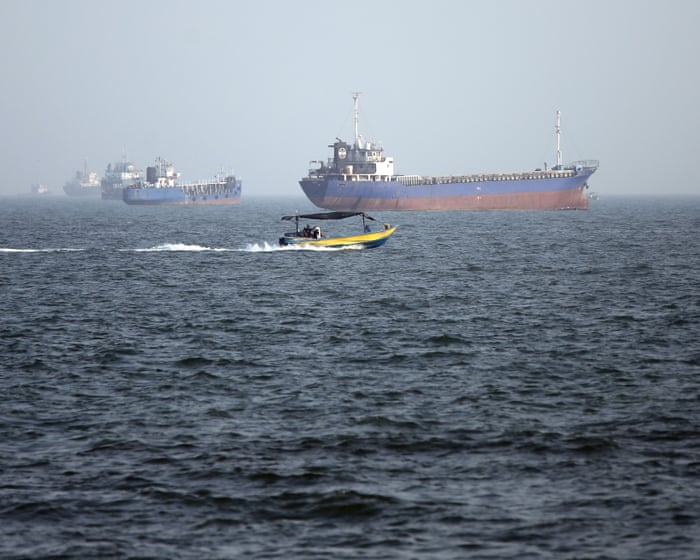 The GuardianThis piece reads center-left
“Tit-for-tat violence surges again in region”
FramingOpens by framing this as cyclical 'tit-for-tat' escalation, establishing a pattern of mutual provocation, whereas other outlets lead with the immediate sequence of attack and response.
Read the original UPInot ratedRead the original
 The HillThis piece reads center
“in response to attempted Iranian missile launches at U.S. Navy warships”
Word choiceUses 'disabled' rather than 'destroyed' like other outlets—a softer characterization of what happened to the tankers.
Read the original- DWThis piece reads center
“The US attacked four oil-carrying vessels in the Gulf of Oman”
What's left outSpecifies the geographic distribution of the strikes (4+1 split across two locations), detail not provided by other outlets reporting on the five tankers.
Read the original 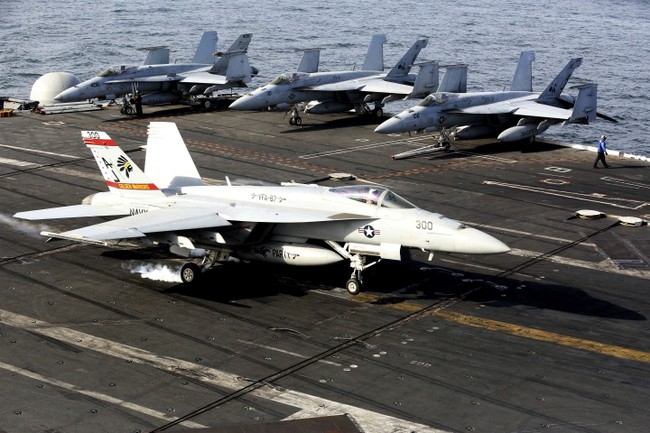 Hot AirThis piece reads center
“US Targets Iranian Ships Near Kharg Island in Response to Attacks”
Read the original- CNBCThis piece reads center-right
Headline changedwas “Iran says it hit American vessels, oil tankers in Hormuz in retaliation for U.S. strikes”
“attempted attack on American warship”
What's left outIntroduces Trump's specific economic prediction about oil prices—a forward-looking political claim—where other outlets simply report the current price impact or focus on the military action itself.
Read the original 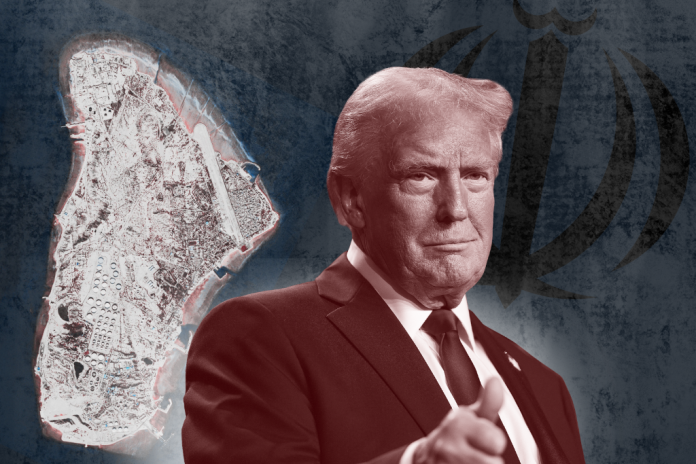 Washington ExaminerThis piece reads center-right
“In response to Iran's most recent failed attacks, CENTCOM destroyed”
Read the original
Placements are generated by an AI model from each article’s own headline and summary, and every quotation above is checked to be a real substring of that article before it is published. How this is done
Prism is free and carries no advertising. Support it if it was useful.