US-led coalition ends military mission in Iraq
Reported by
A dot shows how that piece reads — Prism rates articles, not outlets, and shows the words behind each placement below. No dot means the piece isn’t rated. How the ratings work
What happened
The account the coverage agrees on, with contested figures attributed rather than asserted. This is not one of the five framings below — it is the ground they all stand on.
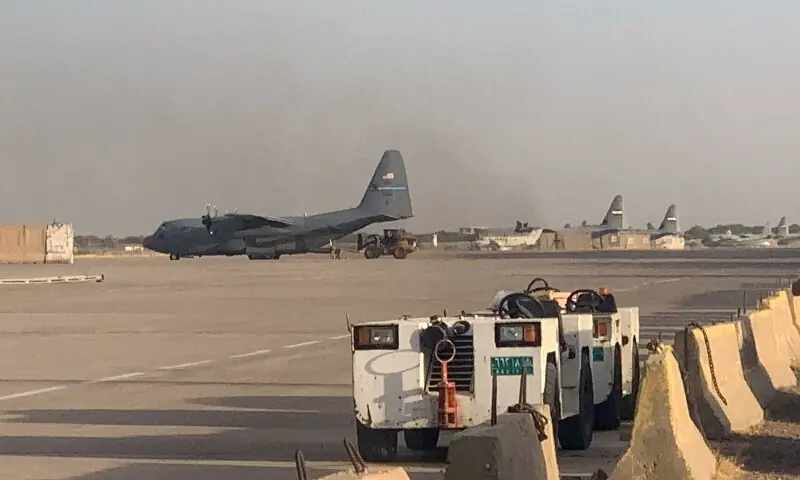
US-led coalition forces completed their withdrawal from Iraq on Wednesday, ending a military presence that began in 2014. The coalition had deployed to fight Islamic State, which was defeated in Iraq in 2017 and in Syria by 2019. The departure marks the second full US military withdrawal from Iraq. Iraqi officials and analysts have expressed concerns that the pullout could create a security vacuum enabling Iran-backed militias and allowing IS fighters to rebuild.
How the spectrum reads this story
The same event, summarised as five points on the political spectrum would each tend to frame it. These are generated by an AI model and are a starting point, not the last word.
Left
The US military presence in Iraq, framed as necessary counterterrorism, has been sustained occupation that destabilized the region for over a decade. While defeating ISIS was important, the mission's true cost—civilian casualties, infrastructure damage, and deepened sectarian tensions—was never adequately reckoned with. The withdrawal is overdue, though the power vacuum the US now leaves reflects the broader failure of military intervention as a tool for regional stability. Real peace requires addressing the structural inequalities and external interference that fueled extremism in the first place.
Center-left
The twelve-year mission accomplished its core objective: defeating ISIS's territorial caliphate. However, the withdrawal underscores the limits of military solutions. The US now bears responsibility for ensuring a genuine transition that protects Iraq's sovereignty and prevents the resurgence of extremist groups or Iranian dominance. The withdrawal should be accompanied by sustained diplomatic engagement and support for Iraqi institutions—not abandonment. Concerns about power vacuums and militia activity are legitimate and require careful management to avoid undoing hard-won progress.
Center
The coalition successfully degraded and defeated ISIS as a territorial force, but the conditions that produced such an organization persist. A full withdrawal made sense eventually, but the timing and manner matter enormously. The risks are real: Iranian influence, militia activity, and potential ISIS resurgence all require serious attention. Neither pure military presence nor pure withdrawal solves Iraq's underlying governance and sectarian challenges. A balanced approach—maintaining some advisory capacity, building Iraqi institutional strength, and coordinating with regional powers—would be more prudent than a complete exit.
Center-right
After 12 years and significant sacrifice, coalition forces successfully defeated ISIS and built Iraqi security forces capable of defending the country. The withdrawal respects Iraqi sovereignty and avoids indefinite military entanglement. However, complete withdrawal carries real risks: Iran-backed militias now operate with less constraint, and without coalition presence, ISIS could attempt resurgence. The US should maintain limited military cooperation and intelligence-sharing relationships while respecting Iraqi independence. A strategic balance—supporting Iraq without permanent occupation—would better serve both nations' interests.
Right
The US military presence in Iraq accomplished what it set out to do: defeating ISIS as an organized force. After more than a decade, maintaining bases abroad indefinitely drains resources needed at home and entangles America in regional conflicts not in its vital interest. Iraqi sovereignty demands that Iraq's own military and people take primary responsibility for their security. The withdrawal is correct, though the US should reserve the right to strike ISIS or other direct threats to American interests if they reemerge. Concerns about Iranian influence are secondary to ending costly overseas commitments.
Hear two viewpoints debate it
Pick two viewpoints and Prism writes a short, six-turn exchange about this story in each one’s own voice — steel-manned, no winner declared. Each pairing is written once and then saved for every reader. The voices are AI syntheses of a tradition, not real people.
New pairing — Prism will write it now.
How each outlet covered it
Where Prism places each piece — not the outlet in general — with the words from that piece that put it there, and the photograph the outlet chose. Picking a photo is a framing decision too.
 France 24This piece reads center-left
“raising fears of Iran-backed militias amid power vacuum”
FramingLeads with security risks and negative consequences of withdrawal in the headline, where other outlets frame the withdrawal itself as the primary event.
Read the original RTÉThis piece reads center-left
Headline changedwas “Iran appeals to US voters as American troops leave Iraq”
“Iran appeals to US voters as American troops leave Iraq”
FramingShifts focus to Iran's political messaging to Americans rather than the military withdrawal itself, introducing domestic US electoral context not present in other coverage.
Read the original- Dawnnot rated
Word choiceFrames the coalition presence as having 'saved' Iraq, using protective language; Al-Monitor uses identical phrasing with 'jihadists' instead.
Read the original - Al-Monitornot ratedRead the original
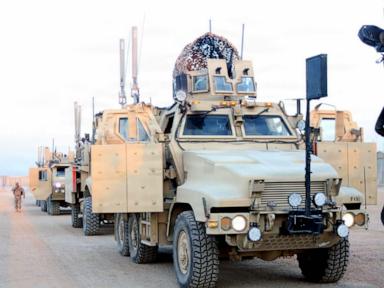 ABC NewsThis piece reads center
“Last US troops expected to leave Iraq on Wednesday following 12-year ISIS fight”
Read the original
Placements are generated by an AI model from each article’s own headline and summary, and every quotation above is checked to be a real substring of that article before it is published. How this is done
Prism is free and carries no advertising. Support it if it was useful.