U.S. military strike kills four in alleged drug-smuggling boat in Caribbean
Reported by
A dot shows how that piece reads — Prism rates articles, not outlets, and shows the words behind each placement below. No dot means the piece isn’t rated. How the ratings work

What happened
The account the coverage agrees on, with contested figures attributed rather than asserted. This is not one of the five framings below — it is the ground they all stand on.
The US military struck a boat in the Caribbean on Saturday, killing four people, according to Pentagon statements. The vessel was alleged to be involved in drug smuggling. This strike is the latest in a series: since the Trump administration began targeting what it calls "narcoterrorists" approximately one year ago, at least 231 people have been killed in 69 boat strikes by US forces in the region.
How the spectrum reads this story
The same event, summarised as five points on the political spectrum would each tend to frame it. These are generated by an AI model and are a starting point, not the last word.
Left
The US military has now killed at least 231 people in 69 strikes over a year, targeting boats in the Caribbean labeled as drug-smuggling vessels. These operations, conducted without transparent oversight or clear evidence standards, exemplify how military counter-narcotics campaigns often result in civilian casualties while the underlying drug trade persists. The scale of deaths raises serious questions about whether due process and proportionality are being observed, and whether this approach actually addresses root causes of trafficking or simply applies force without accountability.
Center-left
Over the past year, US military strikes in the Caribbean have resulted in at least 231 deaths across 69 operations targeting alleged drug-trafficking vessels. While counter-narcotics efforts are necessary, the accumulating death toll warrants scrutiny of the rules of engagement, verification procedures, and whether civilian casualties are being adequately investigated and documented. Policymakers should review whether these strikes are proportionate to their stated objectives and whether alternative approaches might be more effective.
Center
The US military has conducted 69 strikes on alleged drug-smuggling boats in the Caribbean over the past year, resulting in at least 231 deaths. This campaign reflects a genuine security challenge—drug trafficking destabilizes the region—but also raises practical questions about effectiveness and costs. Reasonable people differ on whether the scale of operations is justified by results, whether targeting procedures are sufficiently rigorous, and how to balance interdiction needs against potential for error. The government should provide transparent metrics on outcomes to inform this debate.
Center-right
The US military is actively conducting counter-narcotics operations in the Caribbean, where drug trafficking poses a significant threat to regional stability and American security. Over the past year, 69 strikes have targeted vessels involved in trafficking, removing dangerous criminal actors from the supply chain. The administration's willingness to pursue narcoterrorists directly represents a necessary hardening of policy after years of insufficient action. Operational details and casualty figures should be evaluated in the context of the military and law enforcement challenges these operations address.
Right
The Trump administration is taking decisive action against narcoterrorism in the Caribbean, where criminal organizations exploit weak governance and shipping lanes to threaten American security. In one year, 69 strikes have eliminated at least 231 narco-terrorists operating drug-trafficking vessels. This direct approach demonstrates the administration's commitment to protecting American interests rather than deferring to international bodies or relying on ineffective diplomatic pressure. Such operations represent sovereignty and resolve in the face of organized criminal threats.
Hear two viewpoints debate it
Pick two viewpoints and Prism writes a short, six-turn exchange about this story in each one’s own voice — steel-manned, no winner declared. Each pairing is written once and then saved for every reader. The voices are AI syntheses of a tradition, not real people.
New pairing — Prism will write it now.
How each outlet covered it
Where Prism places each piece — not the outlet in general — with the words from that piece that put it there, and the photograph the outlet chose. Picking a photo is a framing decision too.
- CBS NewsThis piece reads center
“4 killed in U.S. strike on alleged drug-smuggling boat”
Read the original 
- The Straits TimesThis piece reads center
“The US military said it killed four people in a strike”
Read the original - New York Postnot rated
FramingAttribution phrase "it calls" signals distance from the label, whereas CBS and other outlets use similar phrasing but the Post's headline focuses on the kill count first, emphasizing the strike outcome over the contested characterization of the targets.
Read the original 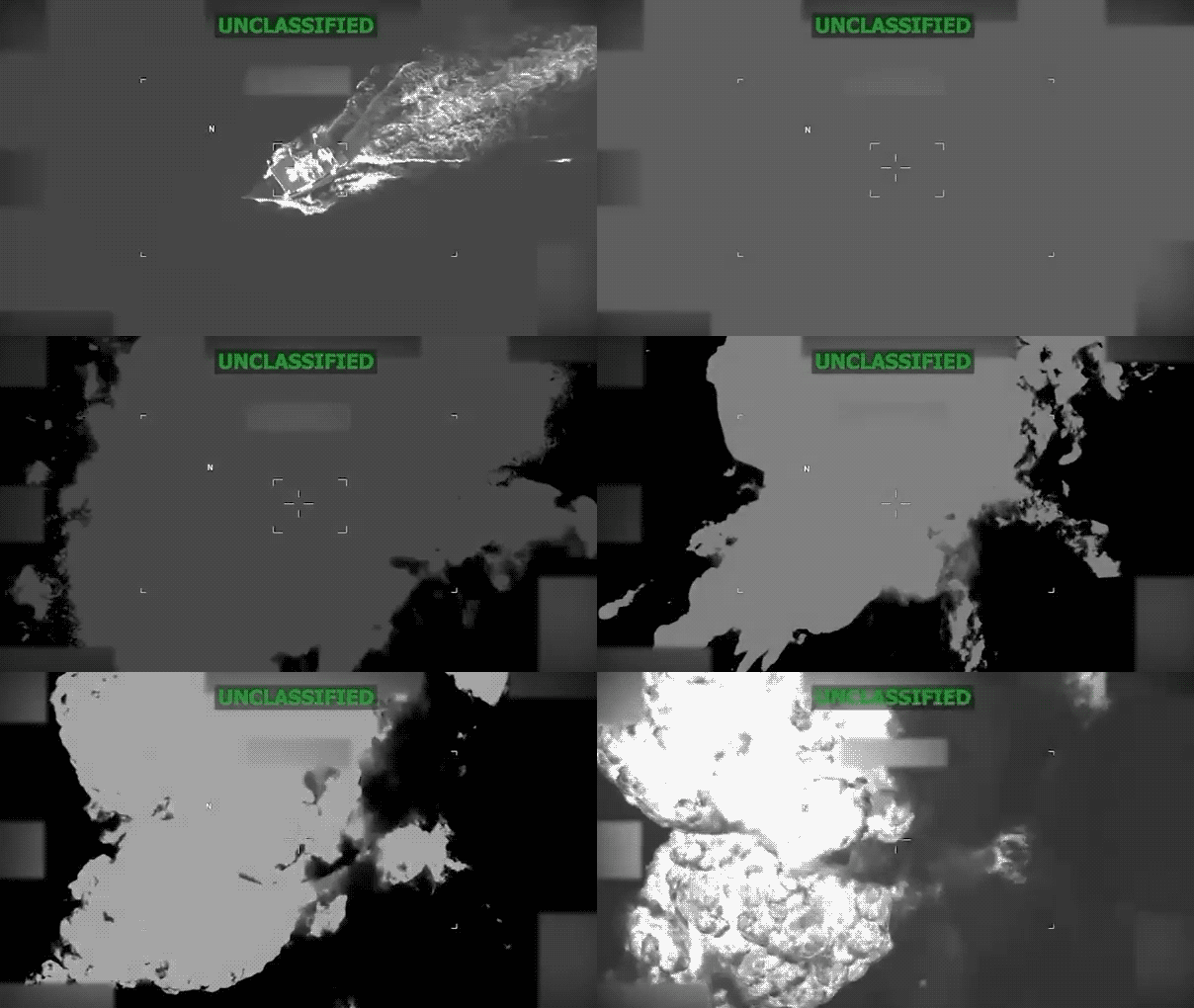 Fox NewsThis piece reads center-right
“killing 4 'narco-terrorists”
FramingPlaces 'narco-terrorists' in quotation marks only in the headline, whereas the military's own descriptor appears without quotes in other outlets — this reads as endorsing the military's characterization while other outlets treat the label more neutrally.
Read the original
Placements are generated by an AI model from each article’s own headline and summary, and every quotation above is checked to be a real substring of that article before it is published. How this is done
Prism is free and carries no advertising. Support it if it was useful.