Trump says he is open to trilateral summit with Putin and Xi, focusing on denuclearization and criticizing Zelenskyy
Reported by
A dot shows how that piece reads — Prism rates articles, not outlets, and shows the words behind each placement below. No dot means the piece isn’t rated. How the ratings work

What happened
The account the coverage agrees on, with contested figures attributed rather than asserted. This is not one of the five framings below — it is the ground they all stand on.
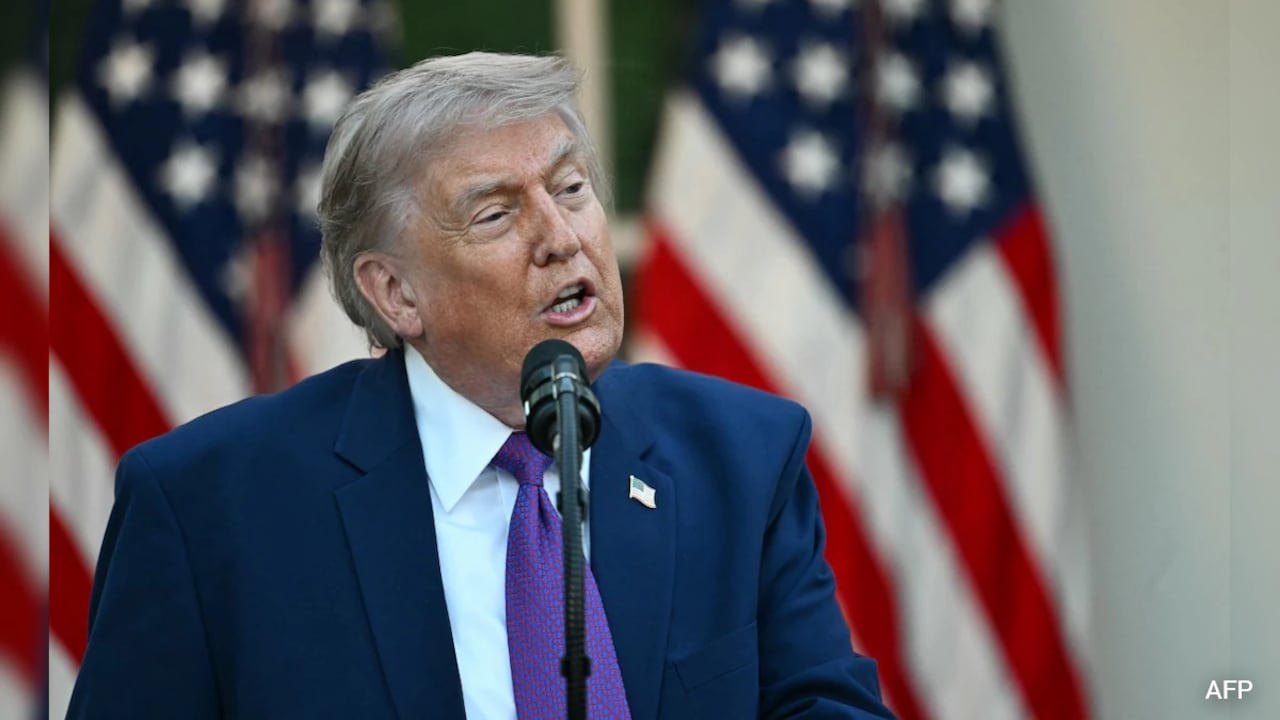
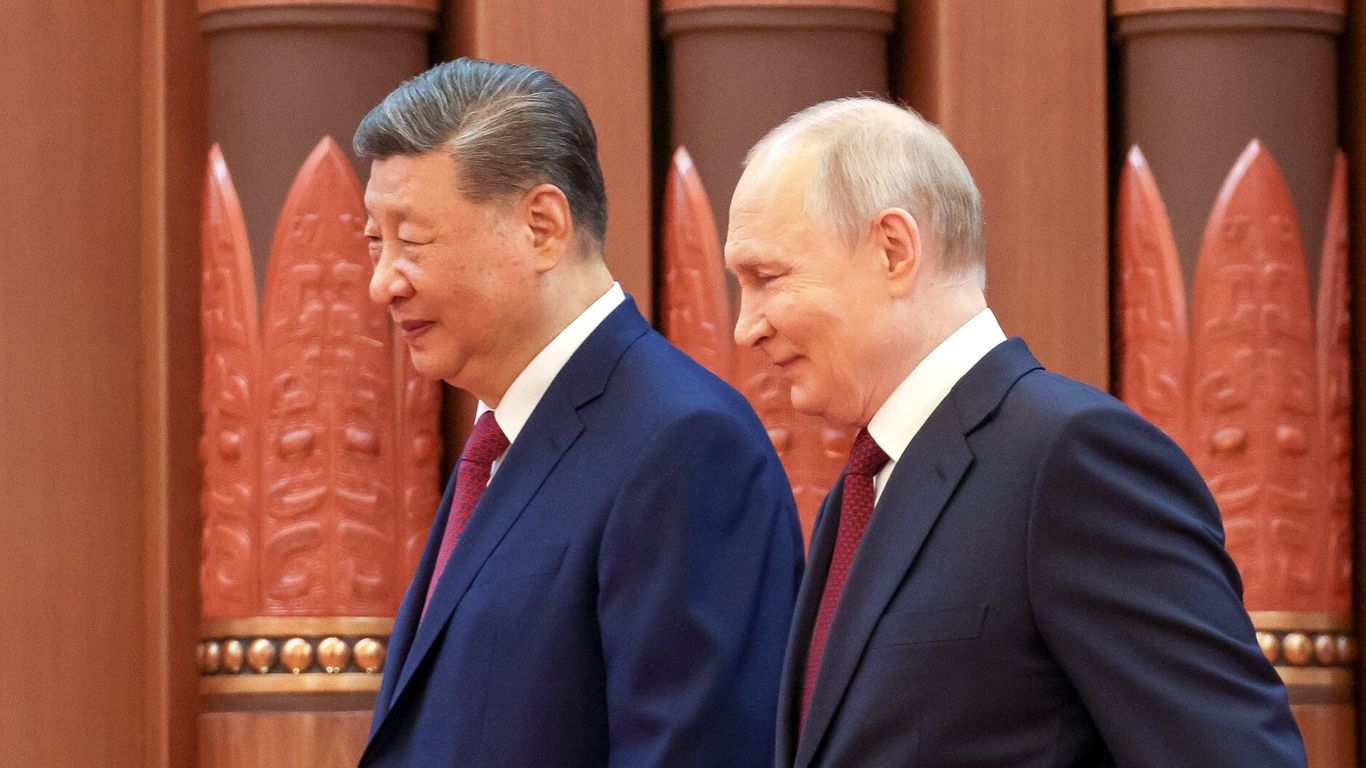
President Trump said he is open to a trilateral summit with Russian President Putin and Chinese President Xi Jinping in China next month, focusing on denuclearization rather than Ukraine's war. Trump also criticized Ukrainian President Zelenskyy, suggesting someone else should negotiate for Ukraine. Ukrainian officials have rejected the idea of talks excluding them, saying it would encourage Putin to continue the war. Trump's approval rating has fallen to 31-33% according to recent polling.
How the spectrum reads this story
The same event, summarised as five points on the political spectrum would each tend to frame it. These are generated by an AI model and are a starting point, not the last word.
Left
Trump is actively undermining Ukraine by proposing talks that exclude it, signaling he intends to pressure Kyiv into capitulation to serve his geopolitical interests with Russia and China. His willingness to negotiate with Putin while attacking Zelenskyy reveals how his administration has shifted from supporting democracy against authoritarianism to accommodating autocrats. This represents a fundamental betrayal of America's alliance commitments and the principle of standing against aggression.
No article in this story reads this way. This is how the position tends to frame events like it — written by a model, not quoted from anyone.
Center-left
Trump's proposal to hold talks on Ukraine without Ukraine present is a problematic approach that could weaken Kyiv's negotiating position and send the wrong signal to Putin. His criticism of Zelenskyy and suggestion for alternative Ukrainian negotiators appears designed to create leverage over Kyiv rather than strengthen the West's position. While diplomatic engagement with major powers can be valuable, excluding the country most affected by the conflict undermines legitimate Ukrainian interests and risks a forced settlement.
Drawn from 3 articles placed here, below.
Center
Trump's openness to a summit with Putin and Xi reflects a realpolitik approach to managing great-power competition, but the exclusion of Ukraine from talks affecting its fate raises serious practical concerns. While denuclearization discussions between the nuclear powers merit consideration, divorcing those from Ukraine's security needs creates tensions between different diplomatic objectives. The deteriorating relationship with Zelenskyy complicates both immediate aid flows and long-term settlement prospects; some negotiating pressure may be necessary, but it requires careful calibration to avoid appearing to abandon an ally.
Drawn from 4 articles placed here, below.
Center-right
Trump is right to pursue diplomatic engagement with Russia and China rather than endless military aid to Ukraine. A trilateral summit addressing nuclear weapons is a legitimate strategic priority for the U.S., and Ukraine should ultimately accept a negotiated settlement rather than continue an unwinnable war. Zelenskyy's resistance to compromise and demands for unconditional Western support have become counterproductive; Trump's suggestion that Ukraine needs different leadership reflects the reality that current approaches are not working. Direct talks between the major powers are how serious diplomacy happens.
Drawn from 2 articles placed here, below.
Right
Trump is correctly prioritizing American interests by engaging directly with Putin and Xi rather than being drawn into an open-ended commitment to Ukraine. The U.S. has spent enormous resources on a peripheral conflict while neglecting its own needs and alienating Russia, which should be a natural partner against China. Zelenskyy has become a liability, demanding ever more American support while refusing reasonable compromises. Trump's willingness to talk to the actual decision-makers without Ukraine's obstruction is the clear-headed diplomacy America needs.
No article in this story reads this way. This is how the position tends to frame events like it — written by a model, not quoted from anyone.
Hear two viewpoints debate it
Pick two viewpoints and Prism writes a short, six-turn exchange about this story in each one’s own voice — steel-manned, no winner declared. Each pairing is written once and then saved for every reader. The voices are AI syntheses of a tradition, not real people.
New pairing — Prism will write it now.
How each outlet covered it
Where Prism places each piece — not the outlet in general — with the words from that piece that put it there, and the photograph the outlet chose. Picking a photo is a framing decision too.
- CNBCThis piece reads center-left
“Russia, which invaded Ukraine”
FramingExplicitly names Russia's action as an invasion where some other outlets refer neutrally to 'the war' or 'tensions,' grounding the diplomatic context in an acknowledgment of aggression.
Read the original - BloombergThis piece reads center-left
“Trump Is Pushing Ukraine to Yield”
Word choiceFrames the Trump-Zelenskyy conflict as an escalating personal dispute ('row') rather than as a policy disagreement, emphasizing interpersonal tension over substantive disagreement.
Read the original - MeduzaThis piece reads center
“he wants to talk about nuclear weapons, not Russia's war”
Read the original - The Jerusalem PostThis piece reads center
“could lower global tensions but also raise alarms”
Read the original 
- The Moscow Timesnot ratedRead the original
 AxiosThis piece reads center-right
“aspiration to reach a deal with Russia and China”
Read the original- Die WeltThis piece reads center-right
“fordert Ablösung Selenskyjs”
FramingExplicitly states Trump 'demands replacement of Zelenskyy' in the headline itself, while other outlets report he suggested 'somebody else' should negotiate — a more direct framing of regime change language.
Read the original


Placements are generated by an AI model from each article’s own headline and summary, and every quotation above is checked to be a real substring of that article before it is published. How this is done
Prism is free and carries no advertising. Support it if it was useful.