Trump attacks Muslim Michigan Senate candidate Abdul El-Sayed at campaign rallies
Reported by
A dot shows how that piece reads — Prism rates articles, not outlets, and shows the words behind each placement below. No dot means the piece isn’t rated. How the ratings work
Newsmax
What happened
The account the coverage agrees on, with contested figures attributed rather than asserted. This is not one of the five framings below — it is the ground they all stand on.
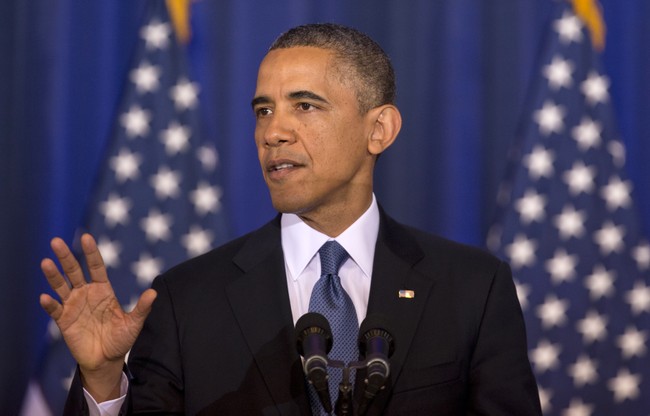
At a Sunday campaign rally in Michigan, President Trump attacked Democratic Senate candidate Abdul El-Sayed, a Muslim physician, invoking 9/11 and calling him a "jihadist" and "Muslim Brotherhood member." Trump said he was in Michigan "to keep a jihadist, Muslim Brotherhood member from becoming a United States senator" and stated "we're not going to let that happen." According to the Daily Mail, Trump also vowed to make El-Sayed go through metal detectors if he wins. This came a day after former President Obama campaigned for El-Sayed and other Michigan Democrats, criticizing the Trump administration.
How the spectrum reads this story
The same event, summarised as five points on the political spectrum would each tend to frame it. These are generated by an AI model and are a starting point, not the last word.
Left
Trump's rhetoric represents a dangerous escalation of Islamophobia designed to inflame bigotry against Muslims and disenfranchise them from the political process. By invoking 9/11 and baselessly smearing El-Sayed as a terrorist sympathizer, Trump weaponizes fear and uses fascistic tactics to prevent a Muslim candidate from running for office. This reveals how the right exploits religious prejudice to consolidate power and undermine democratic participation, while establishment Democrats' tepid response shows they lack the spine to defend their own nominee against racist demagoguery.
Drawn from 1 article placed here, below.
Center-left
Trump's attacks on El-Sayed cross a line by weaponizing his faith and making baseless accusations of extremism to delegitimize him as a candidate. Comparing a Muslim Senate candidate to 9/11 attackers is inflammatory rhetoric that stokes prejudice and has no place in American politics. While El-Sayed's record and policy positions should be subject to legitimate scrutiny, Trump's strategy abandons substantive debate in favor of identity-based fearmongering. Democrats should push back firmly on this kind of divisive language while making their own case for their candidate.
Drawn from 5 articles placed here, below.
Center
Trump's invocation of 9/11 and use of loaded terms like "jihadist" is hyperbolic campaign rhetoric that inflames rather than informs. El-Sayed's Muslim faith is irrelevant to his fitness for office, and religious identity should not be a disqualifying factor in American politics. That said, candidates' actual statements and records deserve scrutiny regardless of background. The real issue here is that both sides are increasingly using polarizing language—Trump with inflammatory religious framing, Democrats with dismissals of any criticism as bigotry—when voters deserve a substantive debate about policy and qualifications.
Drawn from 1 article placed here, below.
Center-right
Trump is raising legitimate concerns about El-Sayed's background and past statements, though his rhetorical approach could be more measured. Voters have a right to know about a candidate's associations, statements on extremism, and ideological commitments. Criticism of El-Sayed's record is fair game in an election, but Trump's comparison to 9/11 and the metal detector comment veer into unnecessary provocation that undermines his substantive argument. The focus should remain on El-Sayed's actual positions and record rather than on identity, while still allowing thorough vetting of any candidate's background.
Drawn from 1 article placed here, below.
Right
Trump is appropriately sounding an alarm about a candidate whose background and statements warrant serious questions about his loyalty and extremist sympathies. Muslim Brotherhood connections and past rhetoric about extremism are legitimate concerns that voters should consider. Trump is doing what the mainstream media refuses to do: asking hard questions about El-Sayed's true beliefs and allegiances. The media's reluctance to scrutinize El-Sayed's background with the same intensity they would apply to other candidates shows clear bias, and Trump's willingness to speak plainly about these concerns reflects the common sense most Americans share.
Drawn from 4 articles placed here, below.
Hear two viewpoints debate it
Pick two viewpoints and Prism writes a short, six-turn exchange about this story in each one’s own voice — steel-manned, no winner declared. Each pairing is written once and then saved for every reader. The voices are AI syntheses of a tradition, not real people.
New pairing — Prism will write it now.
How each outlet covered it
Where Prism places each piece — not the outlet in general — with the words from that piece that put it there, and the photograph the outlet chose. Picking a photo is a framing decision too.
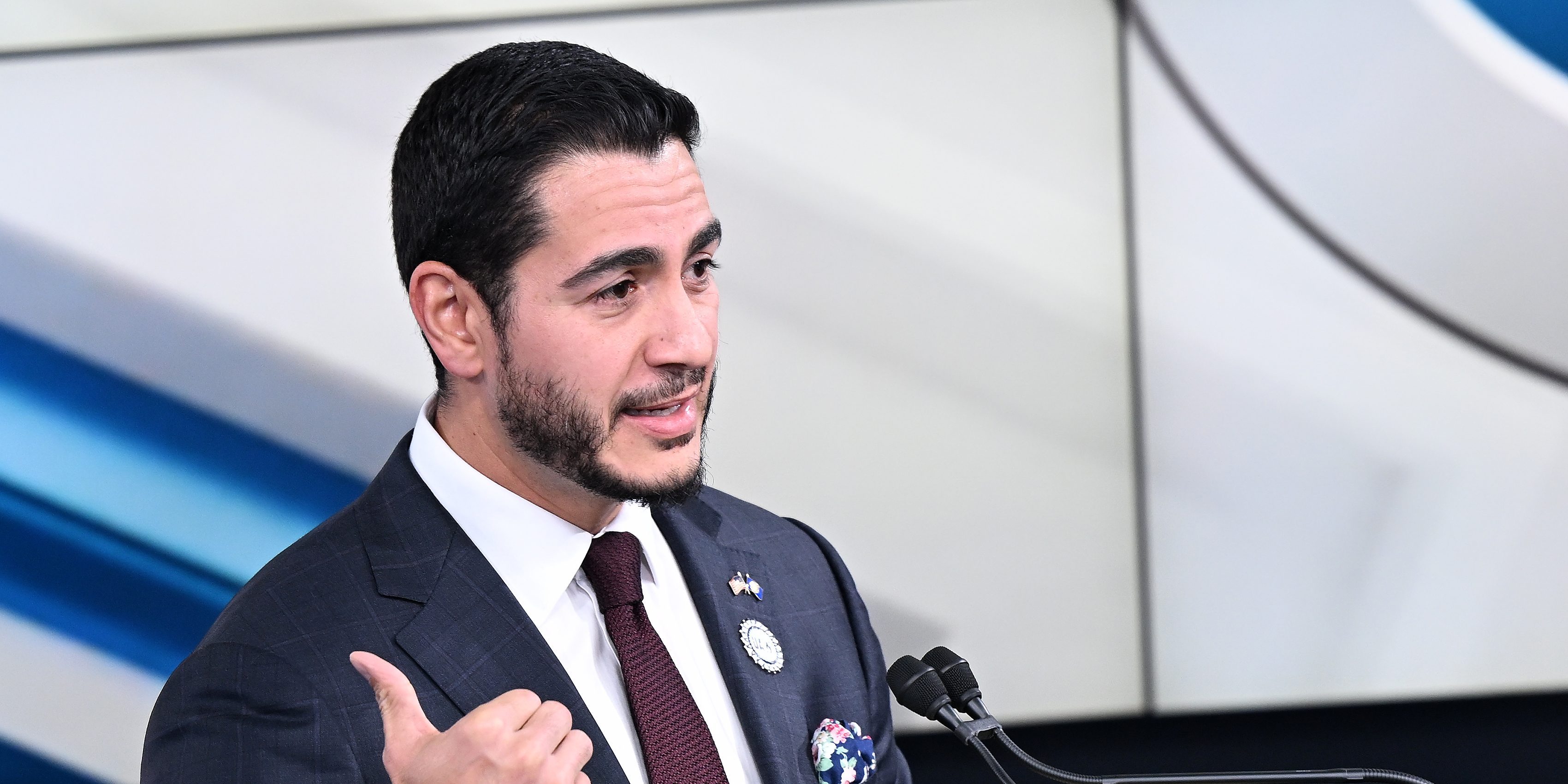 The InterceptThis piece reads left
“Centrist Democrats' calls to fall in line behind”
What's left outFrames the event through internal Democratic dynamics and criticism of centrists rather than focusing on Trump's attack.
Read the original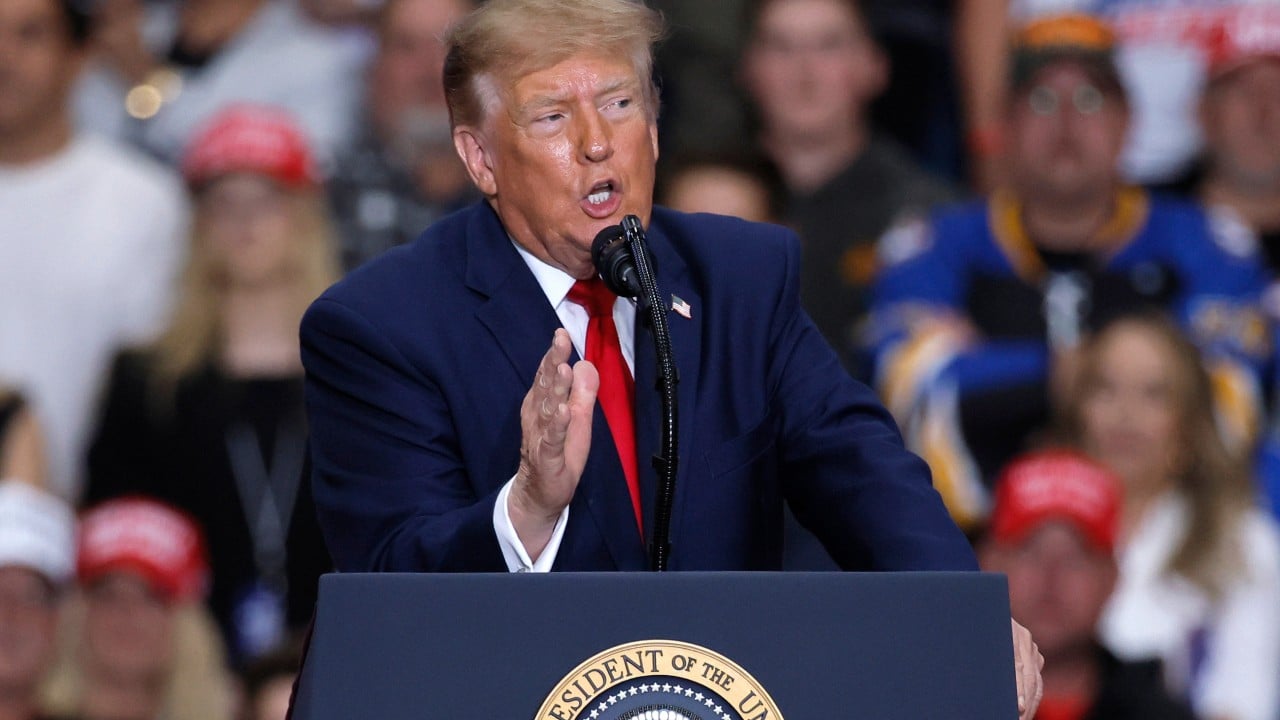 South China Morning PostThis piece reads center-left
“comparing him to the September 11 attackers while saying Democrats would let”
FramingStates Trump's comparison directly as what happened, where other outlets frame it as hyperbolic rhetoric or escalation.
Read the original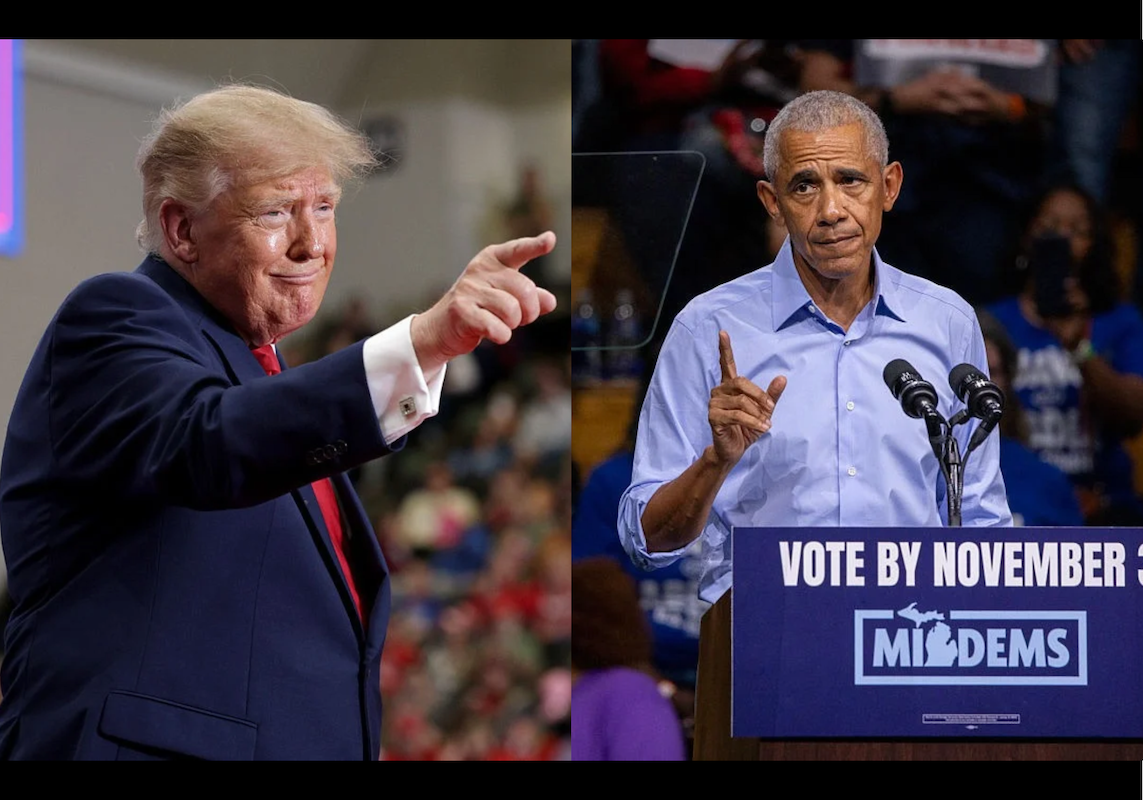
- Taipei TimesThis piece reads center-left
“Barack Obama blasts Trump's 'chaos and cruelty”
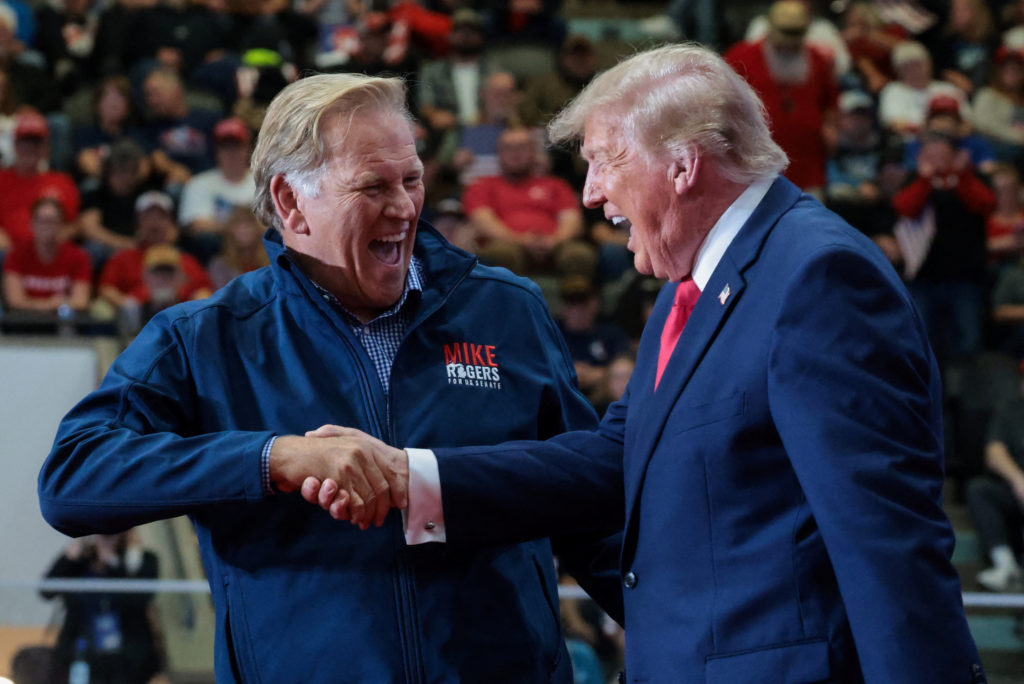
Read the original  Daily MailThis piece reads center-right
“metal detectors in Senate if he wins”
What's left outLeads with the metal detector statement rather than the core 9/11 and jihadist framing, emphasizing a different controversial element of the rally.
Read the original NewsmaxThis piece reads right
“jihadist Muslim Brotherhood member from becoming”
Word choiceIncludes Trump's direct assertion that his claim is factual, whereas other outlets report his claim without his confirmation language.
Read the original- BreitbartThis piece reads right
“Criticizes 'Jihadist' El-Sayed”
Word choicePuts scare quotes around El-Sayed's medical credentials in the headline, suggesting his status as a doctor is questionable rather than established.
Read the original  National Reviewnot rated
FramingSuggests media is treating El-Sayed with unusual favoritism, whereas other outlets report his attacks without this framing of media bias.
Read the original
 PJ MediaThis piece reads right
“Incompetent President' and 'Fake Doctor': Trump Slams”
Read the original
Placements are generated by an AI model from each article’s own headline and summary, and every quotation above is checked to be a real substring of that article before it is published. How this is done
Prism is free and carries no advertising. Support it if it was useful.