Student-led movement sweeps Serbian strongman Aleksander Vučić out of power in parliamentary elections
Reported by
A dot shows how that piece reads — Prism rates articles, not outlets, and shows the words behind each placement below. No dot means the piece isn’t rated. How the ratings work

What happened
The account the coverage agrees on, with contested figures attributed rather than asserted. This is not one of the five framings below — it is the ground they all stand on.
In Serbian parliamentary elections held Sunday, October 26, the Student List—a movement of first-time politicians selected by student-led popular assemblies—won an outright majority of seats. The victory ended 14 years of rule by Aleksandar Vučić's Serbian Progressive Party. Vučić, described as a strongman leader, has been swept from power.
Developing story · 2 chapters
- Serbia's Aleksandar Vučić concedes defeat to student-led movement in parliamentary elections
- Student-led movement sweeps Serbian strongman Aleksander Vučić out of power in parliamentary electionsyou are here
How each side framed the previous chapter
Compare these with the five framings below to see what moved as the story developed — and what each side kept saying regardless.
Left
Serbia's youth have dismantled an authoritarian regime through sustained grassroots organizing. Vučić's 14-year rule exemplified how far-right parties consolidate power through nationalist rhetoric and democratic erosion. The Student List's victory proves that popular movements can overcome entrenched elites, even when those elites control state machinery. This is a template for challenging authoritarian rule anywhere: organize locally, name corruption and democratic backsliding, and persist. The challenge now is whether a new government can actually deliver institutional reform or whether elite capture will reassert itself.
Center-left
Serbia's voters rejected Vučić's model of centralized strongman rule in favor of democratic renewal. A student-led movement channeled public anger at corruption and democratic decline into electoral victory through two years of sustained activism. The snap election and record turnout suggest citizens want transparent, accountable governance and rule of law. This represents a significant break from the previous government's approach, though whether the Student List can deliver meaningful institutional reform and anti-corruption measures will determine whether this transition produces lasting change or remains largely symbolic.
Center
Serbia's election reflects public exhaustion with Vučić's 14-year tenure and his government's real or perceived failures on corruption and democracy. A student-led opposition succeeded in channeling discontent into electoral victory, achieved record turnout, and appears to have won a parliamentary majority. The snap election Vučić called backfired tactically. Whether this represents genuine democratic renewal or simply a change of faces depends on what the Student List actually does in office, how quickly they address the grievances that mobilized voters, and whether institutional checks and reforms can prevent new forms of power concentration.
Center-right
Serbian voters chose change after 14 years of Vučić's rule, signaling desire for new leadership and policy direction. A student-led movement capitalized on public concern about corruption and democratic governance to win a clear electoral mandate. The high turnout and decisive result suggest public engagement with the democratic process. Questions remain about whether the Student List has a coherent governing platform, how they will handle Serbia's complex position balancing ties to Russia and the West, and whether they can deliver on anti-corruption promises without overreaching. Continuity in foreign policy and economic management will matter alongside democratic reform.
Right
After 14 years leading Serbia, Vučić conceded electoral defeat to a student-led movement in snap parliamentary elections. The Student List won majority support with pledges to fight corruption and restore democratic norms. The outcome reflects voter preference for new leadership, though questions persist about the movement's governing capacity, policy platform, and ability to maintain Serbia's strategic balance between Russia and Western institutions. The foreign policy implications of this transition—particularly regarding Serbia's relationship with NATO and Russia—remain to be seen.
How the spectrum reads this story
The same event, summarised as five points on the political spectrum would each tend to frame it. These are generated by an AI model and are a starting point, not the last word.
Left
Serbia's student-led uprising represents a decisive rejection of authoritarian, right-wing rule. After a decade and a half under Vučić's grip, ordinary citizens—mobilized through grassroots assemblies rather than traditional party machinery—reclaimed democratic power. This victory shows that popular movements can overcome entrenched strongman systems when people organize collectively outside establishment structures.
No article in this story reads this way. This is how the position tends to frame events like it — written by a model, not quoted from anyone.
Center-left
Serbia's election is a major democratic breakthrough. Voters have rejected Vučić's authoritarian governance and handed power to fresh, reform-minded representatives chosen through innovative civic participation. The Student List's win suggests appetite for greater institutional accountability, rule of law, and alignment with European democratic norms—key priorities for Serbia's future development.
Drawn from 3 articles placed here, below.
Center
Serbian voters delivered a striking rebuke to 14 years of one-party rule, opting for political newcomers over an entrenched establishment. The Student List's majority raises both promise and questions: these first-time politicians now face the practical demands of governing a complex country with serious economic and regional challenges. Their ability to deliver on reform while managing real-world constraints will determine whether this shift proves lasting.
Drawn from 2 articles placed here, below.
Center-right
Serbia's election reflects public fatigue with centralized power under Vučić, but the outcome's significance remains to be seen. While new political voices can bring energy, the Student List's lack of governing experience poses real risks to stability and economic management. For Serbia to prosper, these newcomers will need to govern pragmatically, respect institutional checks, and pursue pro-market policies alongside democratic reform.
No article in this story reads this way. This is how the position tends to frame events like it — written by a model, not quoted from anyone.
Right
Voters rejected one political establishment in favor of another. While Vučić's long tenure warranted electoral challenge, there is little evidence the Student List represents genuine sovereignty or national interest—they appear to be technocratic reformers aligned with international institutions. Real power may shift less than headlines suggest, and whether this change serves ordinary Serbian citizens or external pressures remains unclear.
No article in this story reads this way. This is how the position tends to frame events like it — written by a model, not quoted from anyone.
Hear two viewpoints debate it
Pick two viewpoints and Prism writes a short, six-turn exchange about this story in each one’s own voice — steel-manned, no winner declared. Each pairing is written once and then saved for every reader. The voices are AI syntheses of a tradition, not real people.
New pairing — Prism will write it now.
How each outlet covered it
Where Prism places each piece — not the outlet in general — with the words from that piece that put it there, and the photograph the outlet chose. Picking a photo is a framing decision too.
- VoxThis piece reads center-left
“The far-right just lost. Twice.”
FramingFrames the outcome as a victory against the far-right, whereas other outlets describe it as the Student List defeating or ousting Vučić—a different emphasis that interprets the political meaning of the result.
Read the original  Democracy NowThis piece reads center-left
“swept out of power by a historic student-led opposition movement”
Word choiceUses 'swept' to convey decisiveness and magnitude, which carries more dramatic weight than more neutral descriptions of the same outcome.
Read the original TruthoutThis piece reads center-left
“Sweeps Strongman Aleksander Vučić Out of Power”
Read the original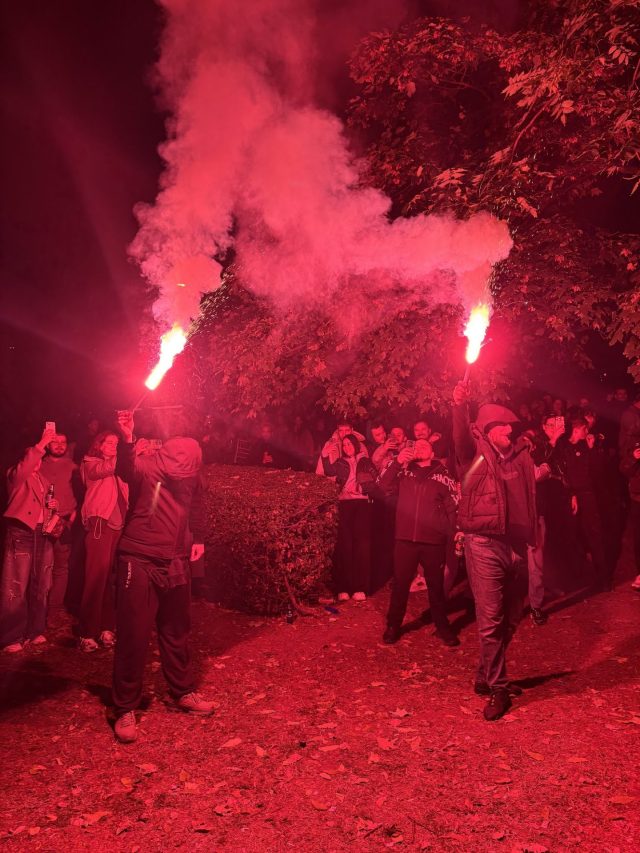 UnHerdThis piece reads center
“Student protesters have won their first election”
Word choiceUses 'conquered,' a military metaphor suggesting triumph and territorial claim, where other outlets use 'won' or 'ousted'—a notably stronger framing of generational achievement.
Read the original Balkan InsightThis piece reads center
“Student List won an outright majority in the parliamentary elections”
Read the original
Placements are generated by an AI model from each article’s own headline and summary, and every quotation above is checked to be a real substring of that article before it is published. How this is done
Prism is free and carries no advertising. Support it if it was useful.