Secretary of State Rubio urges Lebanon to resist Hezbollah pressure over seized explosives
Reported by
A dot shows how that piece reads — Prism rates articles, not outlets, and shows the words behind each placement below. No dot means the piece isn’t rated. How the ratings work
What happened
The account the coverage agrees on, with contested figures attributed rather than asserted. This is not one of the five framings below — it is the ground they all stand on.
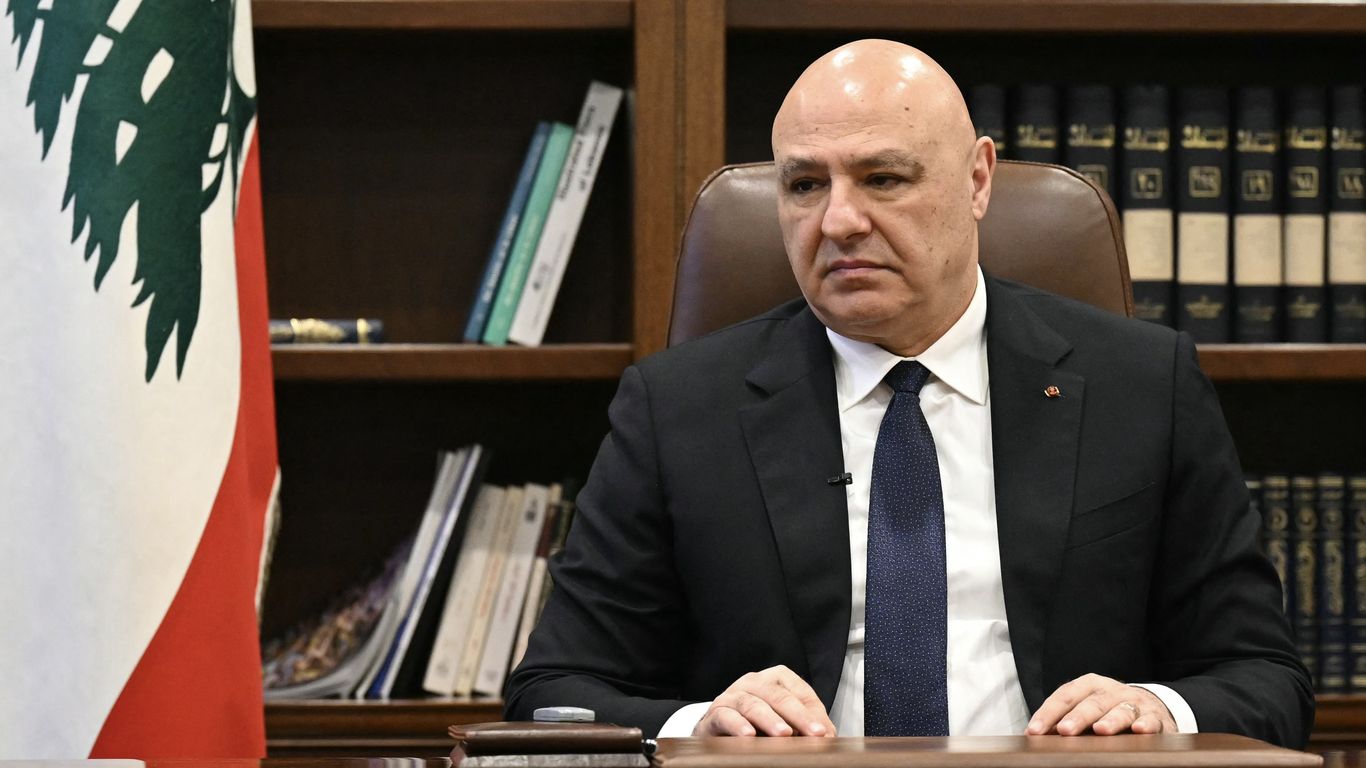
US Secretary of State Marco Rubio spoke with Lebanese President Joseph Aoun on October 15 about hundreds of kilograms of explosives confiscated from Hezbollah that the group had attempted to smuggle into Beirut several days earlier. Rubio urged Aoun not to return the explosives to Hezbollah and to hold accountable those who ordered, financed, and directed the shipment, according to State Department officials.
How the spectrum reads this story
The same event, summarised as five points on the political spectrum would each tend to frame it. These are generated by an AI model and are a starting point, not the last word.
Left
The US is pressuring Lebanon to defy a powerful domestic political force, which reflects Washington's longstanding interventionism in the region. While Hezbollah's weapons activities are concerning, framing this as a test of Lebanese sovereignty risks further destabilizing an already fragile government and deepens resentment of foreign interference in Lebanese affairs.
No article in this story reads this way. This is how the position tends to frame events like it — written by a model, not quoted from anyone.
Center-left
Rubio's call represents appropriate diplomatic effort to strengthen Lebanon's state capacity and independence from Hezbollah's parallel power structure. Encouraging the Lebanese government to maintain control of confiscated weapons and prosecute those responsible supports the rule of law and Lebanon's path toward institutional stability and reduced militia influence.
No article in this story reads this way. This is how the position tends to frame events like it — written by a model, not quoted from anyone.
Center
The US engagement shows both the limits and necessity of diplomacy on security matters. Lebanon's government faces a genuine dilemma: maintaining state authority over weapons requires resisting domestic pressure, yet accepting US backing can paradoxically weaken its legitimacy with parts of the population. Success depends on whether Lebanese leadership can frame accountability as serving national interests rather than foreign demands.
Drawn from 2 articles placed here, below.
Center-right
The seizure of Hezbollah smuggling operations demonstrates the Lebanese state's capacity to act against the militia when it chooses. US support for holding those responsible reinforces the principle that sovereign governments must monopolize force and prevent terrorist organizations from operating freely within their borders, even under domestic political pressure.
Drawn from 2 articles placed here, below.
Right
Hezbollah's attempt to smuggle hundreds of kilograms of explosives into Beirut illustrates why Iran-backed militias cannot be allowed to operate within ostensibly sovereign states. Rubio's insistence that Lebanon hold accountable those behind the operation correctly prioritizes state control of territory and weapons over appeasing a terrorist organization that answers to Tehran.
No article in this story reads this way. This is how the position tends to frame events like it — written by a model, not quoted from anyone.
Hear two viewpoints debate it
Pick two viewpoints and Prism writes a short, six-turn exchange about this story in each one’s own voice — steel-manned, no winner declared. Each pairing is written once and then saved for every reader. The voices are AI syntheses of a tradition, not real people.
New pairing — Prism will write it now.
How each outlet covered it
Where Prism places each piece — not the outlet in general — with the words from that piece that put it there, and the photograph the outlet chose. Picking a photo is a framing decision too.
- The Straits TimesThis piece reads center
“spoke with Lebanese President Joseph Aoun about the confiscation”
Read the original 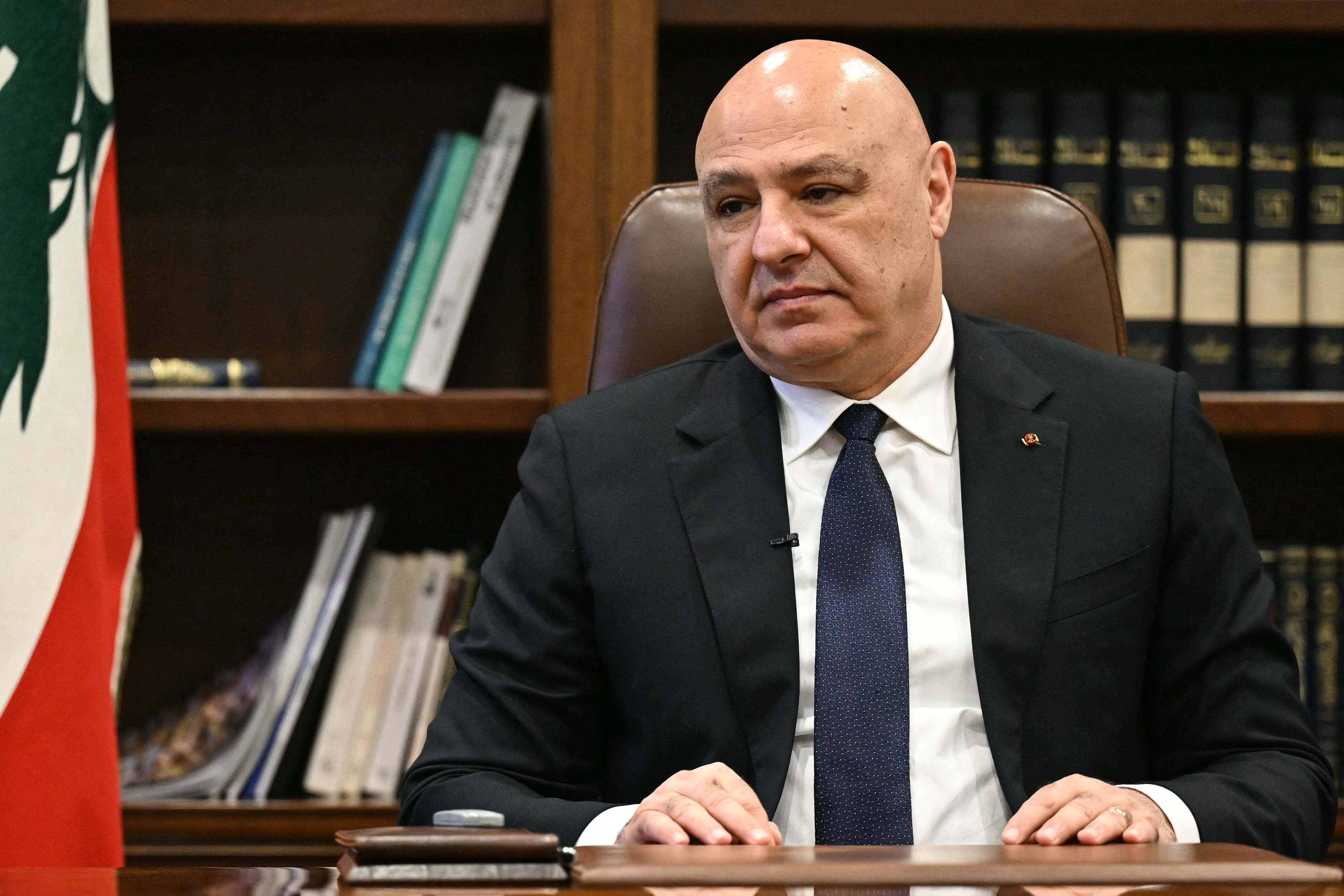 The NationalThis piece reads center
“Rubio speaks to Lebanon's Aoun about explosives seized from Hezbollah”
Read the original- AxiosThis piece reads center-right
“test case for the Lebanese government's resolve to stand up to Hezbollah”
FramingFrames the incident as measuring Lebanese independence from Hezbollah, emphasizing it as a broader indicator of governance capacity—a framing other outlets do not explicitly make.
Read the original - The Jerusalem PostThis piece reads center-right
“urged Aoun to hold accountable those who ordered, financed, and directed”
Read the original

Placements are generated by an AI model from each article’s own headline and summary, and every quotation above is checked to be a real substring of that article before it is published. How this is done
Prism is free and carries no advertising. Support it if it was useful.