Mass protests erupt across France over cost of living with widespread riots, looting, and fires
Reported by
A dot shows how that piece reads — Prism rates articles, not outlets, and shows the words behind each placement below. No dot means the piece isn’t rated. How the ratings work
CNN
What happened
The account the coverage agrees on, with contested figures attributed rather than asserted. This is not one of the five framings below — it is the ground they all stand on.
Hundreds of thousands of people protested across France on Saturday against rising living costs and education issues, with demonstrations spreading to around 140 cities. Police reported about 400 arrests nationwide, though one source cited 1,200. Violence accompanied the protests: fires were set in multiple locations including Limoges town hall (a 143-year-old building), clashes between protesters and police erupted in Paris and other cities, looting occurred at shops and businesses, and tear gas was deployed. Authorities acknowledged most demonstrators were peaceful while condemning what officials called a growing number of violent incidents.
How the spectrum reads this story
The same event, summarised as five points on the political spectrum would each tend to frame it. These are generated by an AI model and are a starting point, not the last word.
Left
France's working people took to the streets Saturday in massive numbers to demand action on inequality and the cost of living crisis, joined by students protesting educational neglect. While the vast majority demonstrated peacefully, some property damage occurred as anger at government inaction boiled over. The real story is not isolated vandalism but systemic government failure—decades of austerity and neglect have created conditions where people feel compelled to risk arrest. Framing this as riots rather than justified uprising obscures whose responsibility this is.
No article in this story reads this way. This is how the position tends to frame events like it — written by a model, not quoted from anyone.
Center-left
Hundreds of thousands of French people demonstrated Saturday over legitimate grievances—rising living costs, education underfunding, and economic hardship. The scale of turnout shows genuine public discontent that requires government response. However, the violence and looting that marred the protests are counterproductive and undermine the demonstrators' message. Police response was mixed; some clashes appeared heavy-handed while order needed to be maintained. The government should take the underlying concerns seriously and pursue reforms while also addressing the security breakdown that allowed property destruction.
Drawn from 2 articles placed here, below.
Center
Saturday's French protests represented real public frustration over economic conditions and education, drawing hundreds of thousands across the country. Most demonstrators were peaceful, but significant violence—fires, looting, and police clashes—occurred in multiple cities, resulting in around 400 arrests. Distinguishing between legitimate protest and criminal destruction matters: the government must address cost-of-living concerns through policy, but also maintain order. The challenge is responding to genuine grievances without rewarding those who exploit protests for vandalism, and maintaining proportionate policing that doesn't inflame tensions further.
Drawn from 11 articles placed here, below.
Center-right
Hundreds of thousands protested in France on Saturday, but the demonstrations were hijacked by violent actors who set fires, looted businesses, and clashed with police. While people have legitimate concerns about living costs, the scale of property damage—including a historic town hall—shows how quickly protests can spiral into urban chaos if authorities lose control. Police made around 400 arrests attempting to maintain order amid tear gas and fires. Governments must protect public safety and commerce; responding to demands made under threat of violence sets dangerous precedent.
Drawn from 4 articles placed here, below.
Right
France experienced widespread rioting Saturday as protests over living costs descended into urban warfare, with historic buildings torched, stores systematically looted, and police attacked in what some described as scenes of guerrilla-style violence. While framed as peaceful demonstrations, the reality was coordinated destruction across 140 cities causing hundreds of arrests. This reflects a failure of state authority and the rise of organized antifa-style tactics exploiting legitimate grievances as cover. Strong law enforcement response is essential; governments that appear weak in face of such disorder invite more.
Drawn from 4 articles placed here, below.
Hear two viewpoints debate it
Pick two viewpoints and Prism writes a short, six-turn exchange about this story in each one’s own voice — steel-manned, no winner declared. Each pairing is written once and then saved for every reader. The voices are AI syntheses of a tradition, not real people.
New pairing — Prism will write it now.
How each outlet covered it
Where Prism places each piece — not the outlet in general — with the words from that piece that put it there, and the photograph the outlet chose. Picking a photo is a framing decision too.
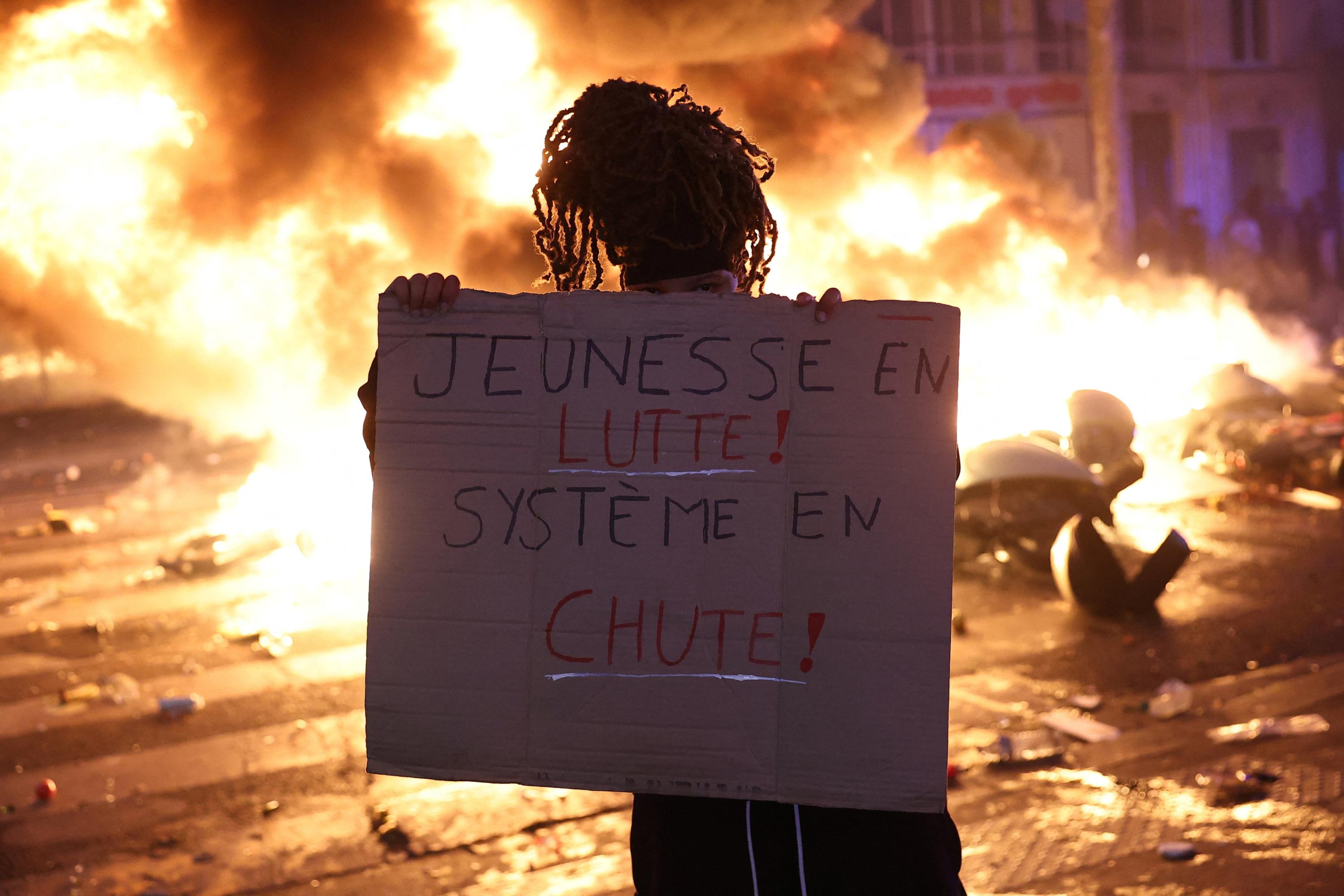 Le FigaroThis piece reads center-left
“pourrissement de la mobilisation”
Word choiceUses military language (urban guerrilla, chain looting) to describe the violence—terms suggesting organized tactical action rather than spontaneous property damage during protests.
Read the original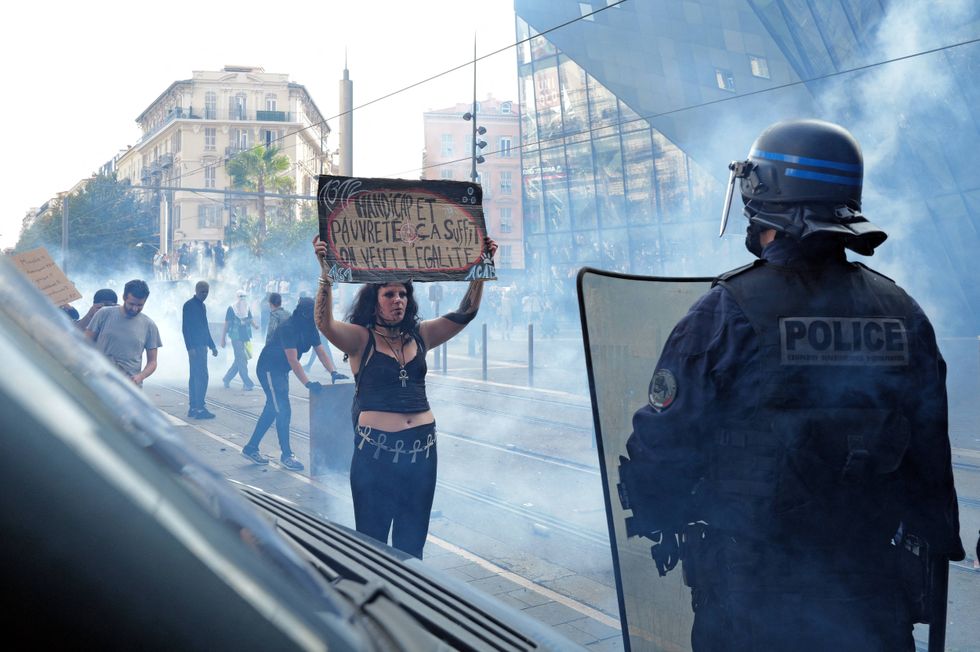 Common DreamsThis piece reads center-left
“The Government is Trembling”
FramingUses a quoted phrase suggesting the protests achieved their goal of intimidating government, emphasizing protester power rather than the violence or vandalism that occurred.
Read the original Straight Arrow NewsThis piece reads center
“vast majority of individuals are demonstrating peacefully”
Read the original

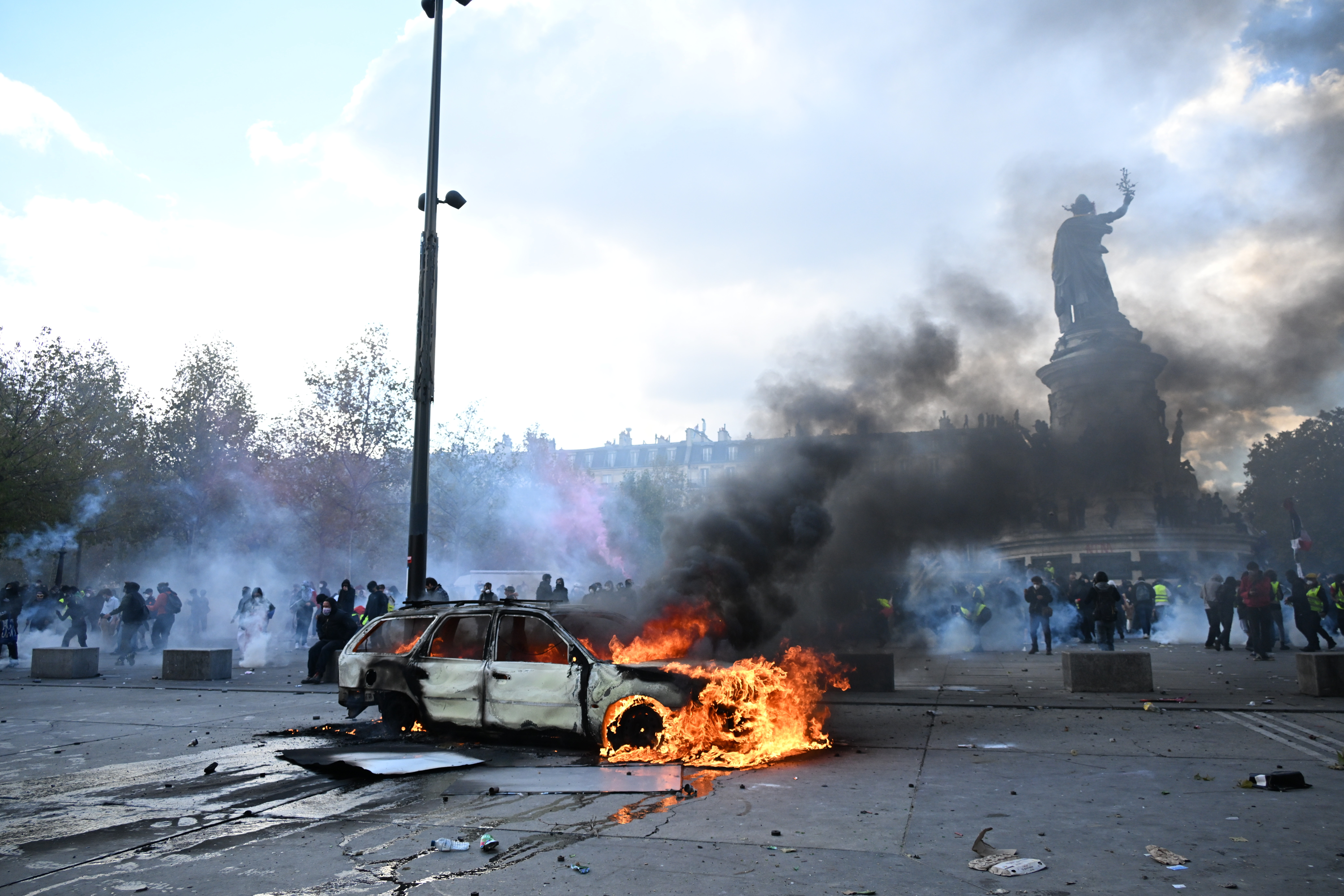


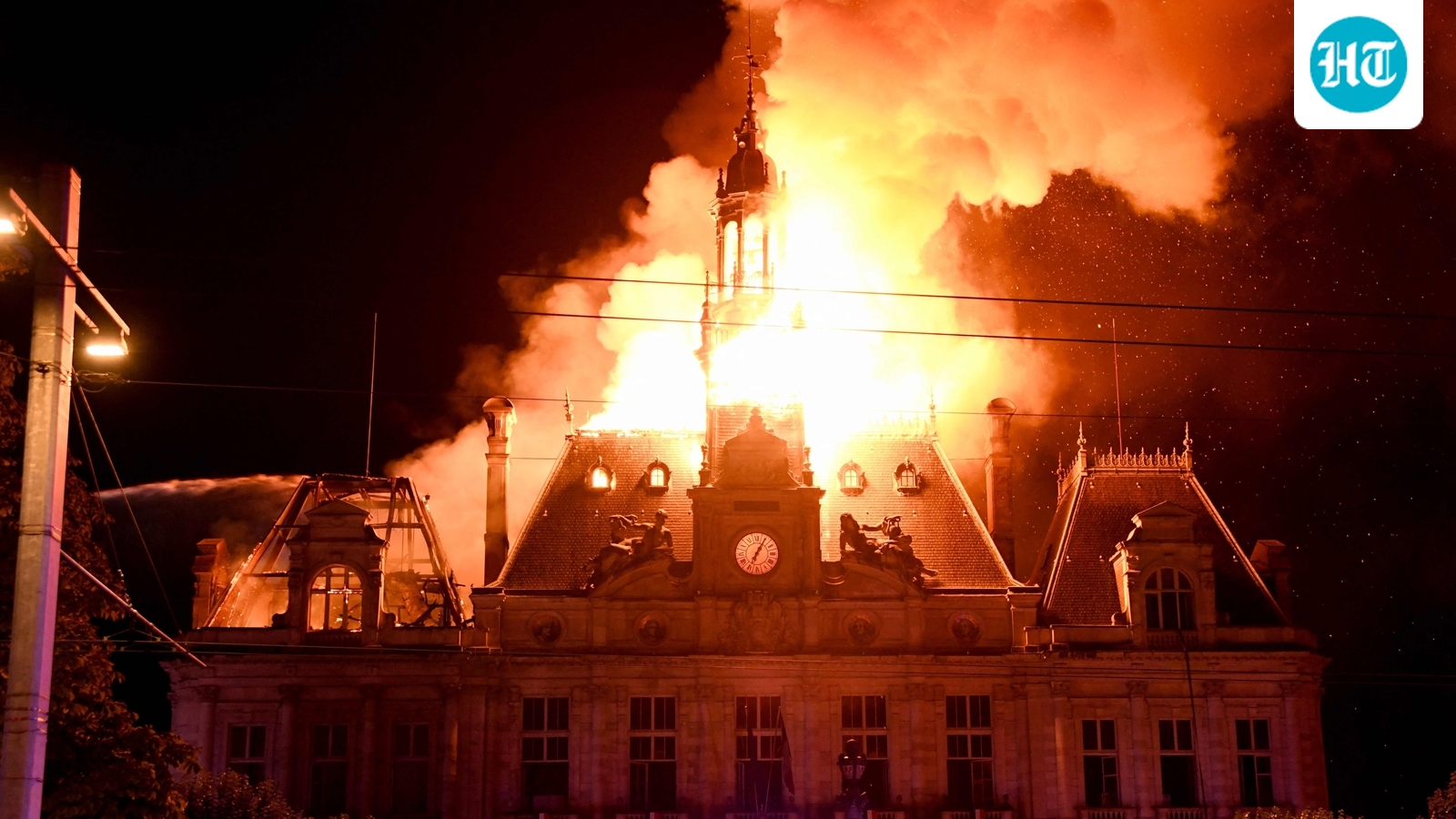 Hindustan TimesThis piece reads center
“Protests over rising living costs turned violent”
Read the original The i PaperThis piece reads center-right
“extremely violent”
Word choiceUses the adjective 'extremely' to intensify the characterization of violence, where most outlets simply report violent clashes or fires as facts.
Read the original- Die WeltThis piece reads center-right
“Gewaltausbrüche landesweite Proteste überschattet”
Read the original - National Postnot ratedRead the original
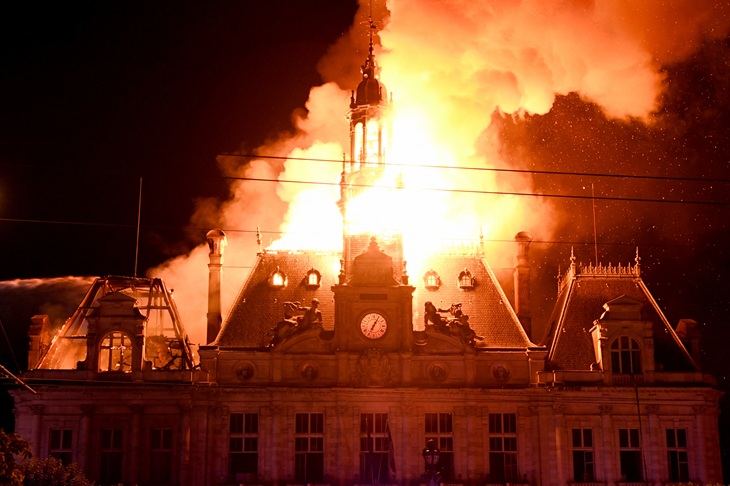 The Spectator AustraliaThis piece reads right
“France is burning again”
FramingFrames the event as a cautionary lesson for Australia rather than reporting what happened in France itself—the headline emphasizes comparative politics over the immediate facts.
Read the original- The Straits TimesThis piece reads right
“spiral into worst riots in years”
Word choiceFrames the event as a deterioration using 'spiral into,' and names it 'riots' from the headline itself, where other outlets describe it as protests that turned violent or included clashes.
Read the original 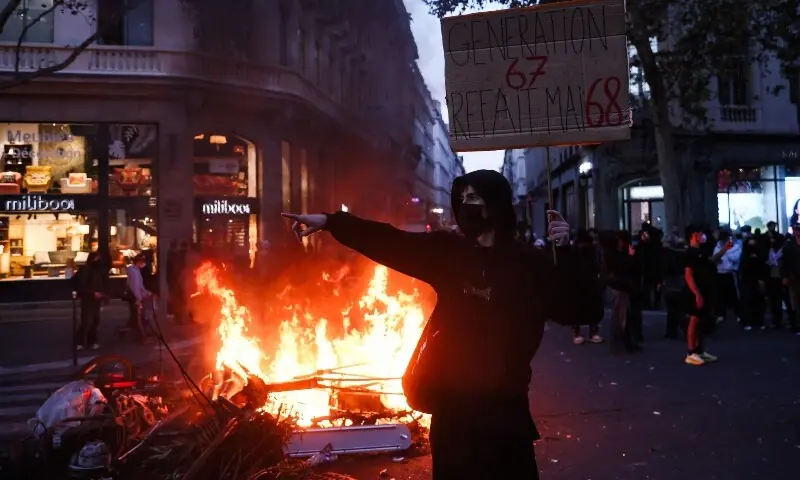 DawnThis piece reads right
“one demonstrator's hand blown off”
What's left outIncludes a graphic detail of injury not mentioned in other outlets' coverage, emphasizing the severity and brutality of the day's events.
Read the original
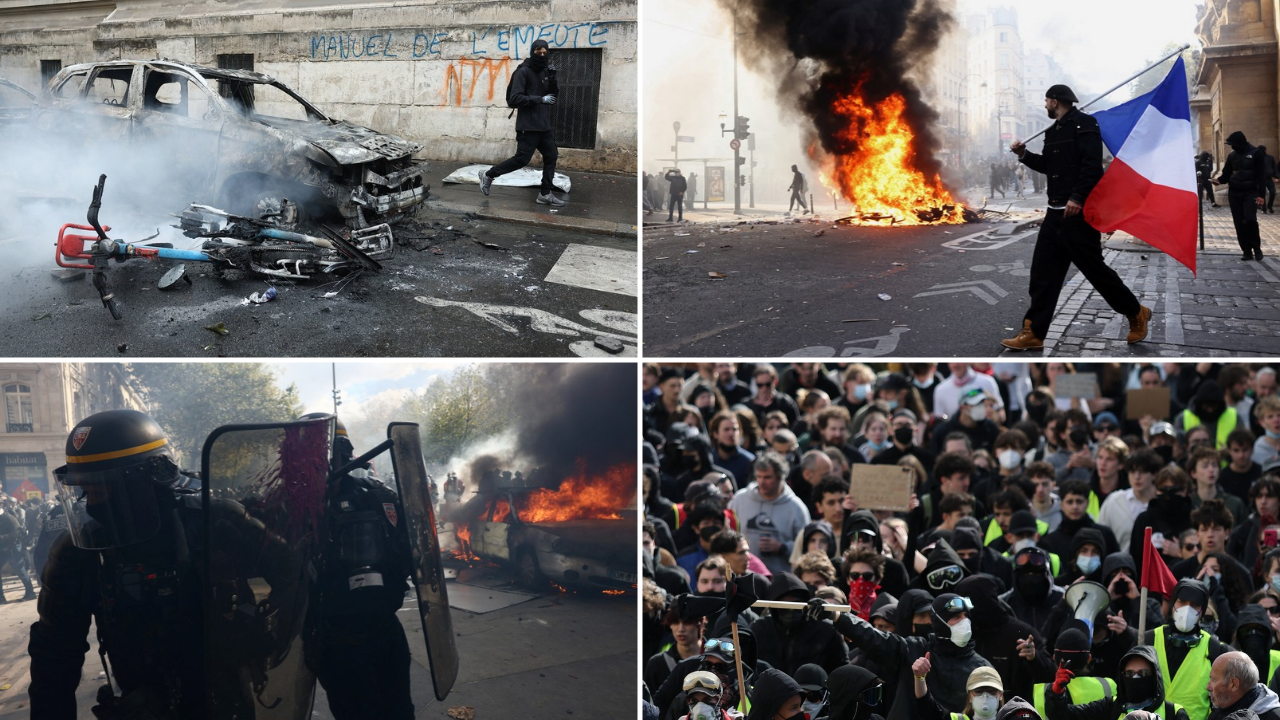

Placements are generated by an AI model from each article’s own headline and summary, and every quotation above is checked to be a real substring of that article before it is published. How this is done
Prism is free and carries no advertising. Support it if it was useful.