Mass protests across France over rising living costs and social strain
Reported by
A dot shows how that piece reads — Prism rates articles, not outlets, and shows the words behind each placement below. No dot means the piece isn’t rated. How the ratings work
What happened
The account the coverage agrees on, with contested figures attributed rather than asserted. This is not one of the five framings below — it is the ground they all stand on.
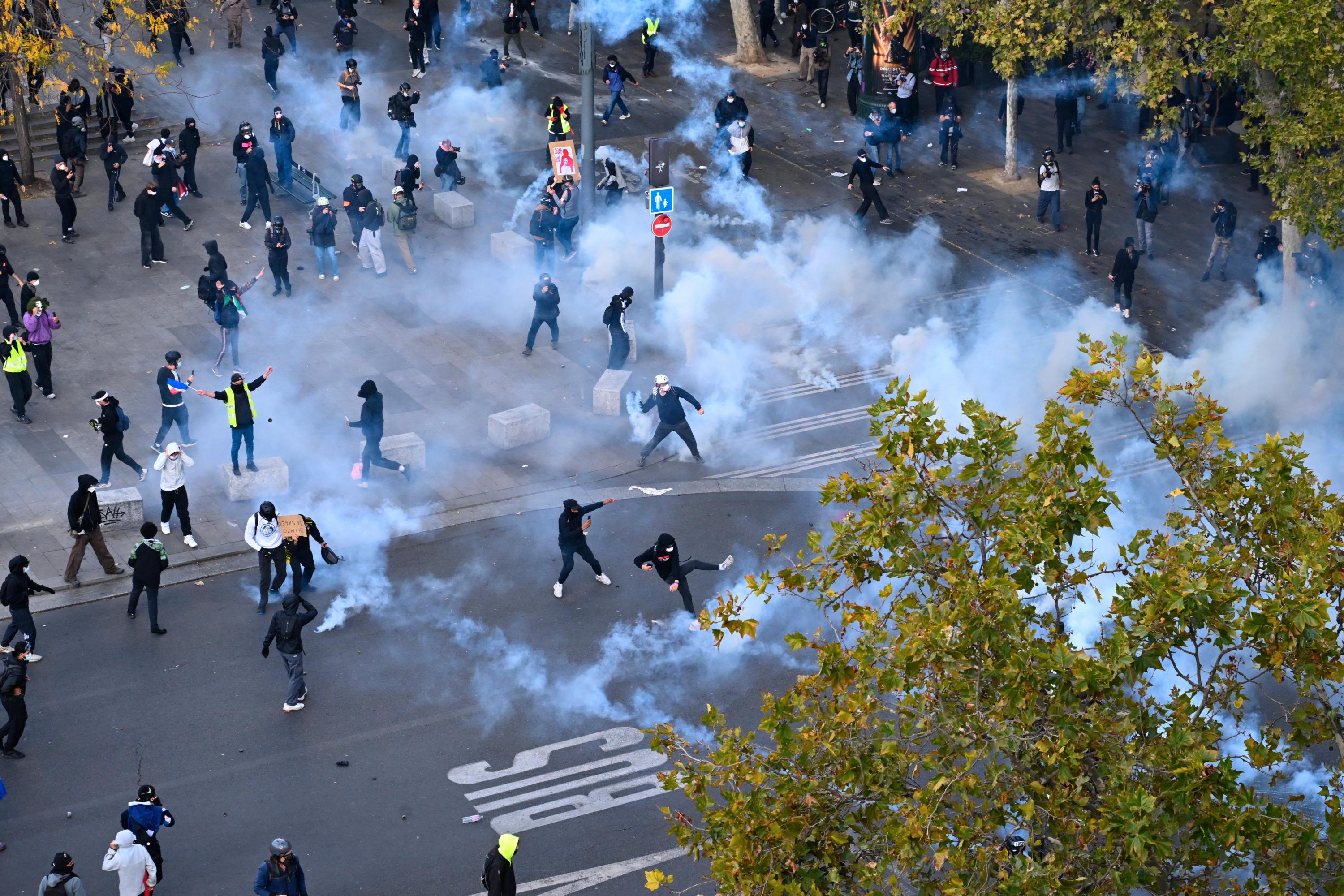
On October 17, 2026, tens of thousands of protesters joined demonstrations across France against rising prices, inequality, and public service difficulties. Yellow Vest activists, high school and university students, and trade unions participated in coordinated protests in Paris, Marseille, Lyon and other cities. Police fired tear gas during clashes in Paris; protesters briefly occupied Marseille's town hall; authorities detained dozens at the start of the day. The demonstrations began in mid-September at schools in Paris's northern suburbs before expanding into broader social grievances.
How the spectrum reads this story
The same event, summarised as five points on the political spectrum would each tend to frame it. These are generated by an AI model and are a starting point, not the last word.
Left
These protests show working people and youth rightfully demanding action on inequality and the cost of living—problems that decades of neoliberal policy have created. The convergence of students, workers, and the Yellow Vest movement signals a potential realignment of French politics around class interests. That police respond with tear gas and mass detentions reveals how the state protects capital over people. This movement could reshape the presidential election by forcing a genuine left alternative onto the agenda, as shown by rising support for La France Insoumise.
Drawn from 1 article placed here, below.
Center-left
France is experiencing significant social strain that demands serious reform. Students and workers protesting high prices and public service cuts represent real grievances that governments must address through targeted fiscal and social policy. The revival of the Yellow Vest movement alongside youth activism shows broad frustration with the current direction. These protests are an important democratic signal, though violence must be avoided. The government needs to respond with concrete measures on living costs and investment in public services before discontent deepens further.
Drawn from 2 articles placed here, below.
Center
Large-scale protests reflect real economic pressures on French households, particularly around energy costs and public services. The coalition of students, workers, and Yellow Vests represents diverse groups with overlapping but distinct concerns. Police responses—tear gas, detentions—are sometimes necessary to prevent vandalism and maintain order, but authorities should distinguish between peaceful assembly and violent clashes. The government faces a genuine challenge: inflation and service quality are legitimate issues, but wholesale policy reversals risk fiscal instability. Incremental reforms addressing worst hardships, combined with transparent communication about constraints, offer the best path forward.
Drawn from 6 articles placed here, below.
Center-right
France faces genuine economic headwinds that have raised living costs, and government must take those concerns seriously. However, mass protests that turn into clashes with police, property damage, and blockades are counterproductive and risk destabilizing public order. Trade unions and activist movements are using legitimate grievances to pursue ideological agendas. The proper forum for these disputes is the ballot box, not the streets. Authorities are right to maintain order, and police should have the tools they need to prevent violence. The government should address inflation through sound monetary and fiscal policy, not capitulate to pressure from disruption.
No article in this story reads this way. This is how the position tends to frame events like it — written by a model, not quoted from anyone.
Right
These protests reveal how out-of-touch elites have become—ordinary French people are struggling with real costs while the political class ignores them or offers only empty rhetoric. The Yellow Vests, students, and workers are correct that the system has failed. However, the causes run deeper than economic policy alone: mass immigration, EU bureaucracy, and loss of French sovereignty have eroded both jobs and social cohesion. Police are right to maintain order against violence, but the real problem is that neither major party offers genuine solutions. Only a government committed to French interests, borders, and sovereignty can address what these protesters are really upset about.
No article in this story reads this way. This is how the position tends to frame events like it — written by a model, not quoted from anyone.
Hear two viewpoints debate it
Pick two viewpoints and Prism writes a short, six-turn exchange about this story in each one’s own voice — steel-manned, no winner declared. Each pairing is written once and then saved for every reader. The voices are AI syntheses of a tradition, not real people.
New pairing — Prism will write it now.
How each outlet covered it
Where Prism places each piece — not the outlet in general — with the words from that piece that put it there, and the photograph the outlet chose. Picking a photo is a framing decision too.
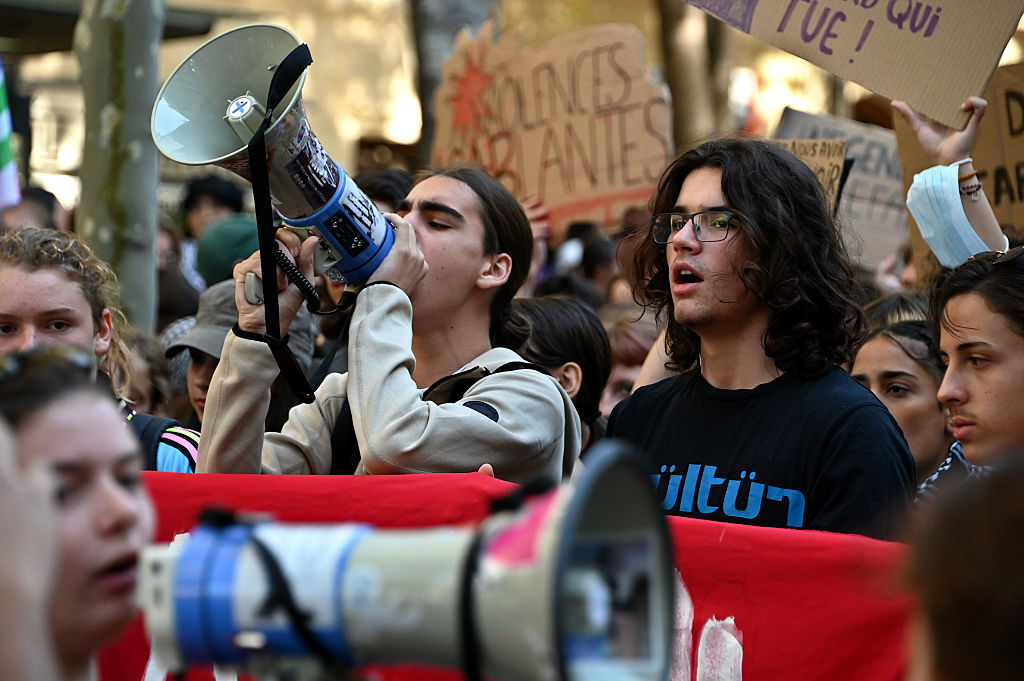 JacobinThis piece reads left
“High School Protests Can Transform France's Election Campaign”
FramingEmphasizes the electoral opportunity and polling gains for a left party, where most outlets treat protests as a social phenomenon or security event.
Read the original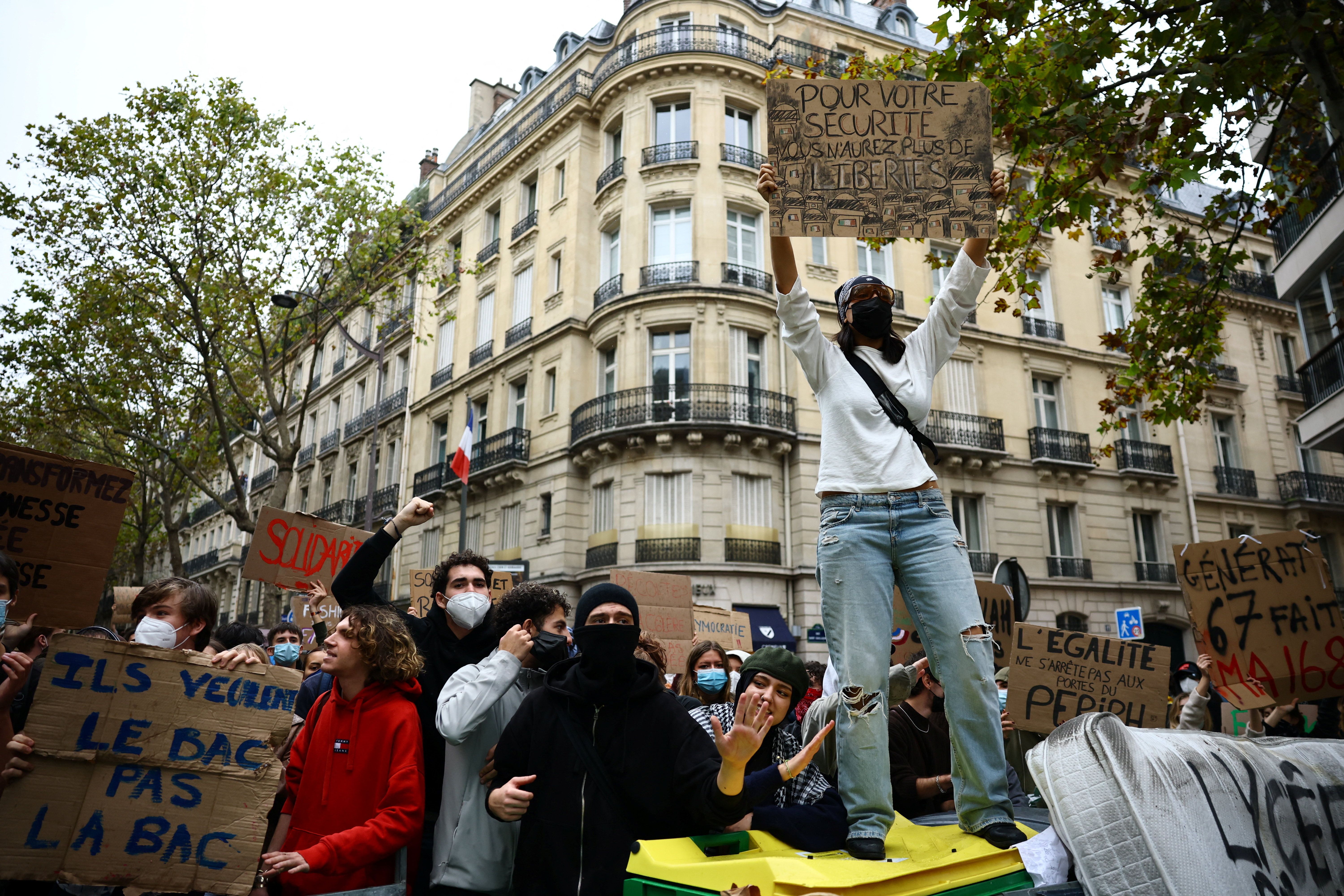 SemaforThis piece reads center-left
“teenager lost his hand during clashes with police”
What's left outReports a policy action by authorities responding to protester injury, whereas other outlets focus on the protests themselves or police responses during the day's clashes.
Read the original
- CNBCnot ratedRead the original
- Le FigaroThis piece reads center
“vives tensions place de la République à Paris”
FramingOpens with 'sharp tensions' and specific locations of disruption (town hall intrusion, mortar fire) before explaining the grievances, emphasizing conflict intensity.
Read the original 
- Al JazeeraThis piece reads center
“Demonstrations began in mid-September at schools”
Read the original - DWThis piece reads center
“Authorities say they fear the rallies could turn violent”
Read the original
Placements are generated by an AI model from each article’s own headline and summary, and every quotation above is checked to be a real substring of that article before it is published. How this is done
Prism is free and carries no advertising. Support it if it was useful.