Israeli forces displace Palestinian families from Hebron after shooting attack kills two soldiers
Reported by
A dot shows how that piece reads — Prism rates articles, not outlets, and shows the words behind each placement below. No dot means the piece isn’t rated. How the ratings work

What happened
The account the coverage agrees on, with contested figures attributed rather than asserted. This is not one of the five framings below — it is the ground they all stand on.
Israeli forces demolished homes and forcibly evacuated Palestinian residents from Hebron in the occupied West Bank on Friday following a Palestinian attack that killed two Israeli soldiers at a checkpoint. Displacement figures vary: Euronews reports around 250 families, Die Welt reports approximately 2,000 people, and RTÉ cites a Palestinian official saying around 1,200. Prime Minister Benjamin Netanyahu announced plans to establish two new communities and six agricultural farms in the area and stated the operation would be on a scale not seen since 1967. The operation occurred days before Israeli elections.
How the spectrum reads this story
The same event, summarised as five points on the political spectrum would each tend to frame it. These are generated by an AI model and are a starting point, not the last word.
Left
Israel has escalated its occupation of the West Bank through mass displacement and demolition in Hebron, framed as retaliation for a militant attack. The scale of forced evacuation—affecting hundreds to thousands of Palestinians—amounts to collective punishment of an entire population for actions of individuals. This operation exemplifies how occupation structures enable state violence against civilians, with electoral politics seemingly driving the timing and scope. Such mass displacement violates international humanitarian law and deepens the systematic dispossession Palestinians face.
Drawn from 2 articles placed here, below.
Center-left
Following an attack that killed two Israeli soldiers, Israel has launched a large-scale military operation displacing Palestinian families from Hebron and announcing new settlements. While security responses to attacks are understandable, the scale of civilian displacement and demolitions raises serious concerns about proportionality and collective punishment. International law restricts responses to military threats, and mass civilian displacement goes beyond what's necessary for security. The operation's timing before elections and Netanyahu's rhetoric about unprecedented scale suggest political calculation alongside security justification.
Drawn from 2 articles placed here, below.
Center
Israel responded to a deadly militant attack in Hebron with a major military operation involving home demolitions and family displacements, with figures ranging from hundreds to thousands depending on the source. Netanyahu framed it as unprecedented in scale since 1967. The operation presents a genuine tension: governments have legitimate security interests after attacks on soldiers, yet mass civilian displacement raises practical and legal questions. The unclear casualty and displacement figures, combined with the political timing before elections, suggest the full picture remains uncertain and warrants scrutiny of both the security rationale and its implementation.
Drawn from 4 articles placed here, below.
Center-right
Israel launched a security operation in Hebron after Palestinian militants killed two soldiers at a checkpoint, displacing Palestinian residents and demolishing structures in the area. The government announced plans for new communities and farms to strengthen Israeli presence in the region. Security operations inevitably involve difficult decisions about civilian areas; the question is whether this response was proportionate to the threat. The operation's scale reflects the gravity of the attack and the need to prevent further violence, though questions about implementation details and broader strategy remain legitimate.
No article in this story reads this way. This is how the position tends to frame events like it — written by a model, not quoted from anyone.
Right
Following a Palestinian terrorist attack that killed two Israeli soldiers, Israel executed a major security operation in Hebron, displacing residents and announcing new communities and farms. The operation demonstrated resolve to respond forcefully to attacks and to strengthen Israeli control of strategically important territory. After decades of violence and repeated attacks, large-scale responses are necessary to deter further aggression and assert sovereignty. The criticism of collective punishment ignores that militant attacks emerge from these same communities, and that security often requires difficult measures. Israel has the right to defend itself and secure its territory.
Drawn from 1 article placed here, below.
Hear two viewpoints debate it
Pick two viewpoints and Prism writes a short, six-turn exchange about this story in each one’s own voice — steel-manned, no winner declared. Each pairing is written once and then saved for every reader. The voices are AI syntheses of a tradition, not real people.
New pairing — Prism will write it now.
How each outlet covered it
Where Prism places each piece — not the outlet in general — with the words from that piece that put it there, and the photograph the outlet chose. Picking a photo is a framing decision too.
- TruthoutThis piece reads left
“Israel Launches Major Ethnic Cleansing Escalation”
Word choiceUses "ethnic cleansing" and "occupation forces" as the primary framing, language that carries strong legal and moral judgment—other outlets describe the same events as displacement, removal, or crackdown without invoking that specific charge.
Read the original 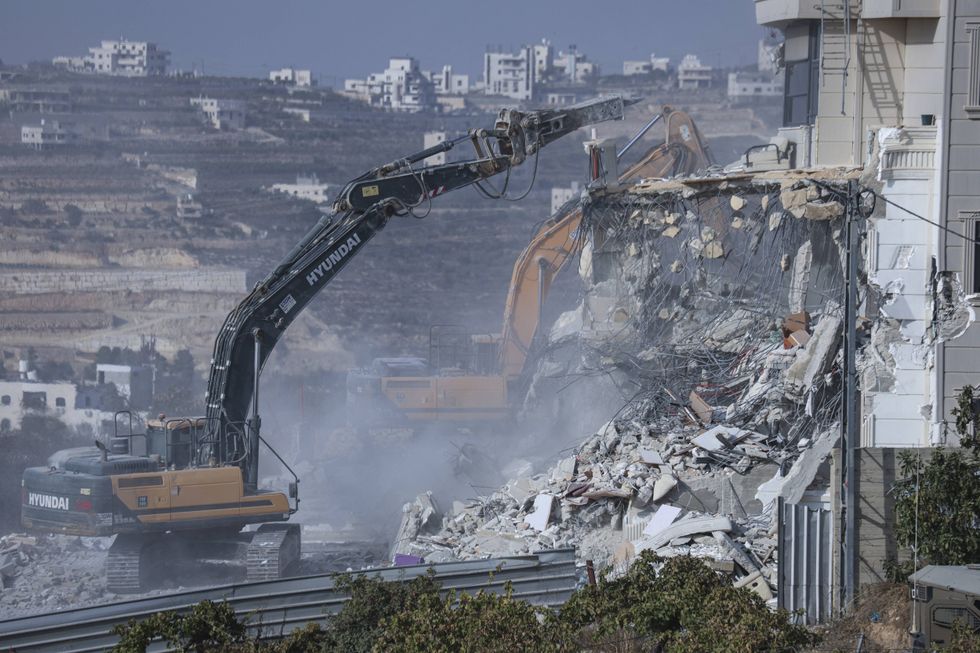 Common DreamsThis piece reads left
“Israeli Occupation Forces Ramp Up Ethnic Cleansing”
Word choiceStates the occupied status as "illegally" occupied, a legal characterization—most other outlets use "occupied" without the legal qualifier, leaving the question of legality to the reader.
Read the original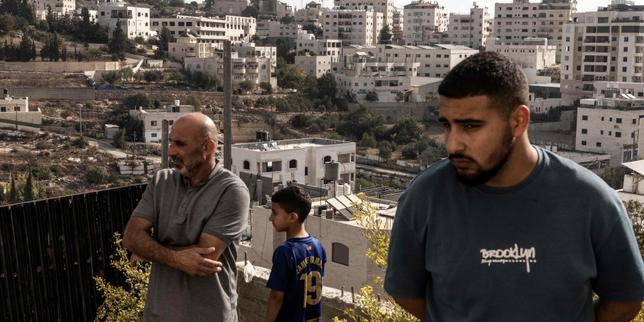
- Die WeltThis piece reads center-left
“Kollektive Bestrafung”
FramingAttributes the term "collective punishment" to the Palestinian vice president in the headline itself, while other outlets either paraphrase the operation or report it without that specific framing.
Read the original 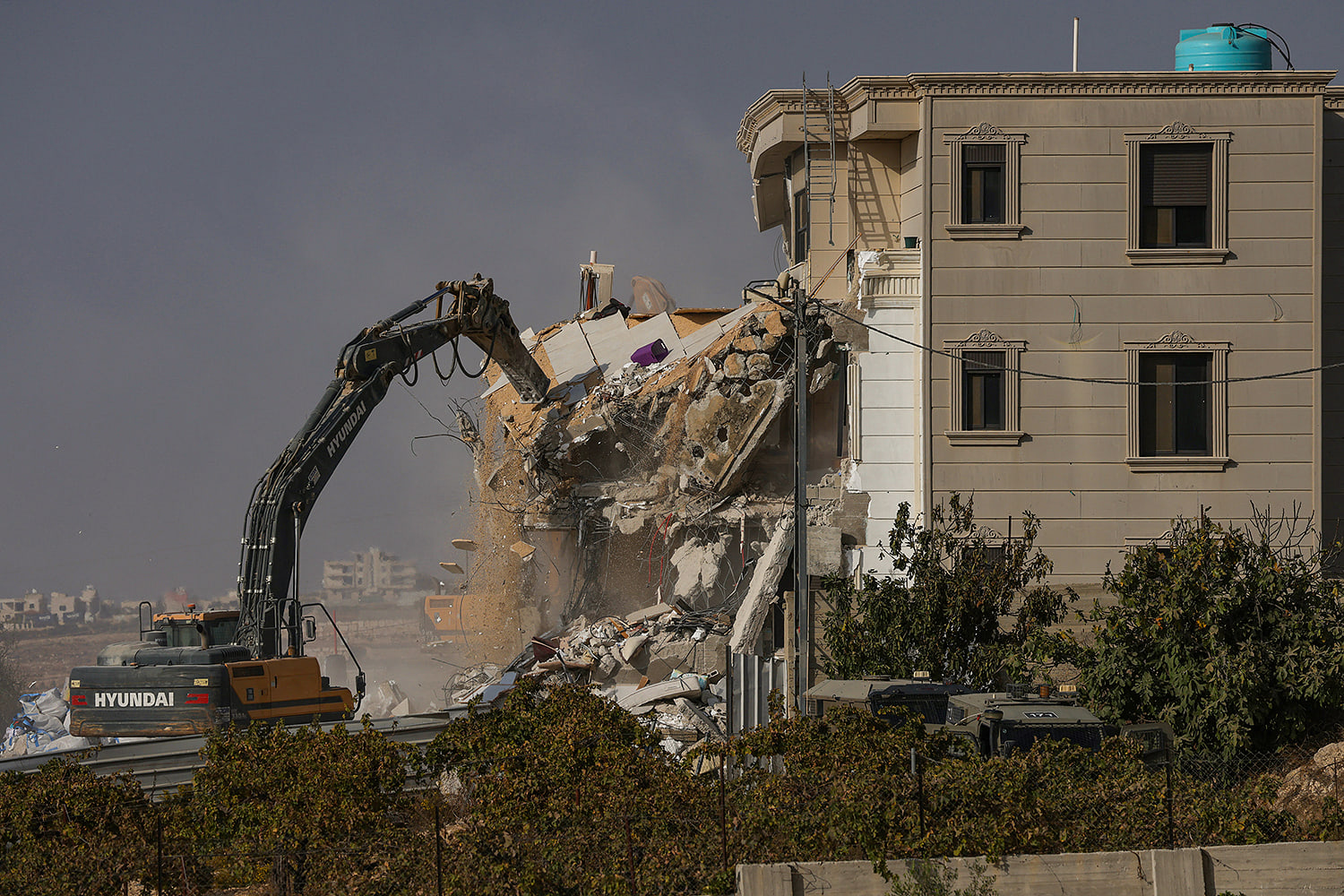 NBC NewsThis piece reads center
“cracks down in the West Bank”
Word choiceUses "cracks down," terminology common in reporting domestic law enforcement actions—other outlets use "displaces," "removes," or "launches operation," which describe the action more directly without the "suppression of dissent" connotation.
Read the original
 Israel National NewsThis piece reads right
“in response to shooting attack”
FramingFrames the new settlements as direct response to the attack, emphasizing causality and justification—other outlets report the attack and the operation as connected events without presenting one as warranted by the other.
Read the original

Placements are generated by an AI model from each article’s own headline and summary, and every quotation above is checked to be a real substring of that article before it is published. How this is done
Prism is free and carries no advertising. Support it if it was useful.