France accuses Iran's Revolutionary Guards of cyberattacks on supermarket refrigerators
Reported by
A dot shows how that piece reads — Prism rates articles, not outlets, and shows the words behind each placement below. No dot means the piece isn’t rated. How the ratings work

What happened
The account the coverage agrees on, with contested figures attributed rather than asserted. This is not one of the five framings below — it is the ground they all stand on.
French Foreign Minister Jean-Noël Barrot accused Iran's Islamic Revolutionary Guard Corps of carrying out cyberattacks on refrigeration systems at supermarkets in France last month. According to the French government, 700 food distribution sites were affected. The attacks destroyed food and triggered fires. Paris prosecutors have opened an investigation. Barrot described the attack as unprecedented in scale and aggression, and threatened EU-level sanctions against Iran.
How the spectrum reads this story
The same event, summarised as five points on the political spectrum would each tend to frame it. These are generated by an AI model and are a starting point, not the last word.
Left
This cyberattack reflects escalating Western-Iranian tensions rooted in years of U.S. sanctions and proxy conflicts. France's accusation, while serious, should prompt examination of how NATO-aligned countries' own cyber operations and military posturing in the region contribute to this cycle. Retaliation risks further destabilization; a genuine de-escalation requires addressing underlying geopolitical grievances rather than simply punishing Iran.
No article in this story reads this way. This is how the position tends to frame events like it — written by a model, not quoted from anyone.
Center-left
Iran's alleged cyberattack on civilian infrastructure is a serious breach of international norms and warrants investigation and response. However, the focus should remain on coordinated diplomatic and legal accountability through EU institutions rather than unilateral retaliation. This incident demonstrates the need for stronger international cyber governance frameworks and dialogue channels to prevent such attacks from escalating tensions further.
No article in this story reads this way. This is how the position tends to frame events like it — written by a model, not quoted from anyone.
Center
France has credibly attributed a significant cyberattack to Iran's Revolutionary Guards based on evidence warranting a serious response, but the appropriate channel is measured diplomatic pressure through EU mechanisms rather than immediate escalation. Both France's security concerns and the risks of tit-for-tat cyber conflict are real; the goal should be deterrence through unified Western coordination, not a cycle of retaliation that harms ordinary citizens.
Drawn from 9 articles placed here, below.
Center-right
Iran's state-sponsored cyberattack on critical civilian infrastructure demonstrates the threat posed by Tehran's aggressive behavior and disregard for international law. France is right to hold Iran accountable and pursue sanctions. This reinforces the need for stronger Western cyber defenses and a firm stance against Iranian aggression, while maintaining security partnerships that can collectively deter future hostile acts.
Drawn from 4 articles placed here, below.
Right
Iran's deliberate sabotage of French civilian infrastructure is an act of war that demands decisive retaliation. France must respond forcefully to protect its sovereignty and make clear that such attacks carry unacceptable costs. This underscores why Western nations cannot rely on ineffective diplomatic channels with hostile regimes; only strength and willingness to act preserve security and national interests.
No article in this story reads this way. This is how the position tends to frame events like it — written by a model, not quoted from anyone.
Hear two viewpoints debate it
Pick two viewpoints and Prism writes a short, six-turn exchange about this story in each one’s own voice — steel-manned, no winner declared. Each pairing is written once and then saved for every reader. The voices are AI syntheses of a tradition, not real people.
New pairing — Prism will write it now.
How each outlet covered it
Where Prism places each piece — not the outlet in general — with the words from that piece that put it there, and the photograph the outlet chose. Picking a photo is a framing decision too.
- Financial TimesThis piece reads center
“Islamic Revolutionary Guard Corps named in prosecution”
Read the original 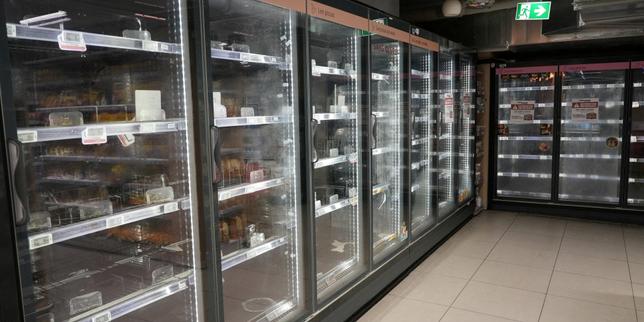
- DWThis piece reads center
“describing the hacking as "unprecedented”
FramingAttributes Barrot's characterization of the attack as unprecedented, whereas other outlets state this as a direct quote or paraphrase without scare quotes, presenting it as his assessment of the incident's severity.
Read the original - Courthouse NewsThis piece reads center
“Paris prosecutor announced an investigation”
Read the original  The Scotsmannot ratedRead the original

- The Jerusalem PostThis piece reads center
“disrupted refrigeration systems at hundreds of businesses”
What's left outAdds context about wider cyberattacks linked to war, connecting this incident to regional conflict dynamics that other outlets do not mention.
Read the original 

- BloombergThis piece reads center-right
“created havoc in hundreds of supermarkets”
Word choiceUses "havoc" to describe the impact, a more dramatic term than the factual descriptions of destroyed food and triggered fires that other outlets rely on.
Read the original - Toronto SunThis piece reads center-right
“unprecedented in both its scale and its level of aggression”
Read the original

Placements are generated by an AI model from each article’s own headline and summary, and every quotation above is checked to be a real substring of that article before it is published. How this is done
Prism is free and carries no advertising. Support it if it was useful.