US Navy strikes Iranian-linked vessels in Gulf of Oman and Arabian Sea over blockade violations
Reported by
A dot shows how that piece reads — Prism rates articles, not outlets, and shows the words behind each placement below. No dot means the piece isn’t rated. How the ratings work

What happened
The account the coverage agrees on, with contested figures attributed rather than asserted. This is not one of the five framings below — it is the ground they all stand on.
On Saturday, November 8, explosions were reported in southern Iran; Iranian state media said officials had not confirmed missile strikes on Iranian territory. The US military said it struck a cargo ship flying a St. Kitts and Nevis flag in the Gulf of Oman after the vessel violated a naval blockade by attempting to leave an Iranian port, firing precision munitions at its stern according to CENTCOM. Iran reported three oil tankers caught fire in or near the Strait of Hormuz. The US also announced a new task force, 'Task Force Iron Gate', aimed at disrupting weapons shipments and land transit routes into Iran, which Iranian officials dismissed, saying Tehran had already prepared for such measures.
How the spectrum reads this story
The same event, summarised as five points on the political spectrum would each tend to frame it. These are generated by an AI model and are a starting point, not the last word.
Left
The US military action reflects an escalating economic war against Iran through naval blockades and now coordinated task forces designed to strangle the country's trade and weapons access. This represents Washington expanding coercive measures that harm civilian commerce and global shipping while Iran responds by asserting its right to defend its territory and maintain trade routes. The new task force signals the US willingness to enforce extraterritorial economic control, treating international waters and neutral shipping as extensions of American military policy.
No article in this story reads this way. This is how the position tends to frame events like it — written by a model, not quoted from anyone.
Center-left
The US is taking aggressive steps to enforce its Iran policy through military strikes and coordinated economic pressure via a new task force. While the blockade aims at legitimate nonproliferation goals, the incident with the commercial vessel raises questions about proportionality and the risks of escalation in an already tense region. The task force represents a more comprehensive approach to Iran sanctions, but the broader context of an eight-month conflict and disrupted Strait of Hormuz transit shows how these measures create instability that affects global energy markets.
Drawn from 3 articles placed here, below.
Center
Both Iran and the US are engaged in tit-for-tat measures in the Gulf region, with the US enforcing a naval blockade and now a broader task force to restrict Iranian trade and weapons transit, while Iran has closed passage through the Strait of Hormuz and reported incidents involving ships. The strike on the cargo vessel reflects CENTCOM's enforcement of blockade rules; the explosions in Iran's south remain disputed as to their cause. A new coordinated task force suggests the US commitment to sustained pressure, while Iranian dismissals suggest Tehran views these steps as manageable. The real risk is that commercial shipping becomes collateral in an escalating standoff.
Drawn from 5 articles placed here, below.
Center-right
The US is taking necessary action to prevent Iran from acquiring advanced weapons and circumventing international pressure through both direct military enforcement and a new interagency task force targeting land routes. The strike on the blockade-violating cargo vessel was a measured response to rule-breaking; the task force represents smart policy coordination to close loopholes in existing sanctions. Iran's explosions, which Iran itself claims were not US strikes, and its threats to shipping demonstrate that Tehran remains willing to disrupt global commerce. These measures protect vital interests in a region where Iran has shown willingness to escalate tensions.
Drawn from 2 articles placed here, below.
Right
The US military is correctly enforcing rules against an adversary attempting to exploit shipping routes to resupply weapons and evade sanctions. Task Force Iron Gate represents the kind of decisive action needed to prevent Iran from threatening regional stability and global energy supplies. The blockade enforcement and the new task force are legitimate tools of national security; Iranian officials' dismissal of these measures and their own disruption of the Strait of Hormuz show they have no interest in de-escalation. Strong American resolve, backed by military capability and coordinated policy, is what Iran understands.
No article in this story reads this way. This is how the position tends to frame events like it — written by a model, not quoted from anyone.
Hear two viewpoints debate it
Pick two viewpoints and Prism writes a short, six-turn exchange about this story in each one’s own voice — steel-manned, no winner declared. Each pairing is written once and then saved for every reader. The voices are AI syntheses of a tradition, not real people.
New pairing — Prism will write it now.
How each outlet covered it
Where Prism places each piece — not the outlet in general — with the words from that piece that put it there, and the photograph the outlet chose. Picking a photo is a framing decision too.
- The NationalThis piece reads center-left
“Smoke blanketing the strait': Iran steps up campaign of threats to shipping”
Read the original - Al JazeeraThis piece reads center-left
“As fears of an escalation grow, Washington announces 'Task Force Iron Gate”
FramingOpens with escalation anxiety as the framing context for the task force announcement, whereas outlets covering the task force separately lead with the policy itself.
Read the original  NDTVThis piece reads center-left
“choke land transit routes Into Iran”
Word choiceUses 'choke' twice, mirroring language about Iran's own Strait of Hormuz closure in the same sentence — creates symmetry that softens how the US blockade sounds.
Read the original- Taipei Timesnot ratedRead the original
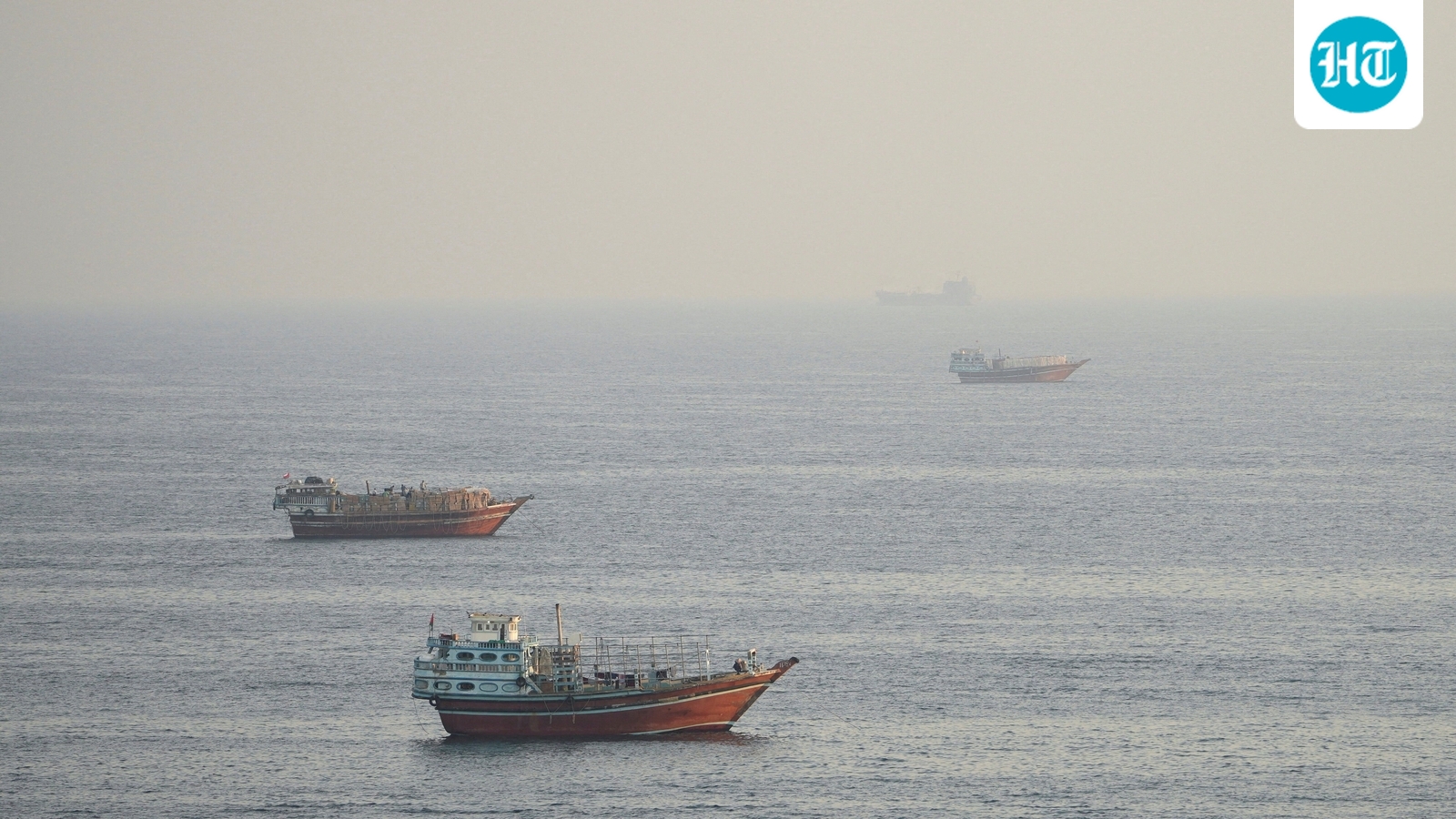 Hindustan TimesThis piece reads center
“Iran says blasts in southern region not US attacks as both sides report ships”
Read the original NewsNationThis piece reads center
“Iranian officials are dismissing a newly launched US task force”
Read the original- The Straits TimesThis piece reads center
“Iranian media suggested explosions in southern Iran on Saturday evening were”
Read the original - DWThis piece reads center
“US military said a vessel trying to leave an Iranian port was hit due to the”
Read the original 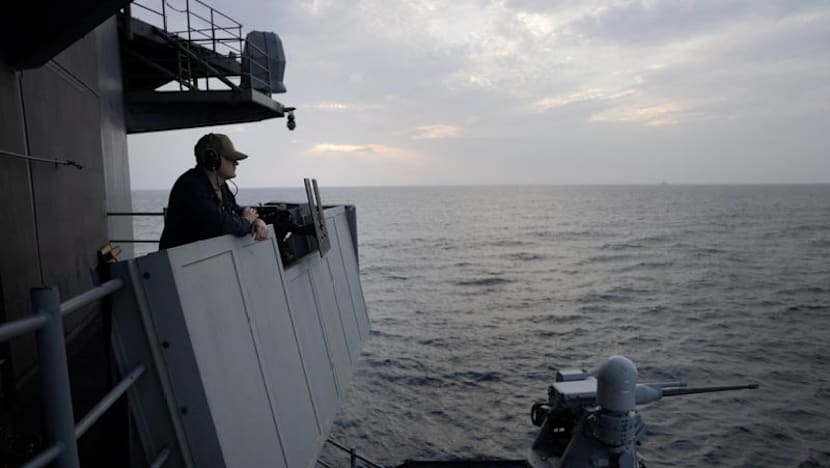 CNAThis piece reads center
“US launches task force to disrupt land transit routes into Iran”
Read the original Just the NewsThis piece reads center-right
“alleged blockade violation”
Word choiceSoftens the characterization by using 'alleged' where other outlets state the blockade enforcement as fact, reading as doubt about US justification.
Read the original- EuronewsThis piece reads center-right
“US forces strike commercial vessel in Gulf of Oman after crew 'ignored repeated”
Word choicePuts the repeated warnings in scare quotes in the headline, signaling skepticism about whether warnings were actually given or emphasized.
Read the original
Placements are generated by an AI model from each article’s own headline and summary, and every quotation above is checked to be a real substring of that article before it is published. How this is done
Prism is free and carries no advertising. Support it if it was useful.