Finland and Norway leaders call Putin to discuss Ukraine peace efforts
Reported by
A dot shows how that piece reads — Prism rates articles, not outlets, and shows the words behind each placement below. No dot means the piece isn’t rated. How the ratings work

What happened
The account the coverage agrees on, with contested figures attributed rather than asserted. This is not one of the five framings below — it is the ground they all stand on.
Finnish President Alexander Stubb and Norwegian Prime Minister Jonas Gahr Støre spoke by phone with Vladimir Putin about ending the war in Ukraine. Denmark's Prime Minister Frederiksen criticized the call, saying she is "very sceptical" of the outreach and that the Nordic leaders had not coordinated with allies beforehand, though they did consult Ukraine. The 90-minute conversation was the first call between pro-Ukrainian European leaders and Putin in over a year.
How the spectrum reads this story
The same event, summarised as five points on the political spectrum would each tend to frame it. These are generated by an AI model and are a starting point, not the last word.
Left
Finland and Norway's direct engagement with Putin, while controversial among Western allies, reflects a pragmatic European approach to pursuing peace in Ukraine independent of US-led frameworks. The criticism from Denmark and other allies reveals how NATO's consensus-based structure can constrain diplomatic flexibility, but these Nordic nations rightly prioritized direct communication with Moscow to explore peace possibilities rather than adhering to rigid allied coordination that may perpetuate conflict.
No article in this story reads this way. This is how the position tends to frame events like it — written by a model, not quoted from anyone.
Center-left
The Finnish and Norwegian leaders' call with Putin shows genuine effort to explore peace channels, but Frederiksen's concerns about coordination deserve weight. European unity matters for leverage with Russia, and unilateral diplomatic moves risk undermining collective negotiating strength. That said, Ukraine was consulted beforehand, which suggests responsible diplomacy—though the lack of broader allied coordination could have been handled better to maintain the diplomatic cohesion needed to actually end this war.
Drawn from 2 articles placed here, below.
Center
Finland and Norway attempted direct diplomatic engagement with Putin on Ukraine, consulting Ukraine beforehand but not coordinating fully with other European allies first. This created friction within Europe's response: Denmark's criticism reflects legitimate concerns about unified strategy, yet the Nordic countries' willingness to talk directly to Moscow may be necessary for any negotiated settlement. The challenge is balancing principled allied unity with the pragmatic reality that peace talks eventually require engagement with all parties.
Drawn from 2 articles placed here, below.
Center-right
While Finland and Norway's initiative to engage Putin reflects a desire for peace, their failure to coordinate with NATO allies first was a significant misstep that weakens European unity when it is most needed. Frederiksen is right to be sceptical—uncoordinated diplomatic overtures to an aggressor can undermine the alliance's bargaining position and send the wrong signal about resolve. European countries must present a unified front; individual nations pursuing separate diplomatic channels only benefits Moscow.
Drawn from 1 article placed here, below.
Right
Finland and Norway's unilateral call to Putin demonstrates the dysfunction of multilateral European coordination and NATO's consensus requirements. Rather than being hamstrung by committee decision-making, sovereign nations should pursue their own national interests directly with Moscow. This call shows that when countries act independently without being bound by consensus requirements from other allies, they can actually achieve diplomatic progress—exactly why excessive institutional constraints on national action produce only stagnation.
No article in this story reads this way. This is how the position tends to frame events like it — written by a model, not quoted from anyone.
Hear two viewpoints debate it
Pick two viewpoints and Prism writes a short, six-turn exchange about this story in each one’s own voice — steel-manned, no winner declared. Each pairing is written once and then saved for every reader. The voices are AI syntheses of a tradition, not real people.
New pairing — Prism will write it now.
How each outlet covered it
Where Prism places each piece — not the outlet in general — with the words from that piece that put it there, and the photograph the outlet chose. Picking a photo is a framing decision too.
- DWThis piece reads center-left
“criticizes Finland and Norway for calling Putin without coordinating”
What's left outEmphasizes in the headline that Ukraine was consulted, a detail that contextualizes the coordination question—other outlets mention this only in snippet text or not at all.
Read the original - Meduzanot ratedRead the original
- StuffThis piece reads center
“calls alleged Russian sabotage plot a 'grave violation' of NATO”
Read the original - The Moscow TimesThis piece reads center
“Russia and Ukraine Trade Deadly Strikes”
What's left outQuotes the Nordic leaders' stated purpose without framing context about allied criticism, presenting their rationale for the call as the primary focus.
Read the original  Daily MailThis piece reads center-right
“European fury after Finland and Norway's leaders hold direct talks”
Word choiceUses the word 'fury' in the headline, which assigns strong emotional language to allied response where other outlets describe it more neutrally as 'criticism', 'rebuke', or 'unease'.
Read the original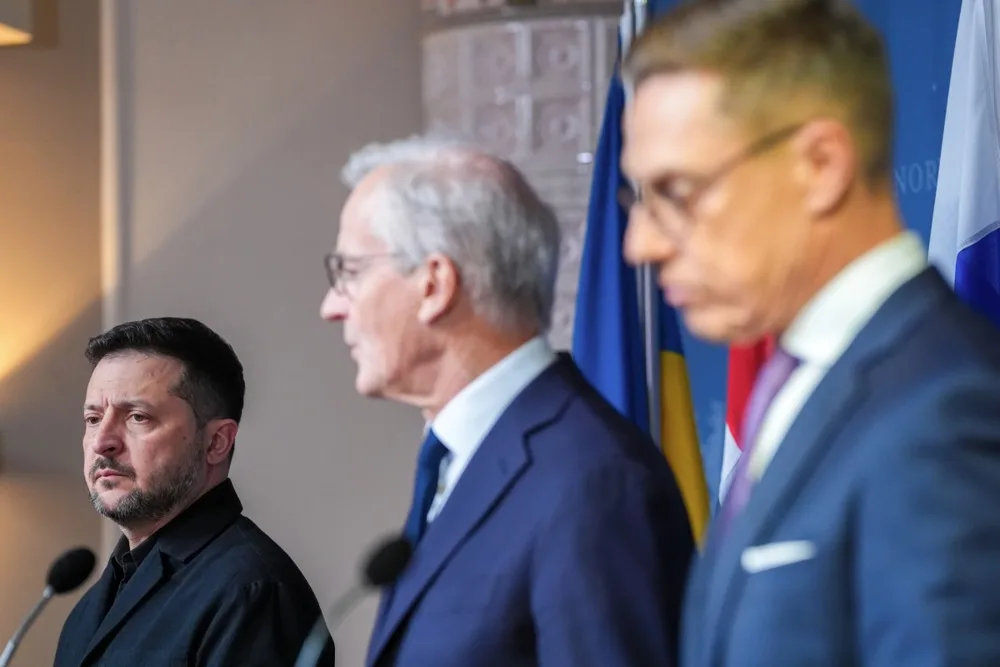 Brussels Signalnot ratedRead the original
Placements are generated by an AI model from each article’s own headline and summary, and every quotation above is checked to be a real substring of that article before it is published. How this is done
Prism is free and carries no advertising. Support it if it was useful.