Netanyahu denies UAE warned him of October 7 Hamas attack before it occurred
Reported by
A dot shows how that piece reads — Prism rates articles, not outlets, and shows the words behind each placement below. No dot means the piece isn’t rated. How the ratings work
CNN
What happened
The account the coverage agrees on, with contested figures attributed rather than asserted. This is not one of the five framings below — it is the ground they all stand on.
Israeli media reported that the UAE warned Prime Minister Netanyahu before the October 7, 2023 Hamas attacks of a planned major operation. Netanyahu has denied the reports. The claims come from a newly released book, "Kidnapped: 843 Days of Abandonment," cited by Haaretz. According to reports, Netanyahu did not relay the warning to his security chiefs. The story has emerged during Israel's election season.
How the spectrum reads this story
The same event, summarised as five points on the political spectrum would each tend to frame it. These are generated by an AI model and are a starting point, not the last word.
Left
Netanyahu's alleged suppression of an advance warning about October 7 exposes how political calculation and power consolidation can override security accountability. If he received intelligence about an imminent Hamas operation and failed to share it with security officials, this represents a catastrophic breach of duty to protect citizens. The incident demonstrates how individuals at the top can prioritize their own political position over public safety, and why systemic oversight and genuine accountability—not just elections—are essential to prevent such failures.
Center-left
The report that Netanyahu received a UAE warning about an October 7 attack but didn't alert his security team raises serious questions about his judgment and fitness for office. While the details remain disputed, the allegations deserve serious investigation. If true, this would represent a significant failure in crisis management and an abuse of executive power. The Israeli public deserves transparent answers about what Netanyahu knew, when he knew it, and why security chiefs weren't informed—especially as the country prepares for elections.
Center
Reports claim Netanyahu received advance warning of the October 7 attack but hasn't disclosed it to security officials, yet he denies the allegations. The facts remain contested: Israeli media cited a new book as the source, but without independent verification or official acknowledgment, it's difficult to assess the accuracy. Both the potential seriousness of the charge and Netanyahu's right to defend himself against unconfirmed reports deserve consideration. An impartial investigation could clarify what happened, separate rumor from fact, and help voters make informed decisions.
Center-right
Netanyahu denies he was warned by the UAE about October 7, and it's worth noting these allegations come from political opponents during an election season when blame for the attacks is becoming a major campaign issue. Reports are based on a newly published book rather than official channels or direct testimony. While any security lapse would be serious, unverified claims made in the heat of electoral competition shouldn't be treated as established fact. Netanyahu deserves the opportunity to defend himself against charges that may reflect political calculation as much as genuine investigation.
Right
Netanyahu is facing politically motivated allegations that he received a warning he didn't act on, claims emerging conveniently during election season when his opponents are seeking to pin blame for October 7 on him. The reports rely on a book rather than direct evidence or statements from the UAE itself. This looks like a coordinated attack by the media and political rivals to damage Netanyahu before voters decide, using unconfirmed allegations to undermine a leader who has made hard decisions in Israel's defense. The timing and sourcing suggest narrative-building rather than serious journalism.
Hear two viewpoints debate it
Pick two viewpoints and Prism writes a short, six-turn exchange about this story in each one’s own voice — steel-manned, no winner declared. Each pairing is written once and then saved for every reader. The voices are AI syntheses of a tradition, not real people.
New pairing — Prism will write it now.
How each outlet covered it
Where Prism places each piece — not the outlet in general — with the words from that piece that put it there, and the photograph the outlet chose. Picking a photo is a framing decision too.
 CNNnot rated
Word choiceUses 'bombshell' to signal major significance and newsworthiness; other outlets describe it more neutrally as a 'report' or 'new reporting,' which frames the revelation with more dramatic weight.
Read the original The New YorkerThis piece reads center-left
“The Warning Benjamin Netanyahu Ignored”
FramingStates as fact that Netanyahu 'ignored' the warning, whereas other outlets frame it as Netanyahu denying the claim or the report being newly revealed—the headline asserts a disputed conclusion rather than reporting the dispute itself.
Read the original New York PostThis piece reads center
“Netanyahu is scheduled to arrive in New York late on Sept. 23”
What's left outThe headline anchors Netanyahu's UN appearance to a legal threat and emphasizes his defiance by attending anyway; other articles focus entirely on the October 7 warning story, treating the UN visit as a separate matter.
Read the original Straight Arrow NewsThis piece reads center
“Netanyahu was warned before Hamas terror attacks on 10/7: Report”
Read the original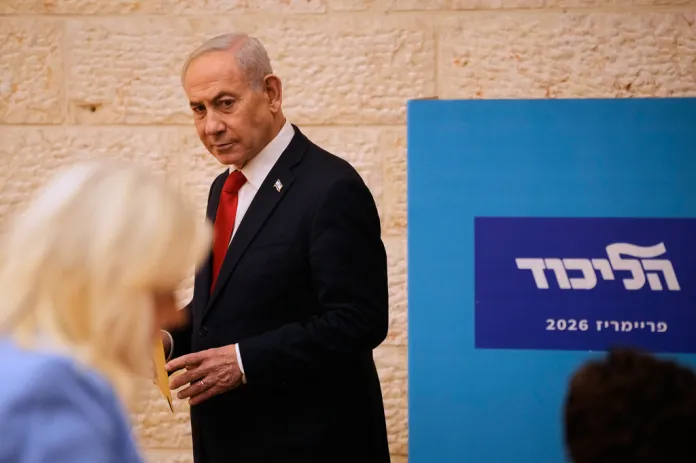 Washington ExaminerThis piece reads center-right
“blame for the tragedy becomes a hot potato ahead of next month's elections”
FramingExplicitly connects the report to electoral politics and suggests the allegation is being deployed tactically; other outlets mention elections only in passing or omit the political angle entirely.
Read the original
Placements are generated by an AI model from each article’s own headline and summary, and every quotation above is checked to be a real substring of that article before it is published. How this is done
Prism is free and carries no advertising. Support it if it was useful.