California voters reject new wealth tax on billionaires in statewide ballot measure
Reported by
A dot shows how that piece reads — Prism rates articles, not outlets, and shows the words behind each placement below. No dot means the piece isn’t rated. How the ratings work
What happened
The account the coverage agrees on, with contested figures attributed rather than asserted. This is not one of the five framings below — it is the ground they all stand on.
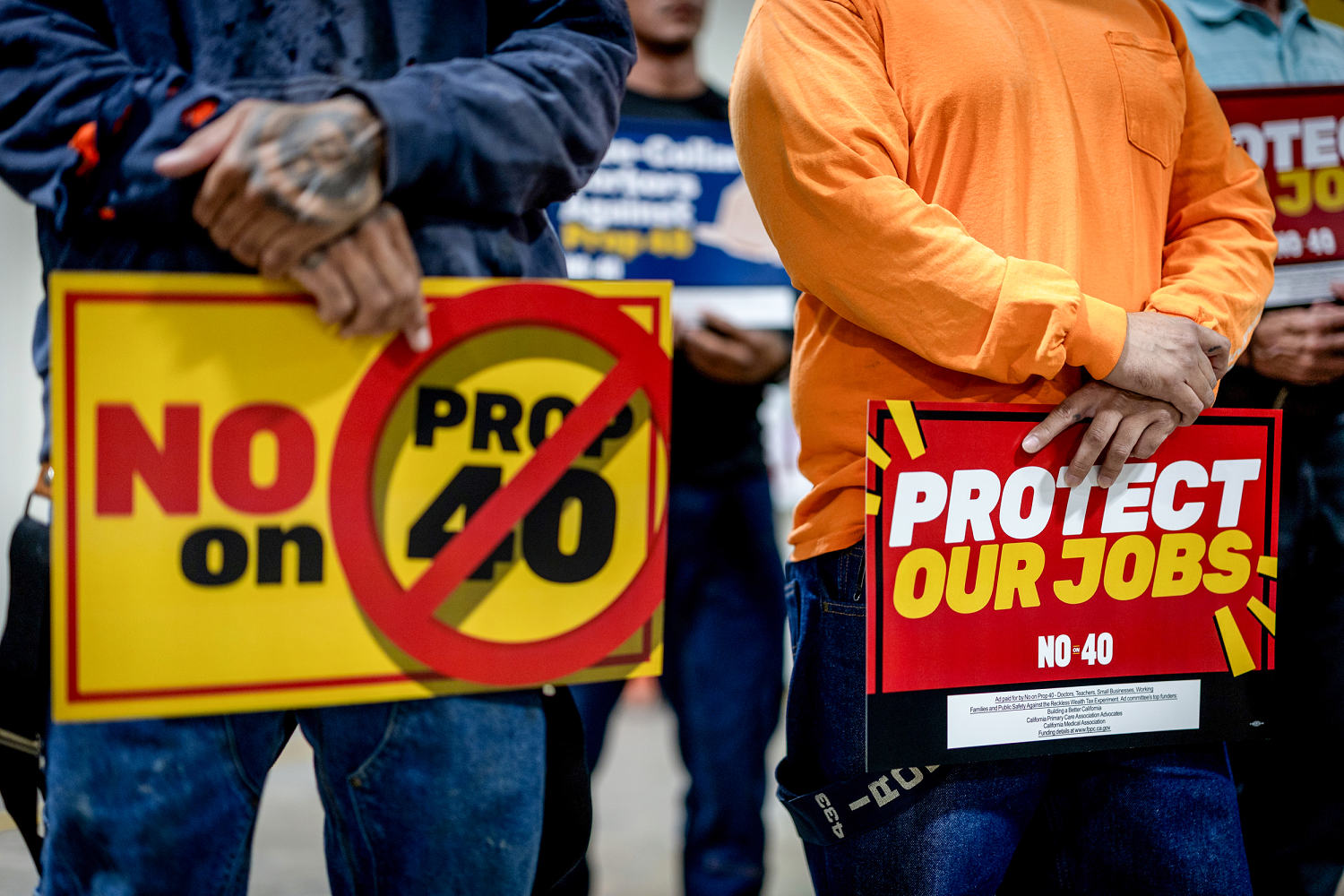
California voters rejected Proposition 40, a ballot measure that would have imposed a one-time 5% tax on the wealth of residents with net worth exceeding $1 billion, with most revenue directed to replace federal healthcare funding cuts. The measure split Democrats within the state and nationally and faced opposition from politicians, a teachers union, and other groups, along with a barrage of attack ads that set spending records for a tax-related measure in California.
How the spectrum reads this story
The same event, summarised as five points on the political spectrum would each tend to frame it. These are generated by an AI model and are a starting point, not the last word.
Left
Wealthy individuals and their allies successfully blocked a modest wealth tax despite its potential to fund healthcare, demonstrating how concentrated money in politics can thwart democratic efforts to address inequality and protect social services. The rejection reveals the structural power of billionaires to shape electoral outcomes, even in a progressive state, and underscores the need for broader campaign finance reform and tax reform that doesn't depend on individual voter referendums.
No article in this story reads this way. This is how the position tends to frame events like it — written by a model, not quoted from anyone.
Center-left
California voters rejected a reasonable proposal to tax billionaires for healthcare funding, a missed opportunity to address inequality and federal disinvestment in the state. While the measure had merit, the campaign's division among Democrats and heavy opposition advertising proved decisive, suggesting Democrats need better coordination and messaging on wealth taxation to win over swing voters concerned about economic effects.
Drawn from 1 article placed here, below.
Center
Proposition 40's defeat reflects genuine uncertainty about wealth taxes: supporters saw a fair way to fund healthcare while limiting inequality, opponents worried about economic harm and enforcement. The split among Democrats and the record spending on opposition ads suggest Californians wanted more debate before embracing such a novel policy, and that future tax measures may need broader consensus and clearer evidence of benefit to succeed.
Drawn from 4 articles placed here, below.
Center-right
California voters wisely rejected an experiment in wealth taxation that risked harming the economy and driving successful residents away. The measure's failure despite heavy support from progressives shows voters understand that targeting billionaires, however popular rhetorically, can have unintended economic consequences and that existing tax structures should be reformed before new ones are layered on.
No article in this story reads this way. This is how the position tends to frame events like it — written by a model, not quoted from anyone.
Right
Californians rejected a punitive wealth tax that would have targeted success and entrepreneurship under the guise of healthcare funding. The rejection demonstrates that voters reject class-warfare policies even in a blue state, and that such wealth confiscation threatens economic growth and individual property rights that form the foundation of prosperity and freedom.
No article in this story reads this way. This is how the position tends to frame events like it — written by a model, not quoted from anyone.
Hear two viewpoints debate it
Pick two viewpoints and Prism writes a short, six-turn exchange about this story in each one’s own voice — steel-manned, no winner declared. Each pairing is written once and then saved for every reader. The voices are AI syntheses of a tradition, not real people.
New pairing — Prism will write it now.
How each outlet covered it
Where Prism places each piece — not the outlet in general — with the words from that piece that put it there, and the photograph the outlet chose. Picking a photo is a framing decision too.
- NBC NewsThis piece reads center-left
“in a blow to the left”
Word choiceFrames the measure's defeat as a setback specifically for the political left, emphasizing partisan outcome rather than reporting it neutrally—other outlets describe the vote without labeling it as advantageous or disadvantageous to one side.
Read the original - CBS NewsThis piece reads center
“following a campaign that has split traditional allies”
Read the original  Just the NewsThis piece reads center
“Proposition 40 would have imposed a one-time 5% tax”
Read the original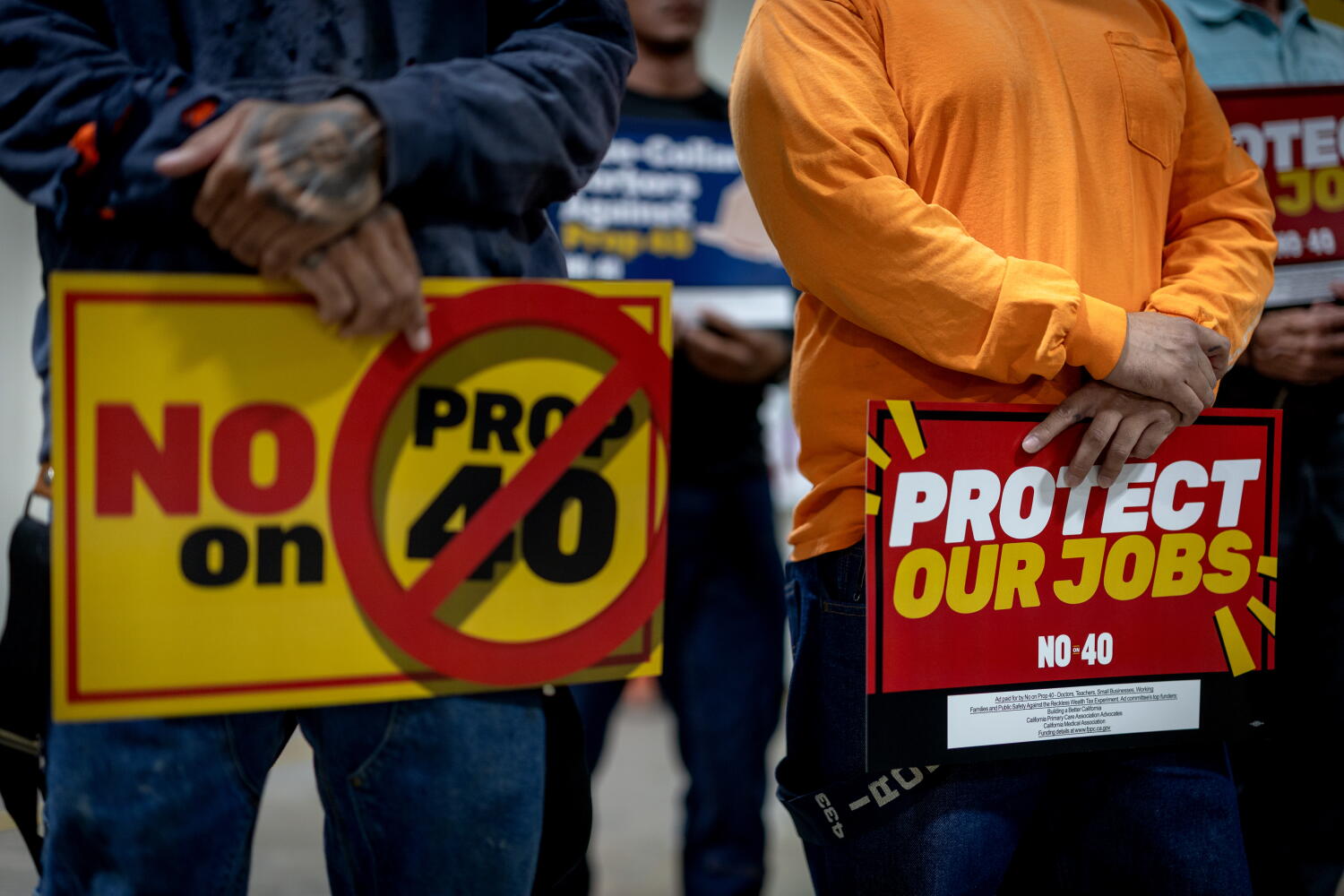 LA TimesThis piece reads center
“on concern squeezing California's ultra-rich would harm the economy”
FramingLeads with the reason voters rejected it—economic concern—rather than simply stating the rejection, which shapes how readers understand public reasoning and prioritizes the anti-tax argument.
Read the original- The EconomistThis piece reads center
“dividing Democrats”
FramingEmphasizes the measure's significance beyond California by noting national implications, suggesting broader political importance that other outlets do not foreground in their reporting of the vote itself.
Read the original
Placements are generated by an AI model from each article’s own headline and summary, and every quotation above is checked to be a real substring of that article before it is published. How this is done
Prism is free and carries no advertising. Support it if it was useful.