Trump administration asks Supreme Court to set aside 20,000 disputed California mail ballots
Reported by
A dot shows how that piece reads — Prism rates articles, not outlets, and shows the words behind each placement below. No dot means the piece isn’t rated. How the ratings work

What happened
The account the coverage agrees on, with contested figures attributed rather than asserted. This is not one of the five framings below — it is the ground they all stand on.
On November 2, 2026, the day before midterm elections, the Trump administration's Justice Department filed an emergency application asking the Supreme Court to order California to set aside approximately 20,000 mail-in ballots. The administration argues the voters are likely noncitizens who cast votes illegally. This appeal came after federal judges had already rejected the same request.
Developing story · 2 chapters
- Trump administration asks Supreme Court to set aside 20,000 disputed California mail ballotsyou are here
- Supreme Court rejects Trump administration's bid to set aside 20,000 California mail ballots
How the spectrum reads this story
The same event, summarised as five points on the political spectrum would each tend to frame it. These are generated by an AI model and are a starting point, not the last word.
Left
The Trump administration is making a last-ditch effort to suppress votes hours before an election by asking the Supreme Court to discard thousands of ballots without evidence. This emergency appeal, after lower courts already rejected it, represents a dangerous attempt to overturn the democratic process and deny eligible voters their say. The timing—one day before the election—reveals this is not a good-faith legal argument but a partisan maneuver to interfere with voting rights.
No article in this story reads this way. This is how the position tends to frame events like it — written by a model, not quoted from anyone.
Center-left
The Trump administration is pursuing an extraordinary legal tactic by asking the Supreme Court to intervene in a voting matter on the eve of elections, after federal courts have already rejected the same request. While voter eligibility matters deserve attention, the timing and emergency nature of this appeal raise serious concerns about using the courts to alter election outcomes rather than address fraud through normal legal channels. This sets a troubling precedent for pre-election judicial intervention.
Drawn from 1 article placed here, below.
Center
The administration is invoking emergency procedures to ask the Supreme Court to act on disputed ballots after lower courts refused. The core tension is real: election administrators do need accurate voter rolls, yet emergency court orders one day before voting creates institutional strain and public concern about judicial interference in elections. The Court faces a difficult choice between responding to potential administrative problems and protecting the integrity of the electoral process itself.
Drawn from 9 articles placed here, below.
Center-right
The Trump administration is raising legitimate concerns about voter eligibility by asking the Supreme Court to segregate ballots from individuals it suspects are noncitizens. Lower courts blocked the request, but the administration argues this requires the highest court's review. Whether or not the Supreme Court grants the emergency order, ensuring that only citizens vote is a valid government interest, and federal officials should have a fair opportunity to present evidence of noncitizen registration.
Drawn from 2 articles placed here, below.
Right
The Justice Department is attempting to enforce basic electoral law by asking the Supreme Court to prevent noncitizens from voting in California. Lower courts have blocked legitimate efforts to maintain voter rolls, and the administration is right to escalate this to the highest court. Election integrity depends on verifying citizenship, and California's resistance to examining its voter rolls raises questions about whether state officials are willing to ensure the legitimacy of voting.
No article in this story reads this way. This is how the position tends to frame events like it — written by a model, not quoted from anyone.
Hear two viewpoints debate it
Pick two viewpoints and Prism writes a short, six-turn exchange about this story in each one’s own voice — steel-manned, no winner declared. Each pairing is written once and then saved for every reader. The voices are AI syntheses of a tradition, not real people.
New pairing — Prism will write it now.
How each outlet covered it
Where Prism places each piece — not the outlet in general — with the words from that piece that put it there, and the photograph the outlet chose. Picking a photo is a framing decision too.
 NPRnot ratedHeadline changed after publishingRead the original
WasDOJ asks for Supreme Court to intervene on California ballot demands
NowThe Supreme Court rejects a DOJ push to separate California ballots
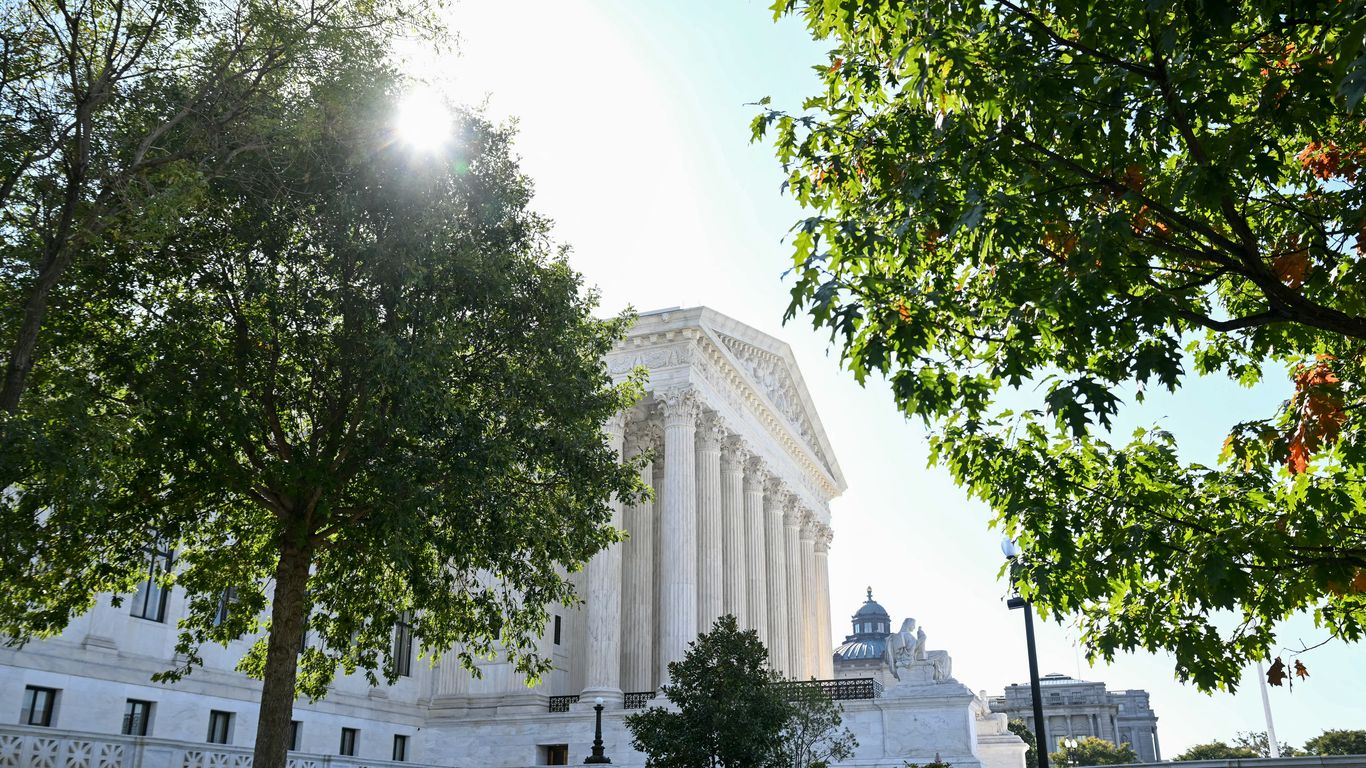 Axiosnot ratedRead the original
- Courthouse NewsThis piece reads center-left
“unproven claims of noncitizen voting in California”
Word choiceDirectly characterizes the administration's allegations as 'unproven' rather than reporting them as assertions—a judgment call other outlets avoid by stating facts without editorial assessment.
Read the original - NYTThis piece reads centerHeadline changed after publishing
Headline changed from: Trump Administration Asks Supreme Court to Intervene in California Ballot Case. To: Supreme Court Rejects Trump Administration Request to Intervene in California Ballot Case.
“administration lawyers asked the justices to immediately order California”
Read the original 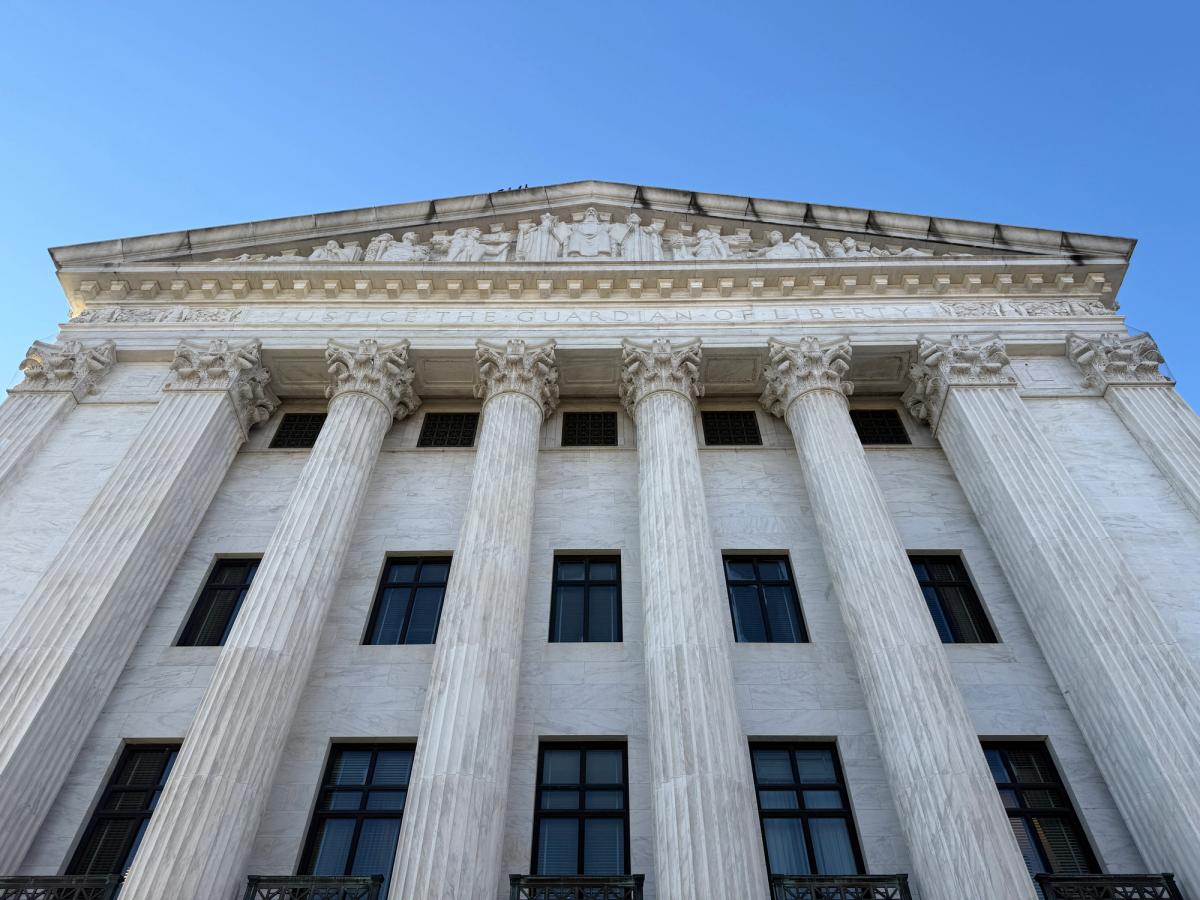 SCOTUSblogThis piece reads centerHeadline changed after publishing
Headline changed from: Trump administration asks Supreme Court to intervene in California ballots dispute. To: Supreme Court declines Trump administration's request to intervene in California ballot dispute.
“Trump administration asks Supreme Court to intervene”
Read the original UPIThis piece reads centerHeadline changed after publishing
Headline changed from: Trump asks Supreme Court to 'segregate' 20,000 California votes. To: Supreme Court denies Trump request to 'segregate' 20,000 California votes.
- AttributionAdded the attribution “denies” — the claim is now put in someone's mouth.
“Trump asks Supreme Court to 'segregate' 20,000 California votes”
Word choiceUses the administration's own word 'segregate' in the headline, which reads more technically neutral than 'set aside' or 'block' that other outlets favor—though the word carries its own connotations in an electoral context.
Read the original- LA TimesThis piece reads centerHeadline changed after publishing
Headline changed from: Trump lawyers ask Supreme Court to set aside 20,000 California ballots. To: Supreme Court rejects Trump administration's bid to set aside 20,000 California ballots.
“after federal judges have rejected the bid”
Read the original - CNBCThis piece reads centerHeadline changed after publishing
Headline changed from: DOJ asks Supreme Court to block California counting disputed mail-in ballots. To: Supreme Court rejects DOJ's bid to block California from counting disputed ballots.
“DOJ asks Supreme Court to block California counting disputed mail-in ballots”
Read the original  Financial TimesThis piece reads center
“White House urges justices to order some mail-in votes be set aside”
Read the original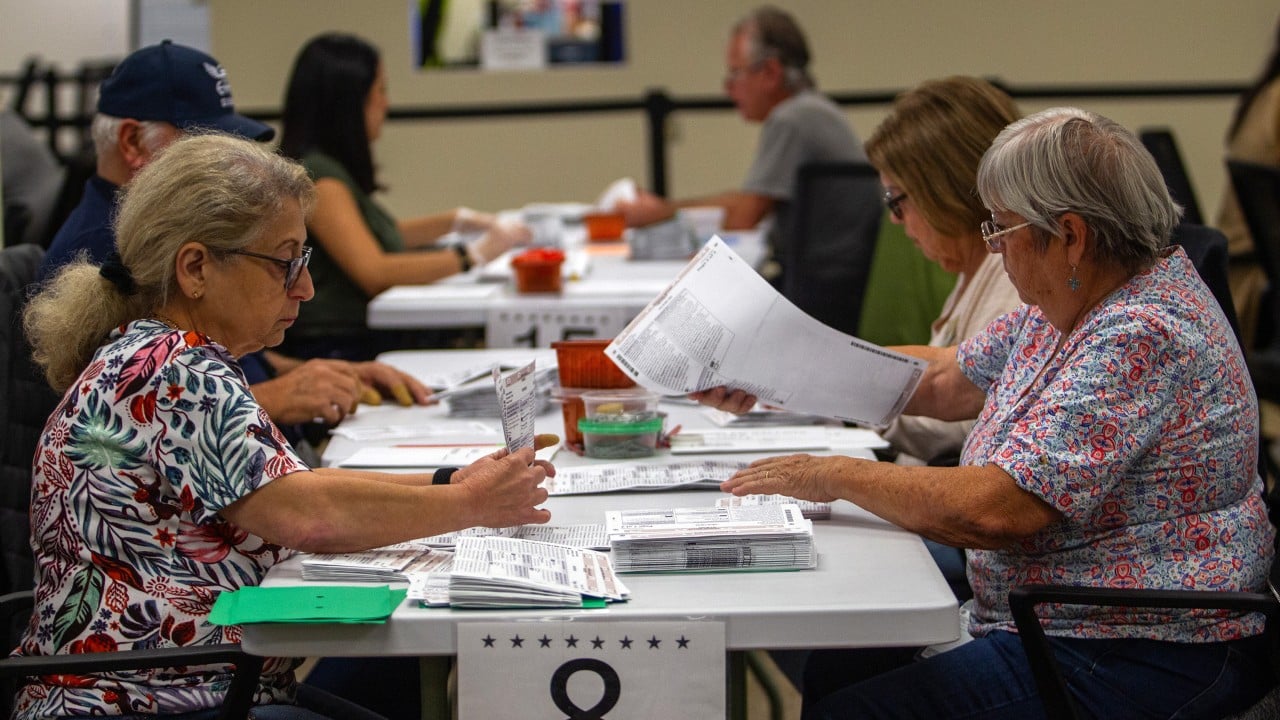 South China Morning PostThis piece reads center
“federal officials allege are probably non-US citizens”
Read the original NewsNationThis piece reads center
“thrusts the justices back into the center of the midterm campaign”
Read the original PBS NewsHourThis piece reads center
“people the federal government suspects may not be citizens”
Read the original Roll CallThis piece reads center-rightHeadline changed after publishing
Headline changed from: Supreme Court asked to intervene in California ballots case. To: Supreme Court denies DOJ request to intervene in California ballot case.
- AttributionAdded the attribution “denies” — the claim is now put in someone's mouth.
“could be noncitizens who illegally cast votes”
Word choiceStates the administration's characterization more directly ('illegally cast votes') compared to other outlets that say 'suspected' or 'likely' noncitizens, which conveys less certainty.
Read the original Washington ExaminerThis piece reads center-right
“long-shot appeal at Supreme Court”
Word choiceFrames the legal effort as a 'long-shot,' suggesting its prospects are poor—an assessment of likelihood most other outlets leave to readers to form.
Read the original
Placements are generated by an AI model from each article’s own headline and summary, and every quotation above is checked to be a real substring of that article before it is published. How this is done
Prism is free and carries no advertising. Support it if it was useful.