Annie Andrews wins South Carolina Senate seat, first openly gay senator elected
Reported by
A dot shows how that piece reads — Prism rates articles, not outlets, and shows the words behind each placement below. No dot means the piece isn’t rated. How the ratings work

What happened
The account the coverage agrees on, with contested figures attributed rather than asserted. This is not one of the five framings below — it is the ground they all stand on.
In midterm elections, three Democrats won U.S. Senate seats previously held by Republicans: Chris Pappas in an unspecified state, becoming the first openly gay man elected to the Senate; Annie Andrews in South Carolina, defeating Republican Darline Graham and flipping a seat last held by Democrat in 2005; and Abdul El-Sayed in Michigan, defeating Republican Mike Rogers to become the nation's first Muslim senator. El-Sayed won in a state Trump carried by 18 points in 2024.
Developing story · 7 chapters
- Americans vote in 2026 midterm elections
- Speaker Mike Johnson announces he will not seek Republican leadership after midterm defeat
- JD Vance blames Iran war for Republican midterm losses
- Abdul El-Sayed wins Michigan Senate race, becomes first Muslim elected to Senate
- Senator Chuck Schumer speaks after Democrats win Senate control in midterms
- Annie Andrews wins South Carolina Senate seat, first openly gay senator electedyou are here
- Trump and Republicans blame Iran war for GOP midterm defeats
How each side framed the previous chapter
Compare these with the five framings below to see what moved as the story developed — and what each side kept saying regardless.
Left
Democrats achieved a decisive victory against Trump and Republican control, flipping critical Senate seats in red and purple states and reclaiming the House. This represents rejection of right-wing policies and gives the party a mandate to advance progressive priorities—healthcare expansion, climate action, and economic justice—in the next Congress.
Center-left
Democrats won a significant midterm victory, taking back both chambers of Congress and flipping multiple Republican-held seats. This result shows voters rejected the Trump administration's direction and gives Democrats the opportunity to advance their agenda on healthcare, infrastructure, and economic policy while blocking Republican initiatives.
Center
Democrats achieved an unexpected midterm victory, winning both chambers and flipping Senate seats in traditionally Republican or swing states. The outcome defies historical patterns where the party in power typically faces losses in midterms. Both parties will need to assess what drove the result and adjust their strategies heading into 2028.
Center-right
Democrats won control of Congress in the 2026 midterms, flipping Senate seats in multiple states and taking the House. Republicans will need to evaluate their messaging and strategy. The divided government ahead means both parties will have to compromise on major legislation, though Democrats will lead the agenda.
Right
Democrats won the midterm elections, flipping Senate seats and taking control of both chambers. This setback for Republicans and the Trump administration reflects a challenging political environment. Conservatives must regroup and develop a stronger platform to compete in 2028 and defend Republican interests against the Democratic majority.
How the spectrum reads this story
The same event, summarised as five points on the political spectrum would each tend to frame it. These are generated by an AI model and are a starting point, not the last word.
Left
These victories represent a genuine repudiation of Trump's political movement and a mandate for a more progressive, inclusive Senate. El-Sayed's win in a Trump state shows voters rejected the Republican agenda, and Andrews' triumph in South Carolina demonstrates that even deep-red states will abandon the GOP when offered a real progressive alternative. These are the first cracks in Republican dominance and signals that a younger, more diverse Democratic coalition is taking power.
No article in this story reads this way. This is how the position tends to frame events like it — written by a model, not quoted from anyone.
Center-left
Democrats achieved significant gains in Senate races that were viewed as difficult terrain. Three wins—including in South Carolina, which hasn't elected a Democrat to the Senate since 2005, and in Michigan where Trump won by a wide margin—show that strong candidates with real credentials can break through even in Republican-leaning states. The diversity of these victors reflects a changing electorate and demonstrates that Democrats can compete and win across diverse districts.
Drawn from 1 article placed here, below.
Center
The midterm Senate results show a mixed political landscape where both parties face real challenges. Democrats flipped some seats in unexpected places, suggesting neither party has an insurmountable advantage nationally. The fact that candidates with diverse backgrounds and progressive platforms won in states Trump carried indicates voters are making granular choices based on individual candidates and local issues, not simply following national partisan trends. These results complicate easy predictions about either party's direction.
Drawn from 2 articles placed here, below.
Center-right
Democrats won a few Senate seats in this cycle, including some upsets in traditionally Republican areas. These victories largely reflect strong individual candidacies and particular local factors rather than a broad rejection of Republican governance. While Democrats should be credited with competitive campaigns, the overall Senate balance remains competitive, and Republicans retain significant strength in most states that Trump won.
No article in this story reads this way. This is how the position tends to frame events like it — written by a model, not quoted from anyone.
Right
Democrats managed to win a handful of Senate races, but this reflects effective Democratic campaign tactics and candidate recruitment in specific states rather than any fundamental shift in American politics. The fact that Republicans still hold most seats in Trump-supporting states shows the underlying strength of conservative governance. These isolated Democratic wins should not obscure the continued Republican dominance across the country and the failure of the progressive agenda to gain broad acceptance.
No article in this story reads this way. This is how the position tends to frame events like it — written by a model, not quoted from anyone.
Hear two viewpoints debate it
Pick two viewpoints and Prism writes a short, six-turn exchange about this story in each one’s own voice — steel-manned, no winner declared. Each pairing is written once and then saved for every reader. The voices are AI syntheses of a tradition, not real people.
New pairing — Prism will write it now.
How each outlet covered it
Where Prism places each piece — not the outlet in general — with the words from that piece that put it there, and the photograph the outlet chose. Picking a photo is a framing decision too.
 Common Dreamsnot rated
Word choiceUses a loaded political characterization where other outlets refer to Graham neutrally by name or title alone.
Read the original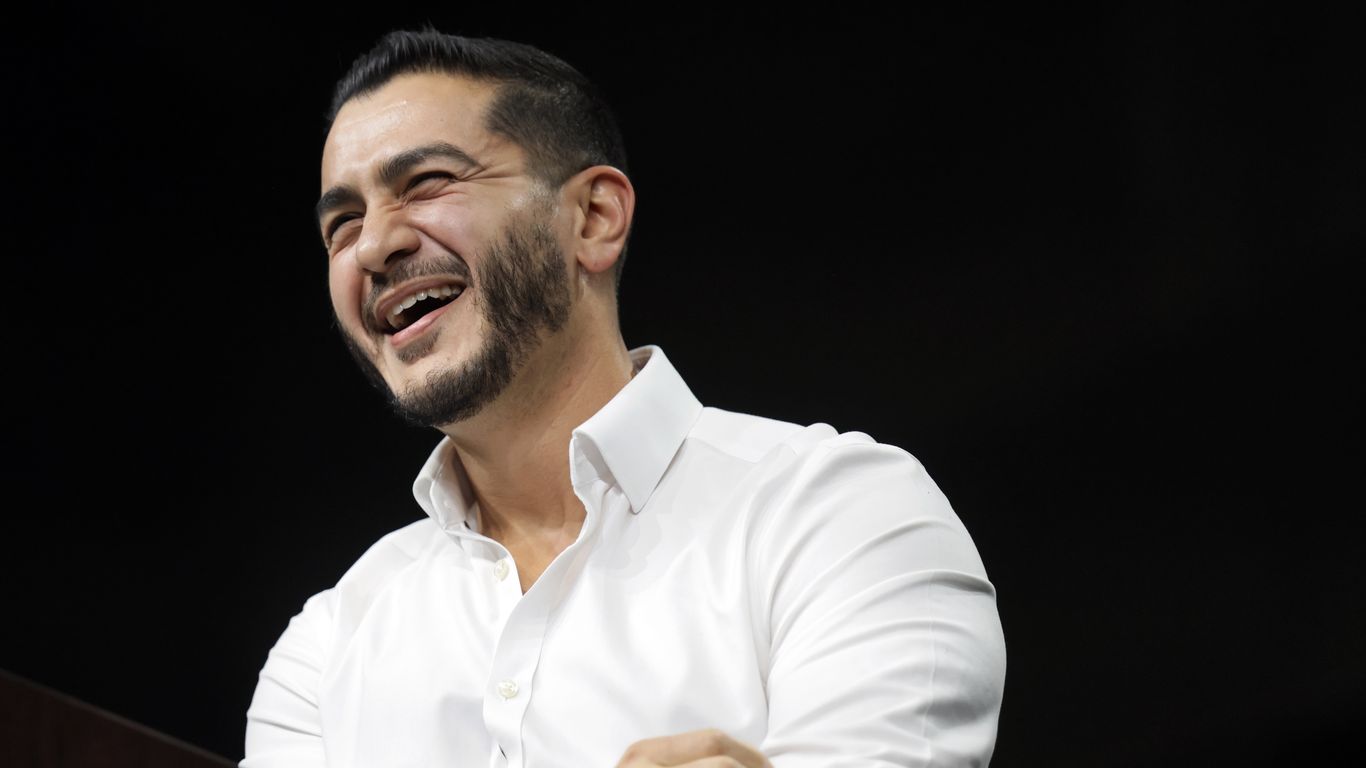 AxiosThis piece reads center-left
“unapologetically progressive candidate can win in a battleground state”
FramingExplicitly frames El-Sayed's political positioning and suggests his ideology as a notable aspect of his appeal, where other outlets report the win more neutrally.
Read the original- The American ConservativeThis piece reads center
“Annie Andrews Wins SC Senate Race”
Read the original - Balkan InsightThis piece reads center
“Chris Pappas makes history as first openly gay man elected to US Senate”
Read the original
Placements are generated by an AI model from each article’s own headline and summary, and every quotation above is checked to be a real substring of that article before it is published. How this is done
Prism is free and carries no advertising. Support it if it was useful.