Judge blocks Trump DHS field operations targeting voter fraud during midterm elections
Reported by
A dot shows how that piece reads — Prism rates articles, not outlets, and shows the words behind each placement below. No dot means the piece isn’t rated. How the ratings work

What happened
The account the coverage agrees on, with contested figures attributed rather than asserted. This is not one of the five framings below — it is the ground they all stand on.
U.S. District Judge Araceli Martínez-Olguín blocked Department of Homeland Security field operations in nine states, including California, Connecticut, Georgia, Missouri and Nevada. The ruling, issued Wednesday, bars DHS agents from conducting elections-related field interviews aimed at identifying noncitizens registered to vote. The injunction applies through election day, with the block staying in effect until Friday. The judge found DHS violated the Voting Rights Act.
How the spectrum reads this story
The same event, summarised as five points on the political spectrum would each tend to frame it. These are generated by an AI model and are a starting point, not the last word.
Left
A federal judge has rightly blocked an error-prone Trump administration scheme to suppress voting rights. The DHS operations represented a baseless attempt to prove noncitizen voting is widespread—a myth used historically to justify voter intimidation and restrict minority participation. The Voting Rights Act violation finding vindicated those who warned that discriminatory door-to-door questioning of citizens about immigration status would chill voting among legal immigrants and people of color. This ruling protects the integrity of elections from bad-faith suppression.
No article in this story reads this way. This is how the position tends to frame events like it — written by a model, not quoted from anyone.
Center-left
A federal judge blocked DHS field operations that raised serious civil liberties concerns. The agency's door-to-door questioning about immigration status and voting history appeared to violate the Voting Rights Act and risked chilling legitimate voters from participating. While election security matters, evidence shows noncitizen voting is vanishingly rare, and the operations' broad scope raised questions whether they targeted protected classes disproportionately. The ruling appropriately restrains enforcement actions that risk harming voting access.
No article in this story reads this way. This is how the position tends to frame events like it — written by a model, not quoted from anyone.
Center
A judge has blocked a controversial DHS effort to investigate noncitizen voter registration in nine states, citing Voting Rights Act violations. The operations raised genuine questions about implementation and civil liberties protections, though election security is a legitimate government interest. The court's decision reflects tension between preventing fraud and protecting voters from overly broad investigations. Both election integrity and voting access matter; courts must weigh these competing interests carefully, and this judge determined the operations as conducted crossed the line.
Drawn from 1 article placed here, below.
Center-right
A federal judge blocked DHS efforts to investigate noncitizen voter registration, a legitimate election security concern. While the court cited Voting Rights Act violations, the broader question remains whether reasonable field interviews to verify voter eligibility constitute discrimination. Election integrity requires that only citizens vote, and investigating registration anomalies is standard practice. The ruling may hamper reasonable election administration, though the judge's stay until Friday allows potential modification of procedures to address civil liberties concerns while preserving some verification capability.
Drawn from 1 article placed here, below.
Right
A judge has blocked DHS efforts to investigate and remove noncitizens from voter rolls—part of a necessary crackdown on illegal voting. The administration's election security operations faced obstruction from a Biden-appointed judge using voting rights claims that don't apply to citizenship verification. Noncitizen voting, while prosecuted rarely, undermines election legitimacy when it occurs. Investigating voter rolls for ineligible registrants is routine election administration. This ruling prioritizes protecting potential violators over protecting American citizens' votes and represents judicial overreach into appropriate executive election security functions.
No article in this story reads this way. This is how the position tends to frame events like it — written by a model, not quoted from anyone.
Hear two viewpoints debate it
Pick two viewpoints and Prism writes a short, six-turn exchange about this story in each one’s own voice — steel-manned, no winner declared. Each pairing is written once and then saved for every reader. The voices are AI syntheses of a tradition, not real people.
New pairing — Prism will write it now.
How each outlet covered it
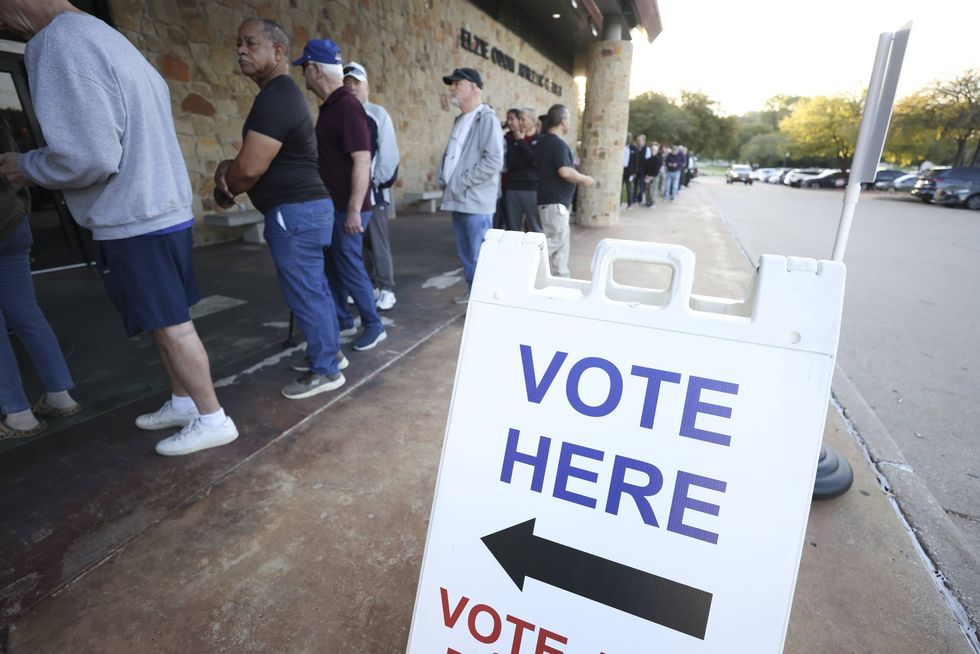
Where Prism places each piece — not the outlet in general — with the words from that piece that put it there, and the photograph the outlet chose. Picking a photo is a framing decision too.
 Common Dreamsnot rated
Word choiceCombines two editorial judgments in the headline—characterizing the program as faulty and the actual problem as trivial—that other outlets present as factual claims made by those challenging the program, not as settled conclusions.
Read the original- NYTThis piece reads center
“The ruling largely blocked homeland security agents from carrying out field”
Read the original  The Hillnot ratedRead the original
 Just the NewsThis piece reads center-right
“Judge blocks DHS voter fraud operations in 9 states”
Word choiceUses the administration's framing of the initiative as 'voter fraud operations' rather than the more neutral 'investigations into noncitizen voting' or 'elections-related field operations' that other outlets employ.
Read the original
Placements are generated by an AI model from each article’s own headline and summary, and every quotation above is checked to be a real substring of that article before it is published. How this is done
Prism is free and carries no advertising. Support it if it was useful.