Zelenskyy addresses EU summit amid deteriorating relationship with Trump over Ukraine support
Reported by
A dot shows how that piece reads — Prism rates articles, not outlets, and shows the words behind each placement below. No dot means the piece isn’t rated. How the ratings work

What happened
The account the coverage agrees on, with contested figures attributed rather than asserted. This is not one of the five framings below — it is the ground they all stand on.
Zelenskyy attended an EU summit in Brussels where European leaders reaffirmed support for Ukraine. He responded to Trump's pressure on Ukraine to halt strikes on Russian oil refineries by saying Ukraine will resume those attacks. Trump had linked the refinery strikes to rising diesel and fuel prices. The incident underscores tensions between Zelenskyy and Trump over Ukraine policy, with the EU closing ranks around Ukraine amid concerns about Starlink involvement and budget constraints.
Developing story · 2 chapters
- Zelenskyy accuses Trump of taking the 'wrong side' and betraying Ukraine
- Zelenskyy addresses EU summit amid deteriorating relationship with Trump over Ukraine supportyou are here
How each side framed the previous chapter
Compare these with the five framings below to see what moved as the story developed — and what each side kept saying regardless.
Left
The Trump administration's withdrawal of support from Ukraine reveals how US foreign policy prioritizes geopolitical convenience over democratic solidarity. Cutting intelligence sharing and restricting Starlink while Russia intensifies attacks on civilian infrastructure exposes the underlying logic of American power—allies matter only when useful. Zelenskyy's anger reflects a structural reality: smaller nations cannot count on Washington when domestic politics shift. The EU's request that he silence his criticism shows how dependent Ukraine has become on American goodwill, a vulnerability the system itself creates.
Center-left
The Trump administration's decision to restrict aid, intelligence, and Starlink access undermines Ukraine's ability to defend itself against Russian aggression at a critical moment. Zelenskyy's accusations of betrayal reflect legitimate frustration with a sudden shift in US commitment. While European leaders' suggestion that Zelenskyy moderate his criticism may be diplomatically prudent, the underlying problem is real: Ukraine needs sustained international support to survive, and unilateral US policy changes destabilize that coalition. The administration should reconsider restrictions that weaken a democratic ally.
Center
Zelenskyy's public criticism of Trump has created a diplomatic tension that complicates efforts to maintain a unified Western response to Russia. His decision to end the energy ceasefire and announce new attacks on Russian infrastructure may escalate the conflict in ways that reduce pressure for negotiation. The US limiting intelligence and Starlink access reflects frustration with Ukrainian strategy, though such restrictions carry real costs for civilian defense. European attempts to encourage diplomatic restraint on both sides are sensible, but the underlying disagreement about war strategy—whether to push for negotiations or intensify pressure on Russia—remains unresolved.
Center-right
Ukraine's leadership must acknowledge that American support, while substantial, is not unlimited and comes with expectations about strategy and public messaging. Zelenskyy's repeated criticism of Trump and his decision to escalate attacks on Russian energy infrastructure risk provoking a broader US withdrawal. The Trump administration's conditions on intelligence and Starlink access, while blunt, reflect legitimate concerns about how resources are being used. European leaders are right to counsel restraint: Ukraine's best path forward depends on maintaining Western coalition support, which requires accepting that allied nations have their own strategic interests and domestic constraints.
Right
The Trump administration is right to question unlimited commitment to a conflict where strategic interests are unclear and costs keep rising. Zelenskyy's attacks on Trump while seeking American aid reveal the contradictions in Ukrainian policy—accepting support while rejecting the conditions attached to it. Restricting intelligence sharing and Starlink access reasserts American sovereignty over its own resources and leverage. Rather than allow foreign leaders to dictate terms through public criticism, the US should prioritize American interests and consider whether continued escalation serves peace. The EU can bear more responsibility for its own defense if it disagrees with American caution.
How the spectrum reads this story
The same event, summarised as five points on the political spectrum would each tend to frame it. These are generated by an AI model and are a starting point, not the last word.
Left
Trump's intervention to protect fossil fuel prices by pressuring Ukraine to stop attacking Russian energy infrastructure reveals how US corporate interests override support for democracy under siege. Zelenskyy's defiance at the EU summit shows Ukraine will not be abandoned by American capital's concerns about fuel costs. The EU's unified backing of Ukraine demonstrates what solidarity looks like when not mediated through a billionaire's geopolitical interests.
No article in this story reads this way. This is how the position tends to frame events like it — written by a model, not quoted from anyone.
Center-left
Zelenskyy's firm response to Trump's demands shows Ukraine will chart its own military course despite pressure from the incoming US administration. The EU summit's reaffirmation of support is encouraging, but Trump's attempts to influence Ukrainian strategy and concerns over his Starlink involvement raise real questions about whether the US commitment to Ukraine will weaken. Ukraine faces a difficult winter with less certain American backing.
Drawn from 2 articles placed here, below.
Center
The EU summit offered Ukraine reassurance at a precarious moment, but the growing friction between Zelenskyy and Trump complicates Ukraine's position. Trump's effort to halt refinery strikes reflects legitimate concerns about global energy prices, yet Ukraine has military reasons for those strikes. The real challenge is whether Ukraine can sustain the war without full US support, and whether Trump's influence through figures like Musk will reshape the conflict's trajectory in ways the EU cannot offset.
Drawn from 1 article placed here, below.
Center-right
Ukraine's decision to defy Trump on refinery strikes, while understandable from a military standpoint, risks alienating the US at a critical moment when American support remains essential. The EU's backing is valuable but cannot replace US military and financial aid. Trump's concern about fuel prices affecting American consumers is legitimate, and Ukraine should weigh the costs of antagonizing the incoming administration. Coordination between allies on strategy, not defiance, serves Ukraine best.
Drawn from 1 article placed here, below.
Right
Trump correctly identified that Ukrainian strikes on Russian energy infrastructure drive up global fuel prices harming American families. Zelenskyy's refusal to cooperate with Trump's reasonable request shows Ukrainian leadership prioritizes maximizing US involvement over ending the conflict. The US should not be drawn into an open-ended war serving European interests while bearing the economic costs. Trump's skepticism about indefinite Ukraine support reflects sound America-First principles.
No article in this story reads this way. This is how the position tends to frame events like it — written by a model, not quoted from anyone.
Hear two viewpoints debate it
Pick two viewpoints and Prism writes a short, six-turn exchange about this story in each one’s own voice — steel-manned, no winner declared. Each pairing is written once and then saved for every reader. The voices are AI syntheses of a tradition, not real people.
New pairing — Prism will write it now.
How each outlet covered it
Where Prism places each piece — not the outlet in general — with the words from that piece that put it there, and the photograph the outlet chose. Picking a photo is a framing decision too.
- DWThis piece reads center-left
“souring relations with the US over Russia and Starlink and a big hole in the”
FramingIdentifies deteriorating ties as the headline's key context, whereas Remix News frames Zelenskyy's statement as the lead fact — different choices about what drives the story.
Read the original - The New RepublicThis piece reads center-left
“Zelenskiy Smiles as Entire EU Summit Laughs at Trump”
FramingFrames the moment as collective mockery of Trump, emphasizing Zelenskyy's skill at generating laughter — other outlets report the same summit more neutrally as reaffirming support.
Read the original 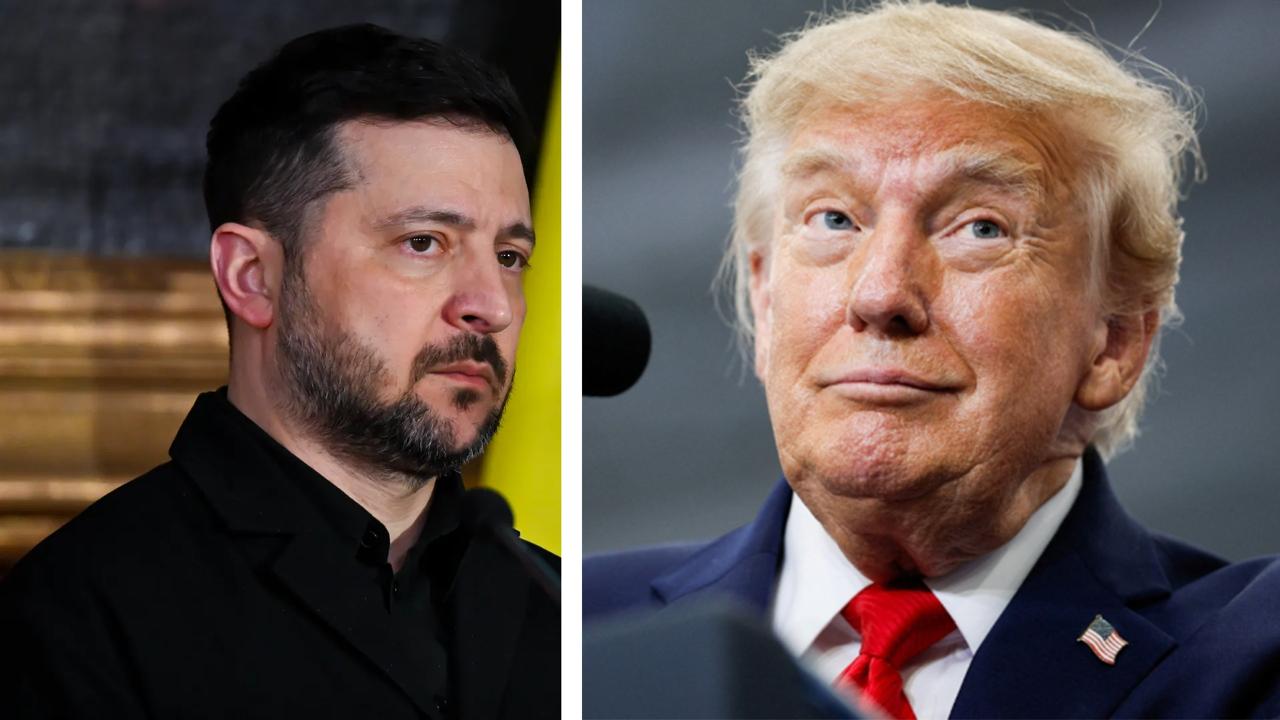 Remix NewsThis piece reads center-right
“Zelensky defies Trump, says Ukraine will resume strikes”
Word choiceUses 'defies' where other outlets describe the same action more neutrally as Zelenskyy stating Ukraine's position — the word emphasizes confrontation over policy disagreement.
Read the original
Placements are generated by an AI model from each article’s own headline and summary, and every quotation above is checked to be a real substring of that article before it is published. How this is done
Prism is free and carries no advertising. Support it if it was useful.