Vivek Ramaswamy's campaign ad featuring Amy Acton's estranged mother draws bipartisan criticism
Reported by
A dot shows how that piece reads — Prism rates articles, not outlets, and shows the words behind each placement below. No dot means the piece isn’t rated. How the ratings work
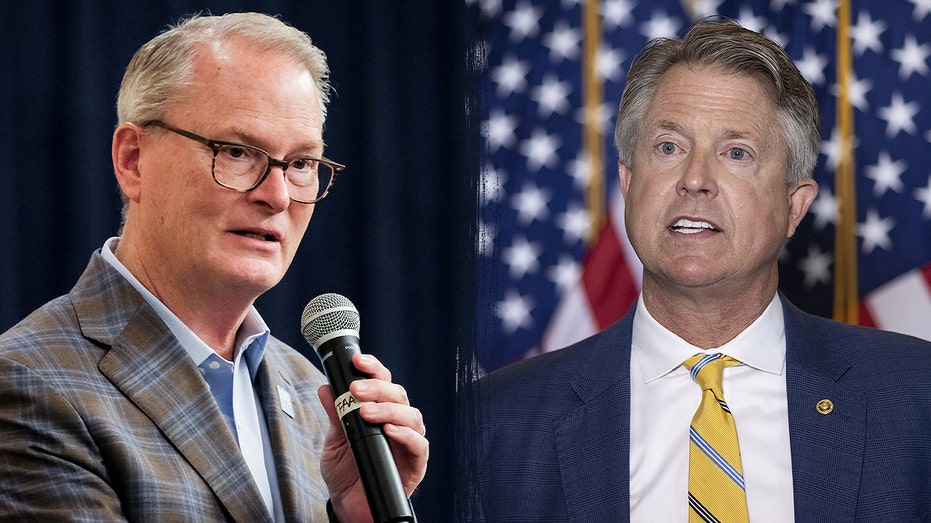
What happened
The account the coverage agrees on, with contested figures attributed rather than asserted. This is not one of the five framings below — it is the ground they all stand on.
Vivek Ramaswamy, the Republican gubernatorial nominee in Ohio, released a campaign ad featuring Amy Acton's estranged mother criticizing the Democratic nominee. Ohio Gov. Mike DeWine, a Republican, called the ad "deeply, deeply troubling" and "wrong" on Thursday and urged Ramaswamy to remove it. Ramaswamy has refused to apologize and said he would spend more to promote the ad. Donald Trump defended the ad, calling it "very powerful" and "well coordinated," putting him at odds with DeWine. The ad has drawn bipartisan criticism and divided Republicans.
Developing story · 2 chapters
- Vivek Ramaswamy defends controversial campaign ad featuring Amy Acton's estranged mother
- Vivek Ramaswamy's campaign ad featuring Amy Acton's estranged mother draws bipartisan criticismyou are here
How each side framed the previous chapter
Compare these with the five framings below to see what moved as the story developed — and what each side kept saying regardless.
Left
Ramaswamy's campaign weaponized a vulnerable woman—Acton's estranged mother—to score political points, exploiting family trauma rooted in childhood sexual abuse for electoral advantage. This represents how right-wing politics cynically deploys personal suffering to damage opponents. Vance's demand that Republicans stop complaining reveals how the GOP has normalized this kind of moral transgression; the party cares more about party unity than basic decency. Acton's strong polling suggests voters reject this tactic.
Center-left
The ad crosses a serious line by using Acton's estranged mother as a political weapon, particularly given the sensitive family history involving childhood sexual abuse allegations. While campaigns do attack opponents, using estranged family members to do so feels exploitative and cruel. Vance's insistence that Republicans stay silent about it is troubling—this is exactly when party members should speak up about standards. That Republican leaders like Husted felt compelled to distance themselves suggests even GOP figures recognize the ad went too far.
Center
Campaigns involve tough tactics, but there are limits to what most voters find acceptable. Using someone's estranged family member as a political weapon—especially given the traumatic history involved—strikes many people as crossing from hard-hitting to gratuitously cruel. Vance's "stop whining" framing dismisses legitimate discomfort with the approach, while Husted's willingness to break ranks suggests this damages Ramaswamy more than it helps him. The question is whether Ohio voters will punish the tactic or move past it by November.
Center-right
While opposition research often involves personal scrutiny, featuring an estranged family member in an ad raises uncomfortable questions about proportionality and decorum. Ramaswamy had plenty of policy grounds to criticize Acton without this approach. Vance's defense, though loyal, doesn't address the legitimate concern that the ad undermines the campaign's broader message. Husted's distance from it reflects reasonable Republican worry that the controversy is a distraction from winning arguments about governance and the economy.
Right
In modern politics, campaigns use available information to make their case, and Acton's mother's willingness to participate suggests she has legitimate concerns about her daughter's record. Democratic campaigns have used personal attacks too. The backlash is partly media-driven outrage designed to protect a Democrat. That said, Ramaswamy could have made his case on policy alone, and Vance's combative tone—telling Republicans to stop objecting—was unnecessary. The focus should be on who is better equipped to lead Ohio.
How the spectrum reads this story
The same event, summarised as five points on the political spectrum would each tend to frame it. These are generated by an AI model and are a starting point, not the last word.
Left
This ad represents the moral bankruptcy of modern Republican politics: weaponizing a woman's trauma of child sexual assault for electoral gain. That Trump not only defends it but celebrates it shows how completely the party has abandoned basic human decency in pursuit of power. When even a Republican governor like DeWine recognizes the ad as wrong, it exposes how far Trump has dragged the GOP from any ethical foundation. This is what happens when a political movement abandons principle for scorched-earth tactics.
No article in this story reads this way. This is how the position tends to frame events like it — written by a model, not quoted from anyone.
Center-left
The ad crosses a clear line by exploiting a family's private pain and a victim's trauma for political advantage. While negative campaigning is normal, targeting someone's estranged family member—especially one connected to abuse—goes too far. DeWine's criticism shows some Republicans recognize this boundary. Trump's enthusiastic defense is troubling because it signals that no line is too far for his wing of the party, emboldening candidates to push further into unethical territory.
Drawn from 3 articles placed here, below.
Center
This ad illustrates a genuine tension in campaign ethics. Opposition research and tough messaging are standard, but using a candidate's estranged family member—particularly one involved in a sensitive personal matter—raises real questions about where lines should be drawn. DeWine and Trump's disagreement reflects legitimate disagreement about campaign norms: how aggressive can you be without crossing into exploitation? The fact that Ramaswamy won't remove it despite significant pressure suggests he calculates the ad helps him electorally, which may be true, but it's worth asking whether winning this way damages the political process itself.
Drawn from 5 articles placed here, below.
Center-right
Negative ads are part of campaigning, and Democrats use family connections against Republicans too. That said, this ad involving a sensitive family matter seems unnecessarily harsh, and DeWine's concerns deserve respect. However, Trump's defense reflects that some voters respond to hard-hitting attacks on opponents' character and judgment. Ramaswamy's refusal to back down suggests he believes the ad effectively communicates something voters should know about Acton. Rather than declaring the ad off-limits, it's fair to let voters decide whether his tactics are appropriate.
No article in this story reads this way. This is how the position tends to frame events like it — written by a model, not quoted from anyone.
Right
The media outrage over this ad reveals their double standard: Democrats attack Republican family members constantly without consequence, but when Ramaswamy uses a legitimate connection to question Acton's character, suddenly everyone's horrified. Trump is right to defend it—this is how elections are actually won, by showing voters who their opponents really are. DeWine's squeamishness is exactly the problem with the Republican establishment: they're always apologizing to media critics instead of fighting. Ramaswamy's willingness to press forward despite pressure shows real leadership.
No article in this story reads this way. This is how the position tends to frame events like it — written by a model, not quoted from anyone.
Hear two viewpoints debate it
Pick two viewpoints and Prism writes a short, six-turn exchange about this story in each one’s own voice — steel-manned, no winner declared. Each pairing is written once and then saved for every reader. The voices are AI syntheses of a tradition, not real people.
New pairing — Prism will write it now.
How each outlet covered it
Where Prism places each piece — not the outlet in general — with the words from that piece that put it there, and the photograph the outlet chose. Picking a photo is a framing decision too.
 The Guardiannot rated
What's left outAdds contextual detail about the mother's own circumstances (staying with a husband charged with rape) that other outlets omit—information that frames the family dynamic as more complicated than just 'estranged mother.'
Read the original- The BulwarkThis piece reads center-left
“Vivek's Hideous Ad”
Word choiceUses the loaded adjective 'hideous' in the headline where other outlets use neutral descriptors like 'controversial' or 'widely criticized'—the word choice carries stronger moral judgment.
Read the original - HuffPostThis piece reads center-left
“Pretty Damn Low': Republicans Pan Ramaswamy's Ad”
FramingOpens with a direct critical quote from Republicans in the headline itself, foregrounding internal GOP opposition more immediately than outlets that lead with the ad's existence.
Read the original - Fox NewsThis piece reads center
“5 key moments from Kansas Senate debate”
What's left outThe snippet treats the Kansas debate as a separate lead story, making no mention of the Ramaswamy ad controversy at all—a notable omission given how many other outlets lead with it.
Read the original  ABC Newsnot ratedRead the original



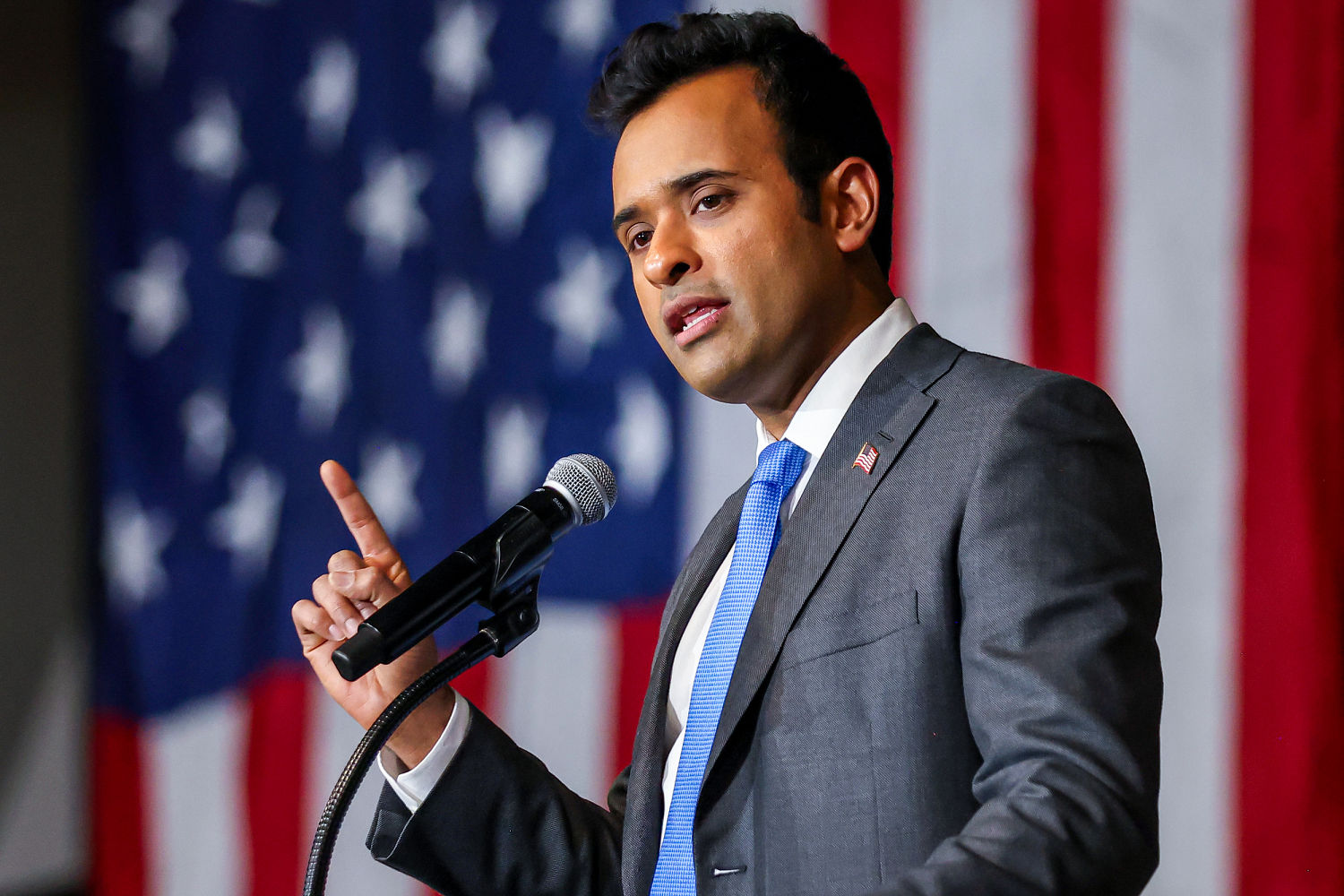
- CNBCnot ratedRead the original
Placements are generated by an AI model from each article’s own headline and summary, and every quotation above is checked to be a real substring of that article before it is published. How this is done
Prism is free and carries no advertising. Support it if it was useful.