Polish president convenes emergency talks amid escalating constitutional court crisis
Reported by
A dot shows how that piece reads — Prism rates articles, not outlets, and shows the words behind each placement below. No dot means the piece isn’t rated. How the ratings work
What happened
The account the coverage agrees on, with contested figures attributed rather than asserted. This is not one of the five framings below — it is the ground they all stand on.
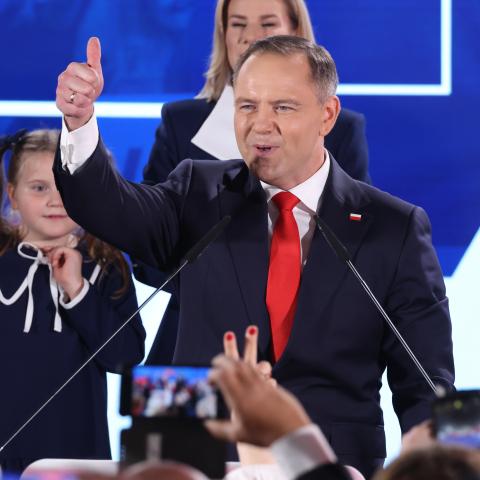
On October 30–31, Polish President Karol Nawrocki was physically involved in a confrontation at the Constitutional Tribunal building in Warsaw, where he was accused of refusing to swear in judges elected by parliament. The court's chief and other senior judges were suspended by a fellow judge. Nawrocki cut short a trip abroad to return to Warsaw, describing the events as a violation of Poland's constitutional order and a forced takeover by Prime Minister Donald Tusk's government. Police cordoned off the tribunal building. Nawrocki convened emergency talks with party representatives on Saturday.
Developing story · 3 chapters
- Polish government-backed judges oust constitutional court chief amid escalating standoff with opposition
- Polish president convenes emergency talks amid escalating constitutional court crisisyou are here
- Polish government and opposition escalate constitutional court crisis, Tusk rules out compromise
How each side framed the previous chapter
Compare these with the five framings below to see what moved as the story developed — and what each side kept saying regardless.
Left
This suspension reflects justified action against a court captured by the nationalist Law and Justice party, which used judicial power to block democratic reforms and entrench conservative control. Tusk's centrist government is attempting necessary structural repair of institutions corrupted under PiS rule. The mobilisation of police is regrettable but necessary when a sitting chief justice refuses to acknowledge lawful suspension. The real threat to rule of law came from years of court capture by the right; this is remedial action, not its violation.
Center-left
The government moved to remove a chief justice aligned with the nationalist opposition, claiming the court had been politicised under the previous PiS administration. While reform of a captured judiciary is legitimate, the method—suspending the chief justice and deploying riot police—carries risks. The optics of police at the court building and accusations of a coup, even if disputed, damage public confidence in institutions. A more transparent process with broader consensus would have been preferable, but the underlying aim of depoliticising the court is sound.
Center
Poland faces a genuine institutional crisis without clear villains. The Constitutional Tribunal was indeed politicised under PiS, justifying some reform. However, Tusk's government has used methods—sudden suspension, police deployment—that bypass normal procedures and inflame rather than resolve conflict. President Nawrocki's involvement suggests political rather than judicial reasoning. A sustainable fix requires negotiation across Poland's deep political divide, not unilateral action by either side. The court's legitimacy and public trust in institutions are at stake regardless of whose cause is just.
Center-right
The Tusk government has overreached in suspending the chief justice without proper process, relying on police force instead of institutional procedure. While concerns about PiS influence on the court may be legitimate, removing a sitting chief justice this abruptly—forcing him physically from the building—crosses a line into executive overreach. Tusk claims to restore rule of law while violating the very procedures that protect it. The nationalist opposition and President Nawrocki are right to call this dangerous, even if the court was previously captured.
Right
This is a power grab by Tusk's centrist government against the nationalist right. The chief justice, aligned with the patriotic Law and Justice party, is being purged through state police deployed to the court building—a textbook coup. The government claims to fight politicisation while using raw power to eliminate political opponents. President Nawrocki correctly rejected this assault on constitutional order. This reveals the hollowness of liberal claims about rule of law: when their interests are threatened, they abandon procedure and resort to force against the right.
How the spectrum reads this story
The same event, summarised as five points on the political spectrum would each tend to frame it. These are generated by an AI model and are a starting point, not the last word.
Left
This crisis reflects the deep institutional damage caused by years of right-wing judicial capture. The previous government packed the court with ideological allies, and Tusk's administration is now attempting to restore democratic legitimacy by replacing those judges through parliament. Nawrocki's obstruction and physical confrontation represent an undemocratic attempt to preserve a compromised institution that blocks reforms. The rule of law requires that courts answer to elected bodies, not to presidents allied with the ancien régime.
No article in this story reads this way. This is how the position tends to frame events like it — written by a model, not quoted from anyone.
Center-left
Poland faces a serious constitutional breakdown. While the previous government's judicial appointments were concerning, Tusk's government is using heavy-handed methods—suspending judges and forcing confrontations—that damage the independent judiciary regardless of past wrongs. The refusal to swear in parliament-elected judges and the physical scuffles suggest an administration willing to bend rules to win institutional battles. Democratic norms require respecting established procedures even when fixing past abuses.
Drawn from 1 article placed here, below.
Center
Poland is trapped in a cycle of institutional revenge between governing coalitions, each using their moments in power to rewrite the rules against the other. Tusk's government inherited a court stacked by predecessors, and wants to change it; Nawrocki, backed by the prior government's allies, is blocking that change. Both sides claim to defend democracy while acting in ways that corrode it. A genuine compromise—perhaps negotiated judicial reform with opposition input—is absent. Without it, Polish institutions will keep swinging wildly with each election.
Drawn from 2 articles placed here, below.
Center-right
The Tusk government is conducting a judicial purge disguised as reform. By suspending sitting judges and forcing a physical confrontation, it is dismantling institutional protections and concentrating power in the executive. While past governments may have made questionable appointments, the answer is not mob-style takeovers of the courthouse. Nawrocki's resistance, however imperfect, is a necessary check on executive overreach. Courts must retain independence from whoever holds office.
Drawn from 2 articles placed here, below.
Right
This is a textbook constitutional coup by Tusk against legitimate authority. Nawrocki represents continuity and constitutional order; the government is staging a forcible seizure of the judiciary to eliminate checks on its power. The suspension of judges, the physical assault at the courthouse, and the refusal to respect the president's constitutional role expose the liberal project's true face—rule by decree once opponents are removed. Poland's independence and sovereignty depend on resisting this power grab.
Drawn from 1 article placed here, below.
Hear two viewpoints debate it
Pick two viewpoints and Prism writes a short, six-turn exchange about this story in each one’s own voice — steel-manned, no winner declared. Each pairing is written once and then saved for every reader. The voices are AI syntheses of a tradition, not real people.
New pairing — Prism will write it now.
How each outlet covered it
Where Prism places each piece — not the outlet in general — with the words from that piece that put it there, and the photograph the outlet chose. Picking a photo is a framing decision too.
 Notes from PolandThis piece reads center-left
“physical confrontation with judges amid power struggle”
FramingDescribes the incident at the courthouse as a confrontation 'with judges' rather than specifying it involved the president confronting security or crowds, which locates agency ambiguously.
Read the original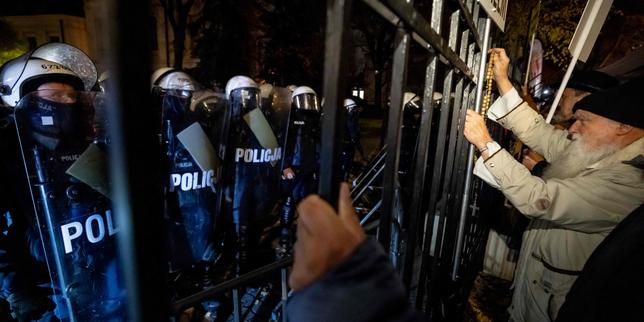 Le Mondenot rated
FramingOpens by naming Nawrocki's refusal as the trigger, establishing his actions as the initial point of conflict rather than contextualizing broader background.
Read the original- MeduzaThis piece reads center
“escalating judicial standoff between Prime Minister Donald Tusk and the”
Read the original - Politico EuropeThis piece reads center
“pushes his way into top court amid rule-of-law tussle”
Read the original - The Straits TimesThis piece reads center-rightHeadline changed after publishing
WasPoland's president accuses Tusk of forced takeover of country's top court
NowPolish PM Tusk vows support for tribunal amid court crisis
- AttributionDropped the attribution “accuses” — the headline no longer says who is claiming it.
- Loaded wordAdded “crisis”.
SpectrumCenter-right→CenterPrism reads the rewritten headline as center, where the original read center-right.
“accused Prime Minister Donald Tusk of staging a forced takeover”
Word choiceIdentifies the suspended court chief explicitly as an ally of a 'far right government,' adding political characterization of the predecessor administration not in all accounts.
Read the original 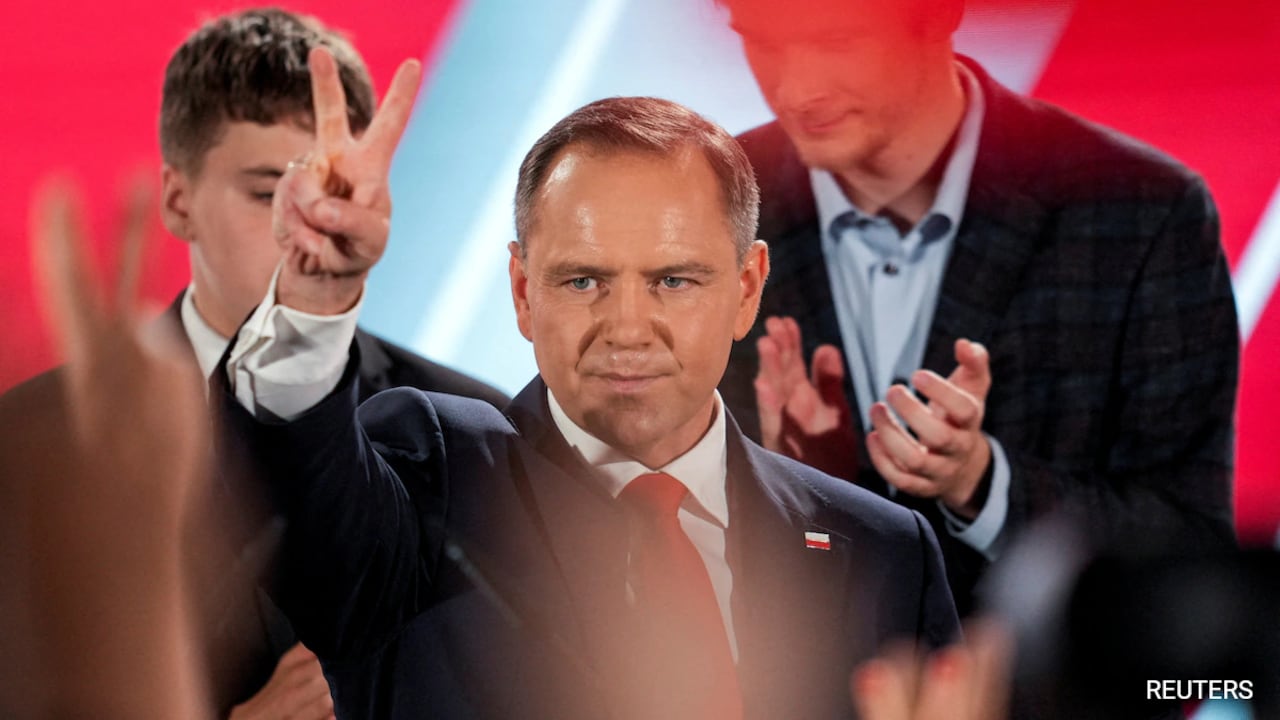 NDTVThis piece reads center-right
“Coup In Poland, Explained”
FramingUses 'coup' in the headline without quotation marks or qualification, stating a contested characterization as a settled fact rather than a claim made by one side.
Read the original- Just the Newsnot ratedRead the original
 Hungarian ConservativeThis piece reads right
“block an attempted judicial coup at the country's highest court”
Word choiceEmphasizes Nawrocki's reactive urgency and the dramatic personal cost of his response, framing him as responding to crisis rather than initiating confrontation.
Read the original
Placements are generated by an AI model from each article’s own headline and summary, and every quotation above is checked to be a real substring of that article before it is published. How this is done
Prism is free and carries no advertising. Support it if it was useful.