Amazon cargo plane crashes in Miami, killing five people
Reported by
A dot shows how that piece reads — Prism rates articles, not outlets, and shows the words behind each placement below. No dot means the piece isn’t rated. How the ratings work
What happened
The account the coverage agrees on, with contested figures attributed rather than asserted. This is not one of the five framings below — it is the ground they all stand on.
An Amazon Prime Air Boeing 767-300 cargo plane overshot the runway at Miami International Airport on Sunday and crashed. Five people—employees of an aircraft cleaning company in a van on the ground—were killed, and five others were injured. The NTSB recovered the plane's black boxes. Data shows the aircraft's wheel brakes were applied, but its speed brakes and thrust reversers did not deploy. Investigators said pilots considered aborting the landing seconds before impact. The scene was described as "utter devastation."
How the spectrum reads this story
The same event, summarised as five points on the political spectrum would each tend to frame it. These are generated by an AI model and are a starting point, not the last word.
Left
This disaster exposes how corporations and regulators prioritize efficiency over safety. Amazon's cargo operations have driven intensive scheduling and cost-cutting; Miami airport lacks safety infrastructure like crush zones that exist elsewhere because upgrades cost money and disrupt profits. The five workers killed were ground staff—people already vulnerable to workplace hazards—caught in a system where their safety matters less than fast cargo turnaround. We need binding safety standards, investment in airport infrastructure, and accountability for companies that push their contractors to dangerous limits.
Center-left
A preventable tragedy occurred when a cargo plane overshot the runway and struck ground workers. While investigations continue into mechanical failures and pilot decisions, the broader context matters: Miami International Airport lacks safety barriers that other U.S. airports have installed. This raises questions about whether safety upgrades are treated as optional rather than mandatory, and whether cost considerations affect infrastructure investment decisions. Families deserve answers, and the industry should review whether current safety protocols are adequate.
Center
The immediate cause of this crash involves both mechanical and operational factors—speed brakes and thrust reversers failed to deploy, and the pilots attempted a last-second abort. The victims were ground workers who happened to be in the plane's path. Miami airport's lack of certain safety barriers is worth examining, but we should be cautious about drawing conclusions before the full investigation. Some safety measures are expensive and may not be practical at every airport; the question is whether this one's risk profile matched its protections. We need the facts before assigning blame.
Center-right
An aircraft experienced a landing failure, and tragically, ground workers died as a result. The investigation into mechanical systems—why the speed brakes and reversers didn't deploy—is essential and ongoing. Some have raised the airport's lack of crush zones, but such infrastructure is costly and cannot be everywhere. We should focus on whether the pilots followed procedures, whether the aircraft was maintained properly, and whether the airport's operations were sound. Regulatory standards exist for safety; we should ensure they're being met rather than constantly expanding expensive requirements based on isolated incidents.
Right
A cargo plane crashed at Miami airport due to apparent mechanical or pilot error, and regrettably, five people on the ground were killed. The investigation should determine what went wrong with the aircraft's systems and whether the flight crew responded appropriately. There's no evidence this was caused by inadequate federal regulation—aircraft are heavily regulated. The suggestion that the airport should have costly crush zones installed implies we need ever-more infrastructure spending to prevent every conceivable accident. Accidents happen; the focus should be on root causes, not on reflexively adding expensive barriers at every airport.
Hear two viewpoints debate it
Pick two viewpoints and Prism writes a short, six-turn exchange about this story in each one’s own voice — steel-manned, no winner declared. Each pairing is written once and then saved for every reader. The voices are AI syntheses of a tradition, not real people.
New pairing — Prism will write it now.
How each outlet covered it
Where Prism places each piece — not the outlet in general — with the words from that piece that put it there, and the photograph the outlet chose. Picking a photo is a framing decision too.
 The GuardianThis piece reads center-left
“Pilots tried to abort landing seconds before deadly Amazon cargo plane crash”
Read the original Straight Arrow NewsThis piece reads center-left
“Airport where Amazon jet crashed lacked 'crush zone' installed elsewhere”
Read the original- Business InsiderThis piece reads center
“An Amazon Prime Air cargo plane overshot a runway”
Read the original 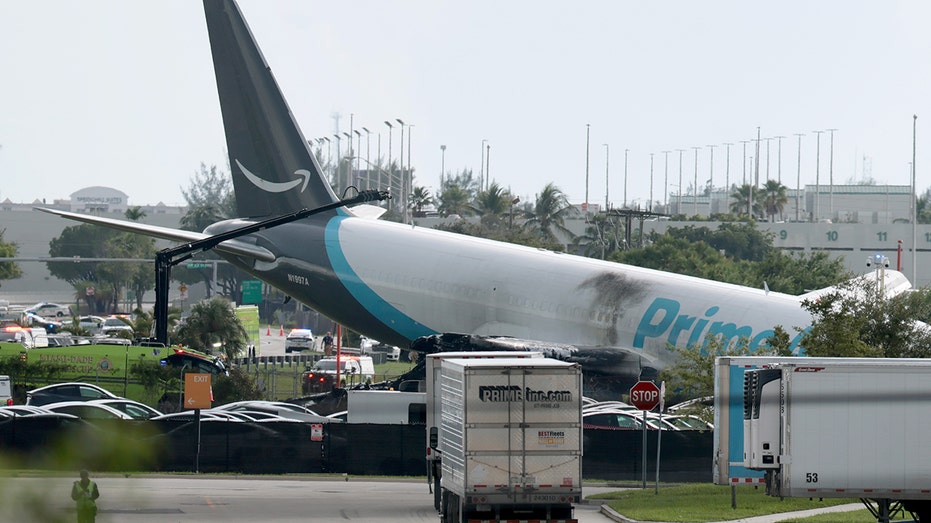 Fox NewsThis piece reads center
“The NTSB said the cargo jet's wheel brakes were applied”
FramingEmphasizes mechanical failure as the lead fact, where other outlets lead with the collision and casualties, then report the systems data later.
Read the original- CBS NewsThis piece reads center
“NTSB investigators are set to interview the pilots”
Read the original 
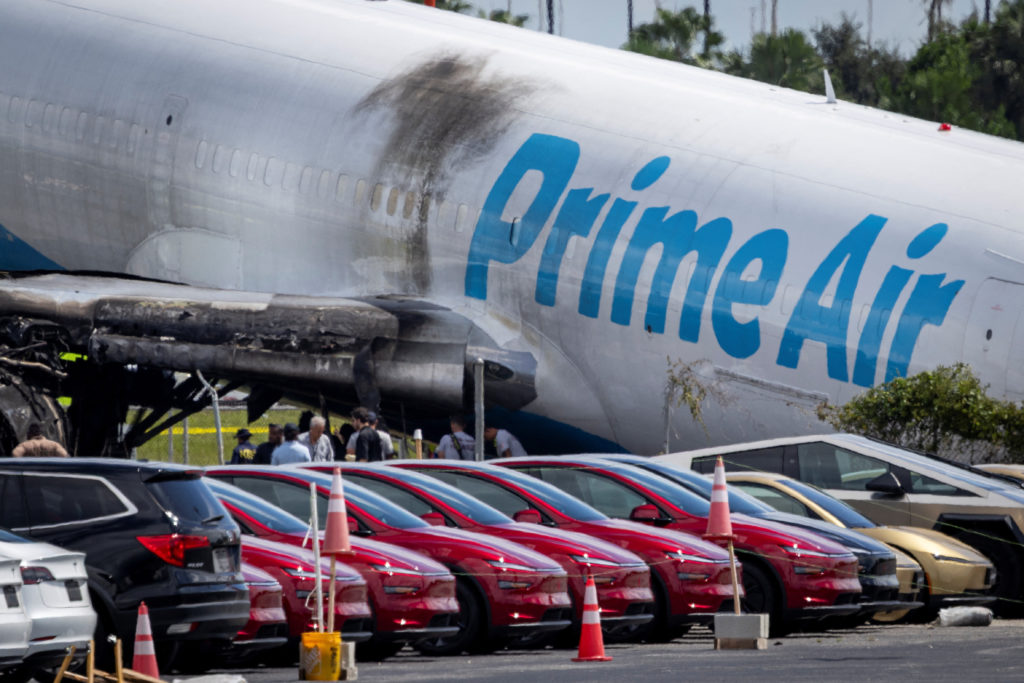 PBS NewsHourThis piece reads center
“All 5 killed in Miami airport cargo jet crash were in a van”
Read the original
Placements are generated by an AI model from each article’s own headline and summary, and every quotation above is checked to be a real substring of that article before it is published. How this is done
Prism is free and carries no advertising. Support it if it was useful.