Venezuelan opposition leader María Corina Machado returns from exile
Reported by
A dot shows how that piece reads — Prism rates articles, not outlets, and shows the words behind each placement below. No dot means the piece isn’t rated. How the ratings work
Newsmax
What happened
The account the coverage agrees on, with contested figures attributed rather than asserted. This is not one of the five framings below — it is the ground they all stand on.
Venezuelan opposition leader María Corina Machado returned to Venezuela on Sunday after nearly 10 months abroad. Machado, a Nobel Peace Prize winner, had left in December 2025 after the government barred her from running in elections; she spent the intervening months in the United States and Panama. Her return poses a direct challenge to the current Venezuelan government.
How the spectrum reads this story
The same event, summarised as five points on the political spectrum would each tend to frame it. These are generated by an AI model and are a starting point, not the last word.
Left
Machado's return reflects ongoing pressure from external actors, particularly the United States, seeking to destabilize Venezuela's government. While opposition voices deserve space, her timing and external backing raise questions about whether this represents genuine domestic opposition or foreign interference in Venezuela's internal affairs. The framing of her as a Nobel laureate obscures the complex geopolitical context of her activities.
No article in this story reads this way. This is how the position tends to frame events like it — written by a model, not quoted from anyone.
Center-left
Machado's return is a significant moment for Venezuela's opposition movement after months of exile. She represents a democratic alternative to the current government and her physical presence in the country strengthens the opposition's ability to organize and mobilize support. However, the international dimensions of her struggle and the involvement of foreign powers complicate the picture of what genuine democratic change might look like.
Drawn from 1 article placed here, below.
Center
Machado's return is a notable development in Venezuela's political standoff, where the opposition and government remain at an impasse. Her arrival after nearly a year abroad signals either growing confidence in her safety or shifting political calculations. The sustainability and practical impact of her return remain uncertain—symbolic gestures matter in politics, but whether this translates to concrete changes depends on many factors beyond her physical presence.
Drawn from 4 articles placed here, below.
Center-right
Machado's return represents an important assertion of political freedom and opposition rights in Venezuela. After being barred from elections and forced into exile, her ability to return home signals potential opening in the political space. Her Nobel Prize recognition underscores international support for democratic values, and her presence could strengthen pressure on the government to respect basic political freedoms and allow genuine competition.
Drawn from 2 articles placed here, below.
Right
Machado's return is a significant blow to Venezuela's authoritarian regime and a victory for those seeking to restore democratic governance. As a Nobel laureate and credible opposition leader, her presence directly challenges the legitimacy of a government that forced her into exile. Her return demonstrates that determined opposition to tyranny cannot be permanently suppressed, and her courage in facing potential detention sends a powerful message about resistance to authoritarian rule.
No article in this story reads this way. This is how the position tends to frame events like it — written by a model, not quoted from anyone.
Hear two viewpoints debate it
Pick two viewpoints and Prism writes a short, six-turn exchange about this story in each one’s own voice — steel-manned, no winner declared. Each pairing is written once and then saved for every reader. The voices are AI syntheses of a tradition, not real people.
New pairing — Prism will write it now.
How each outlet covered it
Where Prism places each piece — not the outlet in general — with the words from that piece that put it there, and the photograph the outlet chose. Picking a photo is a framing decision too.
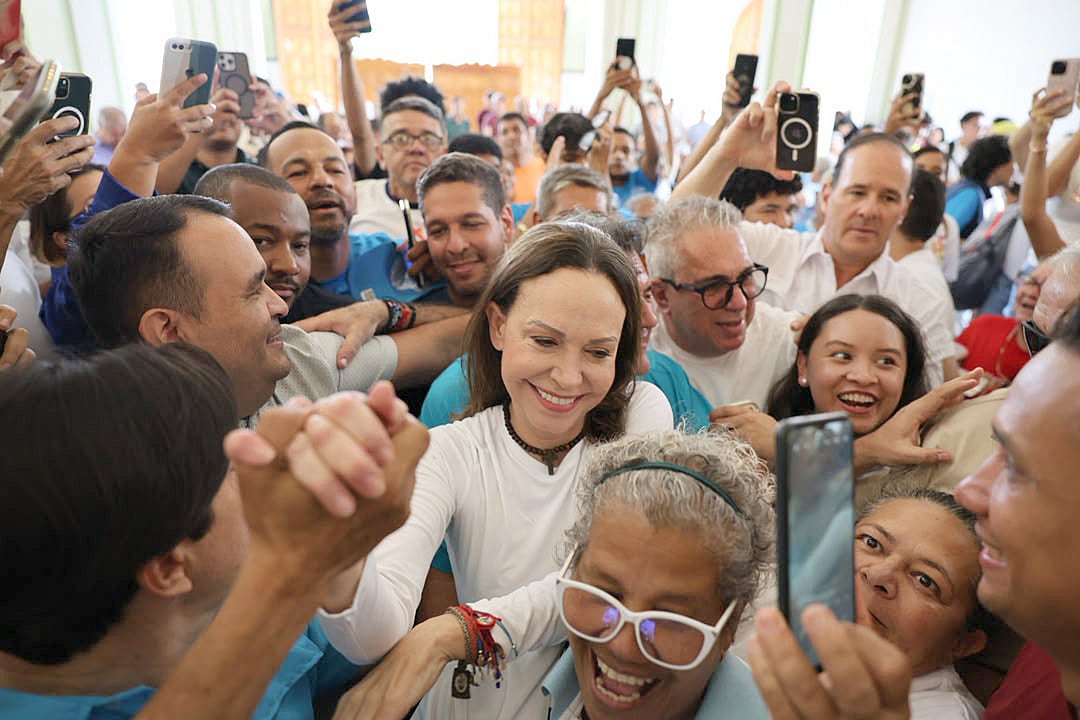
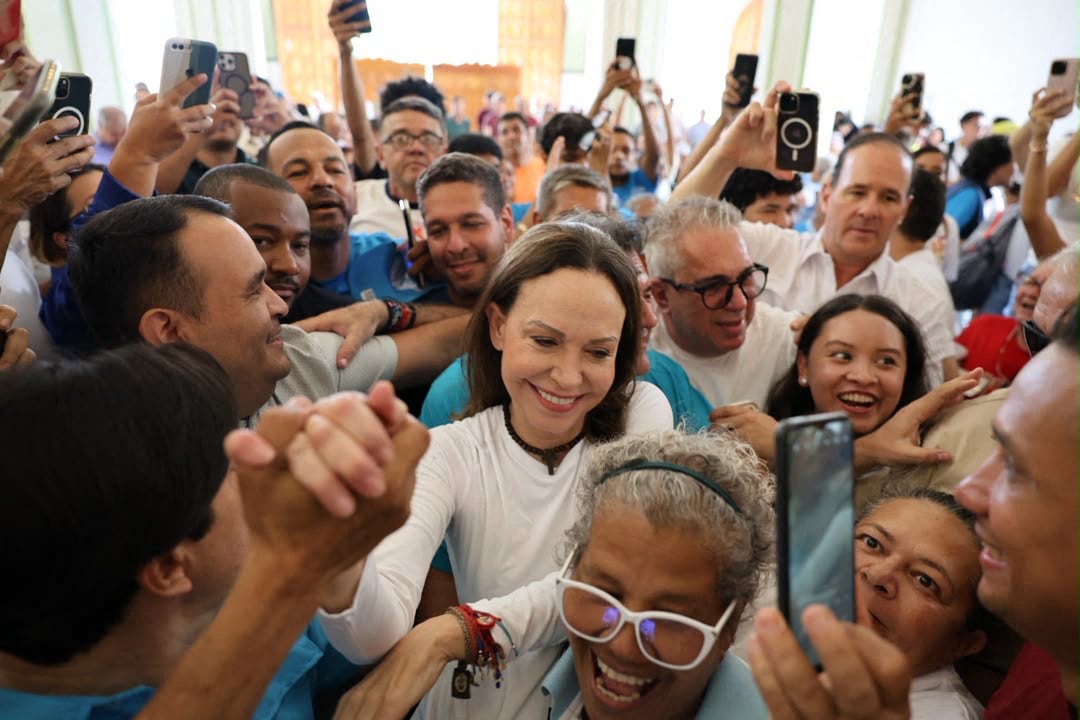 The NationalThis piece reads center
“Opposition leader and Nobel Prize winner Maria Corina Machado returns”
Read the original
- Euronewsnot rated
What's left outSpecifies that she left to receive the prize in Oslo, providing concrete detail about her movements that other outlets mention less explicitly.
Read the original  RTÉThis piece reads center
“returned to her home country after nearly a year in exile”
Read the original Financial TimesThis piece reads center-right
“Nobel laureate's arrival poses a challenge”
Word choiceDescribes the current government as 'Trump-backed interim' rather than just naming it—this framing emphasizes U.S. involvement and questions the government's legitimacy by calling it 'interim' rather than established.
Read the original NewsmaxThis piece reads center-right
“What does it mean for the White House?”
FramingFrames Machado's return primarily through the lens of U.S. interests rather than Venezuelan domestic politics, making Washington's calculations central to the story.
Read the original
Placements are generated by an AI model from each article’s own headline and summary, and every quotation above is checked to be a real substring of that article before it is published. How this is done
Prism is free and carries no advertising. Support it if it was useful.