Israeli President Herzog tasks Gadi Eisenkot with forming next government
Reported by
A dot shows how that piece reads — Prism rates articles, not outlets, and shows the words behind each placement below. No dot means the piece isn’t rated. How the ratings work

What happened
The account the coverage agrees on, with contested figures attributed rather than asserted. This is not one of the five framings below — it is the ground they all stand on.
Israeli President Isaac Herzog tasked opposition leader Gadi Eisenkot with forming a government on Saturday after 67 Knesset members recommended him. Eisenkot, chairman of the Yashar party, has 28 days to assemble a coalition, with a possible 14-day extension. He does not plan to hold a swearing-in ceremony until after the Knesset speaker is replaced next week, even if he forms a government before then.
How the spectrum reads this story
The same event, summarised as five points on the political spectrum would each tend to frame it. These are generated by an AI model and are a starting point, not the last word.
Left
Netanyahu's grip on power is finally breaking as Herzog hands the mandate to Eisenkot, signalling voters' demand for change after years of right-wing rule. However, the path remains treacherous—Eisenkot will need to navigate coalitions with either Arab parties or ultra-Orthodox factions, groups Netanyahu has long exploited to divide the left. Without fundamental shifts in how Israeli politics operates, even a change of PM risks reproducing the same dysfunction that enabled Netanyahu's dominance in the first place.
No article in this story reads this way. This is how the position tends to frame events like it — written by a model, not quoted from anyone.
Center-left
This represents a genuine opportunity to remove Netanyahu after his extended tenure, with Eisenkot emerging as the viable alternative. He now faces the practical challenge of assembling a working coalition across Israel's fractured political landscape—a task complicated by the demands of both Arab parties and ultra-Orthodox groups. Success would mark a real democratic moment, though the complexity of these negotiations shows why stable government has proven so difficult.
Drawn from 2 articles placed here, below.
Center
Herzog has formally handed the mandate to Eisenkot, the procedurally correct step after sufficient Knesset support. Whether this leads to actual government formation depends on whether Eisenkot can broker deals across Israel's competing factions without either side making unreasonable demands. The 28-day window is tight; the real test is whether political actors prioritize governance over deadlock, and whether the public actually supports the compromises a working coalition requires.
Drawn from 5 articles placed here, below.
Center-right
The nomination process has run its course and Eisenkot now has his opportunity to prove he can lead. He faces genuine obstacles—the ultra-Orthodox and Arab parties each have their own agendas—but these are normal coalition negotiations, not insurmountable barriers. The question is whether Eisenkot can deliver the stable, competent governance Israel needs, and whether he can do so without ceding excessive influence to parties whose priorities may not serve the broader national interest.
No article in this story reads this way. This is how the position tends to frame events like it — written by a model, not quoted from anyone.
Right
Even as Eisenkot receives his mandate, the deep fractures in Israeli politics remain unhealed. Relying on Arab parties or ultra-Orthodox factions to govern threatens both national unity and Jewish identity. A government assembled from such compromises will lack the mandate and clarity to address Israel's real security challenges. This moment shows why strong, principled leadership—not coalition-building among parties with incompatible visions—is what Israel actually requires.
No article in this story reads this way. This is how the position tends to frame events like it — written by a model, not quoted from anyone.
Hear two viewpoints debate it
Pick two viewpoints and Prism writes a short, six-turn exchange about this story in each one’s own voice — steel-manned, no winner declared. Each pairing is written once and then saved for every reader. The voices are AI syntheses of a tradition, not real people.
New pairing — Prism will write it now.
How each outlet covered it
Where Prism places each piece — not the outlet in general — with the words from that piece that put it there, and the photograph the outlet chose. Picking a photo is a framing decision too.
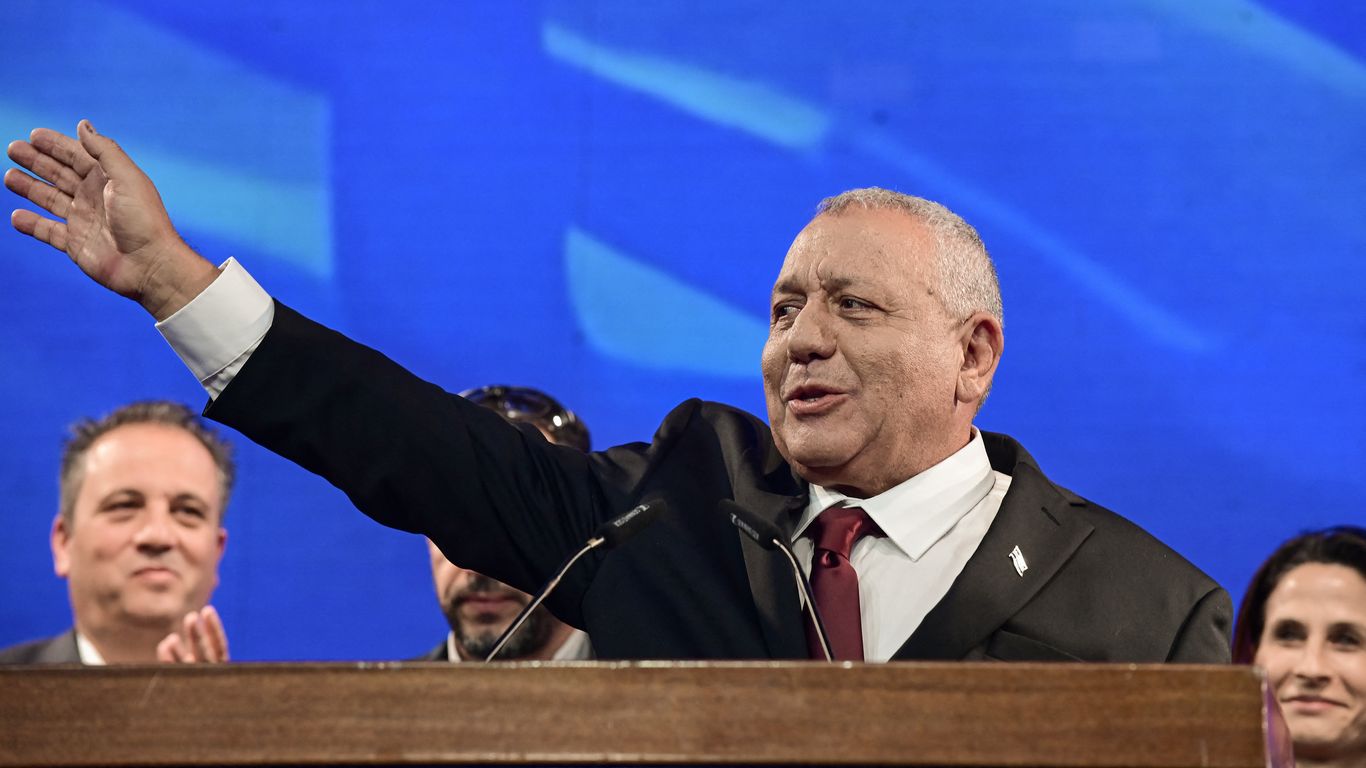 AxiosThis piece reads center-left
“dealing a major setback to Prime Minister Benjamin Netanyahu”
Word choiceFrames the mandate explicitly as a setback for Netanyahu, whereas other outlets report the event neutrally or focus on Eisenkot's task ahead.
Read the original- CNBCThis piece reads center-left
“in setback for Netanyahu”
Word choiceUses 'setback' in the headline to characterize the event's impact on the current PM, similar framing to Axios but less prominent in other outlets.
Read the original - Israel National NewsThis piece reads center
“does not plan to swear in a new government before”
Read the original - DWThis piece reads center
“Israeli President Isaac Herzog tasked Gadi Eisenkot with the right of trying”
Read the original - The Jerusalem PostThis piece reads center
“Under Basic Law: The Government, Eisenkot will have 28 days”
Read the original - The Straits TimesThis piece reads center
“Tasked with forming next government, Eisenkot faces complex path”
Word choiceUses 'end Netanyahu's reign,' language that emphasizes finality and removal, whereas most other outlets focus on the formation task itself.
Read the original
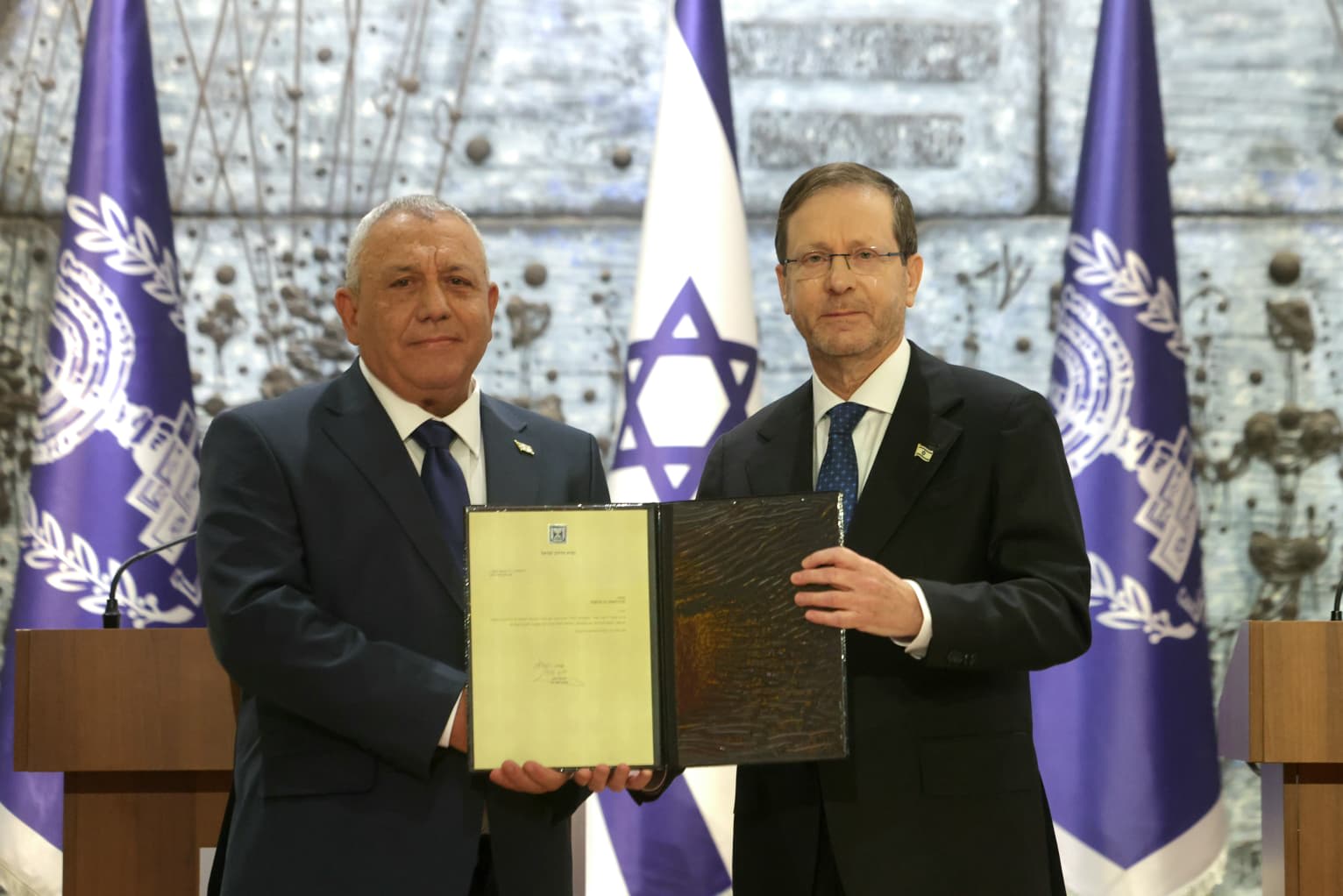
Placements are generated by an AI model from each article’s own headline and summary, and every quotation above is checked to be a real substring of that article before it is published. How this is done
Prism is free and carries no advertising. Support it if it was useful.