Israeli opposition leader Gadi Eisenkot tasked with forming next government, seeks national unity
Reported by
A dot shows how that piece reads — Prism rates articles, not outlets, and shows the words behind each placement below. No dot means the piece isn’t rated. How the ratings work

What happened
The account the coverage agrees on, with contested figures attributed rather than asserted. This is not one of the five framings below — it is the ground they all stand on.
Israeli President Isaac Herzog tasked opposition leader Gadi Eisenkot with forming the next government on Sunday, following Herzog's consultations with lawmakers. Eisenkot, chairman of the Yashar! party and a former military chief, is expected to seek backing from 56 lawmakers according to Ynetnews, compared to 46 for Prime Minister Benjamin Netanyahu. United Torah Judaism declined to endorse either candidate, while Otzma Yehudit backed Netanyahu and Democratic party members supported Eisenkot. Eisenkot said he is open to including Netanyahu in a coalition and appealed to Likud and Religious Zionism to join under his leadership.
How the spectrum reads this story
The same event, summarised as five points on the political spectrum would each tend to frame it. These are generated by an AI model and are a starting point, not the last word.
Left
Netanyahu's removal from office is essential given the damage his leadership has inflicted on Israeli democracy and society. Eisenkot's mandate offers an opportunity to end years of coalition instability and Netanyahu's polarizing governance. A new government must address the deep fractures Netanyahu created and reset Israel's diplomatic standing. However, meaningful change requires excluding the far-right elements that have dominated recent coalitions and preventing Netanyahu from blocking reforms through continued political leverage.
No article in this story reads this way. This is how the position tends to frame events like it — written by a model, not quoted from anyone.
Center-left
Eisenkot's appointment is a hopeful turning point after years of political dysfunction under Netanyahu. The former military leader offers practical experience and a commitment to national unity rather than partisan division. Building a coalition will be genuinely difficult given the fragmentation in parliament, but the prospect of a government focused on governing rather than political survival is significant. Netanyahu's potential inclusion should depend on whether he can accept a subordinate role and commit to the coalition's agenda.
Drawn from 2 articles placed here, below.
Center
Eisenkot's mandate reflects the voters' message that the current political arrangement is unsustainable, but forming a stable government will test everyone's commitment to compromise. The math is tight—he needs support from fractious parties with conflicting interests, and excluding Netanyahu entirely carries risks of destabilization. A pragmatic approach would find room for Netanyahu if it serves stability, while setting clear limits on his role. The real work is persuading Haredi parties and others to prioritize governance over narrow interests. Success requires all sides to treat this as an opportunity to reset, not as a prelude to revenge.
Drawn from 4 articles placed here, below.
Center-right
Eisenkot's appointment marks a serious juncture requiring careful handling of Israel's security and stability. Netanyahu has earned the right to a continued role given his experience on defense matters, though questions about his judgment in recent years are legitimate. Any coalition must preserve Israel's security posture and not compromise with parties whose demands would weaken the state. The challenge is building a government that can command broad backing while protecting core interests—neither Eisenkot nor Netanyahu should prioritize their personal political fortunes over that goal.
No article in this story reads this way. This is how the position tends to frame events like it — written by a model, not quoted from anyone.
Right
Eisenkot's appointment represents an attempt by establishment elites to overturn the results of recent elections and remove a prime minister who resisted their preferences. Netanyahu has faced constant pressure despite delivering on security and economic matters. The shift toward Eisenkot without a clear electoral mandate raises concerns about whether unelected institutions are overriding democratic choice. Any government formed should respect Netanyahu's substantial parliamentary backing and avoid arrangements that punish him for his policies or personal challenges.
No article in this story reads this way. This is how the position tends to frame events like it — written by a model, not quoted from anyone.
Hear two viewpoints debate it
Pick two viewpoints and Prism writes a short, six-turn exchange about this story in each one’s own voice — steel-manned, no winner declared. Each pairing is written once and then saved for every reader. The voices are AI syntheses of a tradition, not real people.
New pairing — Prism will write it now.
How each outlet covered it
Where Prism places each piece — not the outlet in general — with the words from that piece that put it there, and the photograph the outlet chose. Picking a photo is a framing decision too.
 RTÉThis piece reads center-left
“veteran prime minister had brought the country to a historic crisis”
FramingUses Eisenkot's characterization of Netanyahu's tenure as bringing Israel to a 'historic crisis' as the frame for why he is forming a government, emphasizing the magnitude of the perceived problem.
Read the original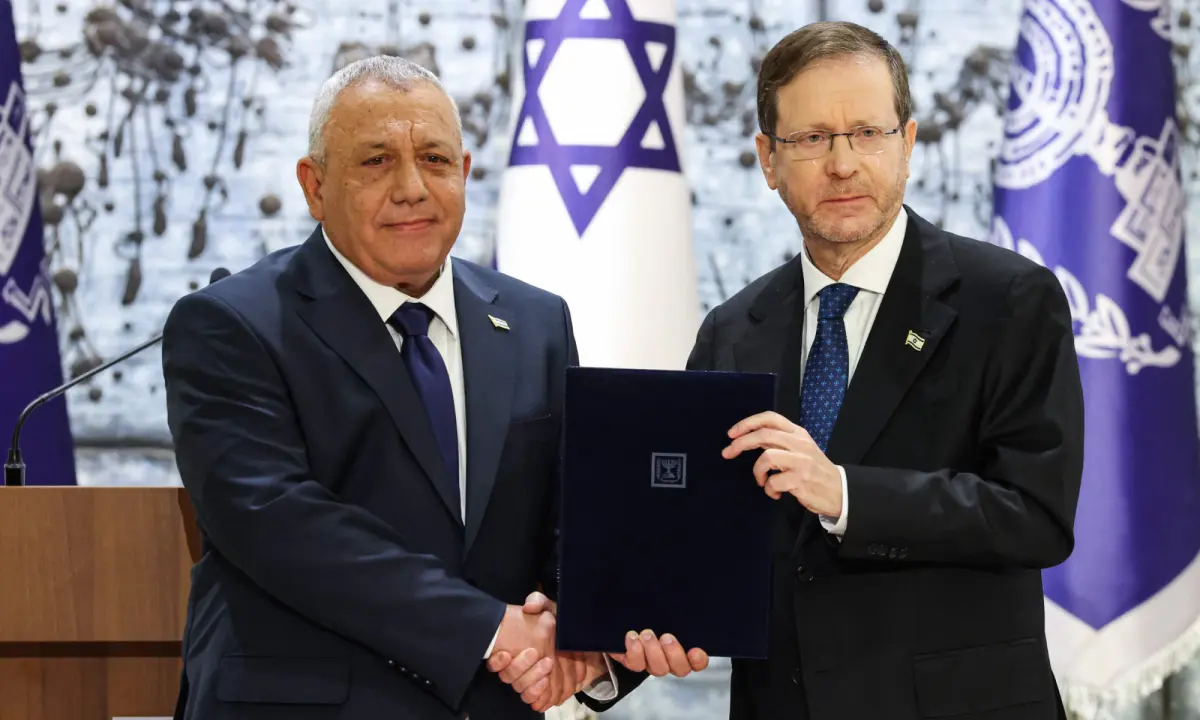
- UPIThis piece reads center
“open to including Prime Minister Benjamin Netanyahu in the coalition”
Read the original 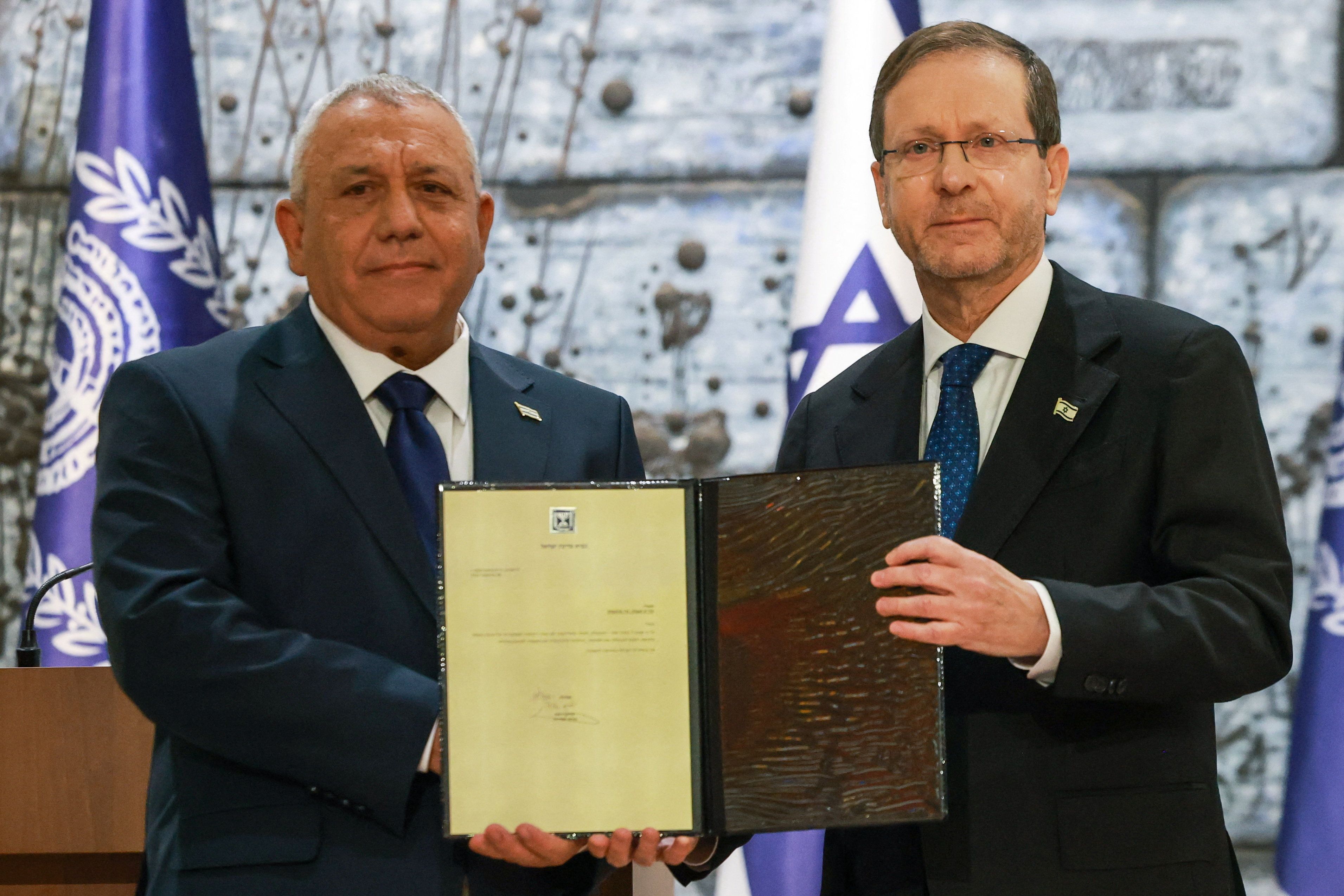 SemaforThis piece reads center
“could oust long-serving Prime Minister Benjamin Netanyahu”
FramingPresents the coalition-building as a process with an uncertain outcome that might remove Netanyahu, whereas other outlets treat the mandate as an already-established fact.
Read the original YnetnewsThis piece reads center
“expected to win backing of 56 lawmakers to PM's 46”
Word choiceOpens with specific vote counts showing Eisenkot's numerical advantage, grounding the story in parliamentary arithmetic rather than political narrative.
Read the original France 24This piece reads center
“lack of a clear majority in parliament will make trying to forge a coalition”
Read the original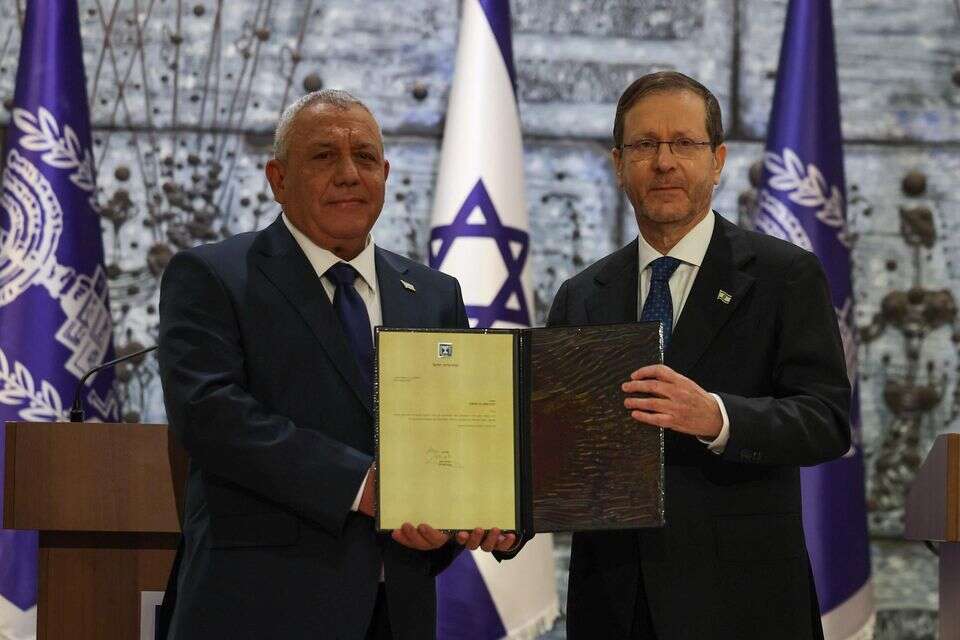 Israel Hayomnot ratedRead the original
Placements are generated by an AI model from each article’s own headline and summary, and every quotation above is checked to be a real substring of that article before it is published. How this is done
Prism is free and carries no advertising. Support it if it was useful.