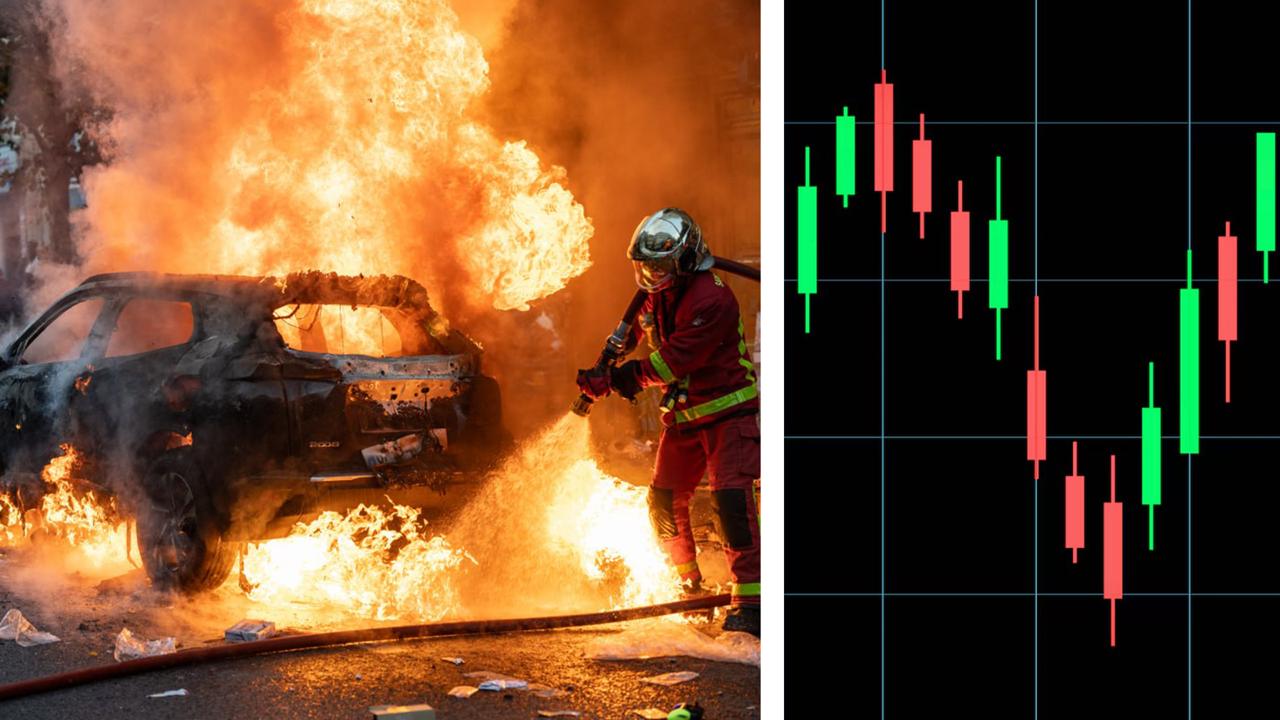
France's borrowing costs hit 5% amid civil unrest, reaching highest level since 2002
Reported by
A dot shows how that piece reads — Prism rates articles, not outlets, and shows the words behind each placement below. No dot means the piece isn’t rated. How the ratings work
What happened
The account the coverage agrees on, with contested figures attributed rather than asserted. This is not one of the five framings below — it is the ground they all stand on.
France's 10-year bond yield rose above 5% for the first time since 2002, with some reports citing rates as high as 4.94%. The rise occurred amid widespread protests and unrest in France. The spread between French and German 10-year bonds reached nearly 160 basis points. Yields had stood at 3.2% in late February.
How the spectrum reads this story
The same event, summarised as five points on the political spectrum would each tend to frame it. These are generated by an AI model and are a starting point, not the last word.
Left
France faces a manufactured crisis driven by austerity demands and financial markets' power over democracy. Rising bond yields reflect investor pressure for spending cuts that would harm working people, not genuine fiscal problems. The government should reject these demands, invest in public services, and challenge the premise that markets should dictate policy—the real issue is inequality and underfunded public goods, not overspending.
No article in this story reads this way. This is how the position tends to frame events like it — written by a model, not quoted from anyone.
Center-left
France's rising borrowing costs reflect real concerns about public finances and political stability that require attention. However, the solution is not to abandon social investment but to pursue smart reforms that restore confidence while protecting vulnerable groups. The government needs a credible fiscal plan that balances necessary spending restraint with continued support for public services and those affected by unrest.
Drawn from 1 article placed here, below.
Center
France faces a genuine dilemma: markets are signaling concern about public finances and political uncertainty, which raises real borrowing costs. But markets sometimes overcorrect. The government must restore confidence through transparent fiscal planning and political stability, while avoiding both reckless spending and counterproductive austerity that would deepen unrest. Pragmatic reform—not ideology in either direction—is needed.
Drawn from 3 articles placed here, below.
Center-right
France's rising bond yields reflect justified market concerns about the government's ability to manage public finances while facing intense pressure to spend more. The fiscal situation is unsustainable, and the government must demonstrate fiscal responsibility through meaningful spending discipline. Political stability and credible deficit reduction are essential to bring borrowing costs back down and protect France's economic future.
No article in this story reads this way. This is how the position tends to frame events like it — written by a model, not quoted from anyone.
Right
France's debt crisis is a direct result of years of uncontrolled spending and mass migration's burden on public services and welfare systems. The government must prioritize fiscal discipline and immigration restriction to restore economic stability. Rising borrowing costs are a market signal that current policies are unsustainable—France needs fundamental change in both spending and immigration policy.
Drawn from 1 article placed here, below.
Hear two viewpoints debate it
Pick two viewpoints and Prism writes a short, six-turn exchange about this story in each one’s own voice — steel-manned, no winner declared. Each pairing is written once and then saved for every reader. The voices are AI syntheses of a tradition, not real people.
New pairing — Prism will write it now.
How each outlet covered it
Where Prism places each piece — not the outlet in general — with the words from that piece that put it there, and the photograph the outlet chose. Picking a photo is a framing decision too.
 Novara MediaThis piece reads center-left
“hundreds of thousands of protesters across the country took to the streets”
Read the original- CNBCThis piece reads center
“intense pressure to slash spending, while trying to quell violent protests”
FramingFrames the government's dilemma as directly opposing forces—austerity versus spending—making the conflict explicit where other outlets simply report the rising yields.
Read the original  Financial TimesThis piece reads center
“Concerns over public finances and political stability”
Read the original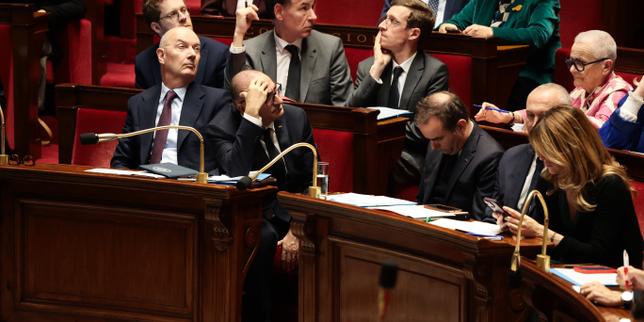 Le MondeThis piece reads center
“The spread between the French and German 10-year bonds surged to nearly 160”
Read the original- Remix NewsThis piece reads right
“mass migration is not only leading to insecurity, polarization and public unrest”
FramingAttributes rising bond yields to mass migration rather than treating it as one factor among others; other outlets focus on political instability and public finances as the primary drivers without linking to migration.
Read the original
Placements are generated by an AI model from each article’s own headline and summary, and every quotation above is checked to be a real substring of that article before it is published. How this is done
Prism is free and carries no advertising. Support it if it was useful.