France experiences widespread protests and civil unrest with police clashes
Reported by
A dot shows how that piece reads — Prism rates articles, not outlets, and shows the words behind each placement below. No dot means the piece isn’t rated. How the ratings work
What happened
The account the coverage agrees on, with contested figures attributed rather than asserted. This is not one of the five framings below — it is the ground they all stand on.
Protests erupted across Europe on Saturday, with the largest demonstrations in France drawing over 400,000 people. French police arrested 1,314 people, with 53 officers injured according to the interior ministry. In Paris, masked protesters threw fireworks and projectiles; police responded with tear gas, sound grenades and water cannons. Demonstrations also took place in Italy (Turin, Rome, Bologna, Milan), Spain (Barcelona, with around 100 arrested and stores looted), and other European cities. Protesters cited concerns over rising living costs, school funding, housing, and social services. France faces presidential elections in April and May.
How the spectrum reads this story
The same event, summarised as five points on the political spectrum would each tend to frame it. These are generated by an AI model and are a starting point, not the last word.
Left
These protests reflect widespread anger at a system that has failed ordinary people, particularly the young, who face deteriorating social services and unaffordable living costs. The scale of mobilization—hundreds of thousands across Europe—shows that people are demanding real change, not minor reforms. The fact that demonstrations turned confrontational in some places is a predictable response to economic desperation and the state's refusal to address structural inequality. Governments should listen to these grievances rather than deploying riot police and tear gas.
Drawn from 1 article placed here, below.
Center-left
Large-scale protests across Europe signal genuine public concern about the cost of living, education funding, and social services that deserve serious policy responses. While peaceful demonstration is a vital democratic right, violence and looting undermine the protesters' legitimate message and alienate potential supporters. Governments should engage with the underlying economic anxieties—through housing policy, wages, and public services—while maintaining order and protecting both citizens and police from harm.
Drawn from 1 article placed here, below.
Center
Europe is experiencing significant social unrest driven by real economic pressures, but the picture is mixed. Most demonstrations were peaceful and represent normal democratic expression; violence in some locations appears limited to smaller groups within larger marches. The challenge for governments is taking economic concerns seriously without either dismissing protesters or allowing disorder to escalate. France's upcoming elections provide an institutional channel for these grievances, which is preferable to ongoing street conflict.
Drawn from 5 articles placed here, below.
Center-right
Hundreds of thousands of Europeans are protesting over legitimate concerns about living costs and public services, which governments should address through responsible fiscal policy and economic growth rather than spending increases. However, the incidents of looting, vandalism, and violence—particularly in Barcelona and Paris—are criminal acts that undermine the protesters' credibility and cannot be tolerated. Police and security forces were right to maintain order, and governments should distinguish between peaceful assembly and the destruction of property and assault on officers.
Drawn from 3 articles placed here, below.
Right
These protests reveal deep discontent with the political establishment's failure to deliver for ordinary citizens, particularly on cost of living and national services. The violence and looting by extremist elements attempting to hijack legitimate grievances discredit the movement and distract from real economic problems. France's presidential election offers an opportunity for voters to choose leaders who will actually prioritize citizens' interests rather than globalist agendas. Order must be maintained against those using protests as cover for lawlessness.
Drawn from 1 article placed here, below.
Hear two viewpoints debate it
Pick two viewpoints and Prism writes a short, six-turn exchange about this story in each one’s own voice — steel-manned, no winner declared. Each pairing is written once and then saved for every reader. The voices are AI syntheses of a tradition, not real people.
New pairing — Prism will write it now.
How each outlet covered it
Where Prism places each piece — not the outlet in general — with the words from that piece that put it there, and the photograph the outlet chose. Picking a photo is a framing decision too.
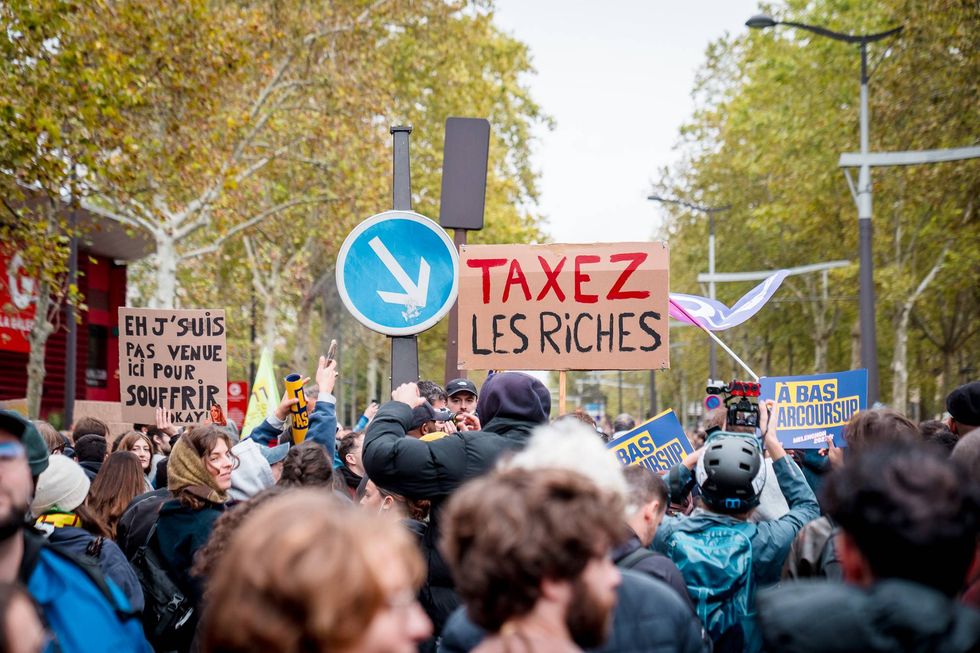 Common DreamsThis piece reads left
“Against Inequality and 'for Young People's Future”
FramingLeads with the framing of inequality and system critique; places economic grievance front and center rather than violence, which appears lower in coverage.
Read the original- Christian Science MonitorThis piece reads center-left
“broad range of issues, from education to housing”
FramingEmphasizes the diversity of protesters' demands across countries, whereas right-leaning outlets focus more narrowly on violence and arrest numbers.
Read the original 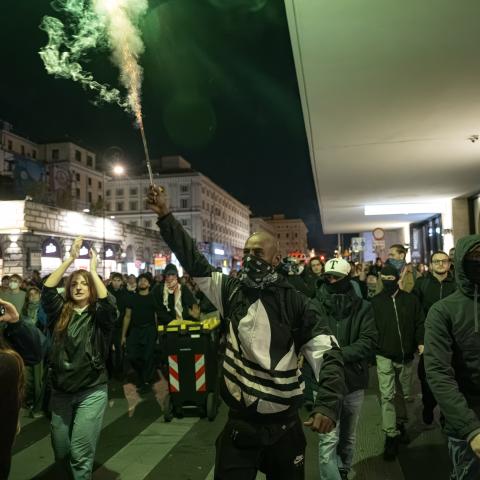
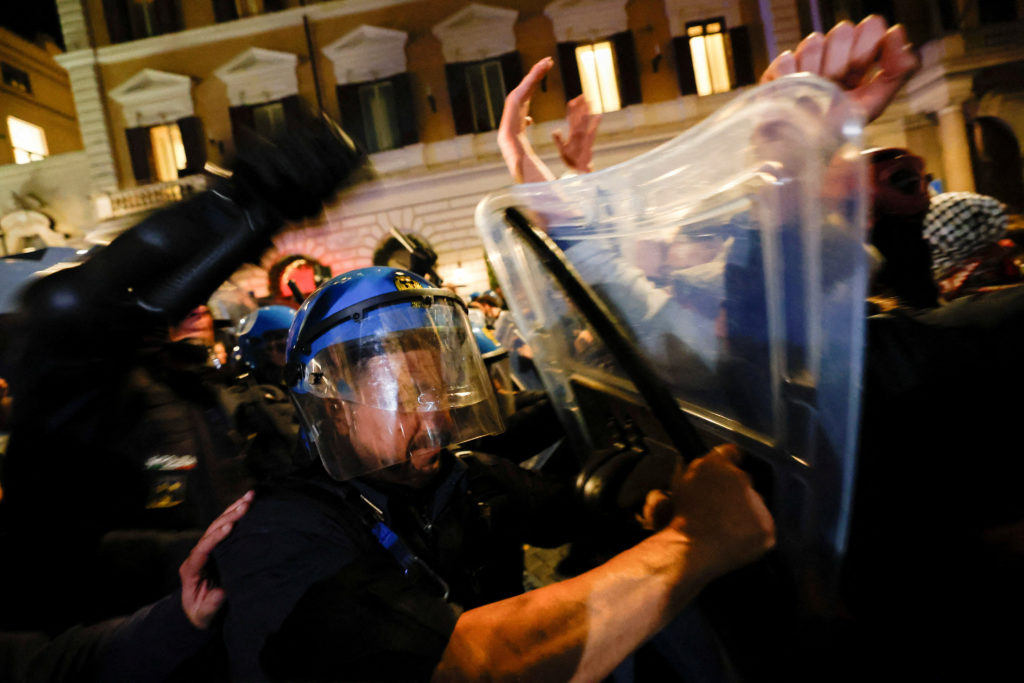 PBS NewsHourThis piece reads center
“peaceful, but there were brief clashes with police”
Read the original
- American GreatnessThis piece reads center-right
“Nearly 1,000 Arrested as Violent Protests Sweep France”
FramingFrames the protests as primarily significant for their political impact on a specific leader, whereas most outlets describe the demonstrations as rooted in economic grievances affecting multiple countries.
Read the original 
 Daily MailThis piece reads center-right
“violent French protests”
FramingLinks the protest violence directly to the upcoming presidential race and Le Pen's campaign, making electoral politics central to the framing where other outlets treat elections as background context.
Read the original- BreitbartThis piece reads right
“1,300+ Rioters Arrested, 53 Police Officers Injured”
Word choiceUses 'rioters' where other outlets say 'protesters' or 'people arrested'—the word choice emphasizes criminality and disorder over the political nature of the gatherings.
Read the original
Placements are generated by an AI model from each article’s own headline and summary, and every quotation above is checked to be a real substring of that article before it is published. How this is done
Prism is free and carries no advertising. Support it if it was useful.