DOJ deploys 1,000 election monitors to all 50 states
Reported by
A dot shows how that piece reads — Prism rates articles, not outlets, and shows the words behind each placement below. No dot means the piece isn’t rated. How the ratings work
ABC News
What happened
The account the coverage agrees on, with contested figures attributed rather than asserted. This is not one of the five framings below — it is the ground they all stand on.
The Justice Department is deploying approximately 1,000 election monitors to all 50 states for the first time in history. ABC News describes this as the largest federal monitoring effort in history. Axios reports the deployment comes after courts repeatedly rejected DOJ efforts to force states to restrict voting for alleged noncitizens, and amid a Trump administration push to fight voter fraud, which studies say is rare.
How the spectrum reads this story
The same event, summarised as five points on the political spectrum would each tend to frame it. These are generated by an AI model and are a starting point, not the last word.
Left
The DOJ's deployment of 1,000 monitors to all 50 states represents an alarming escalation of federal overreach into election administration, which is constitutionally a state responsibility. Courts have already rejected the administration's attempts to restrict voting access based on unsubstantiated noncitizen voting claims. This coordinated federal monitoring campaign appears designed to discourage participation and legitimize voter suppression efforts under the guise of election security, despite scientific evidence that voter fraud is vanishingly rare.
No article in this story reads this way. This is how the position tends to frame events like it — written by a model, not quoted from anyone.
Center-left
While election security is important, this deployment raises concerns about federal overreach. The DOJ has already lost multiple court cases trying to restrict voting based on noncitizen concerns, yet appears to be pursuing the same goals through monitoring. State election officials typically manage their own elections, and this unprecedented federal presence could undermine that system. The administration should focus on working with states through existing legal channels rather than deploying monitors nationwide.
Drawn from 1 article placed here, below.
Center
The DOJ's historic deployment of 1,000 monitors across all 50 states represents an unusual expansion of federal election oversight. The move follows court rejections of the administration's attempts to impose voting restrictions, suggesting the monitors may represent an alternative strategy. This raises a genuine tension: election security requires vigilance, but elections are traditionally state-administered, and federal monitoring on this scale is unprecedented. Clarity on what monitors will actually observe and how their findings will be used is essential before assessing whether this serves legitimate security interests or overreaches.
Drawn from 3 articles placed here, below.
Center-right
The Justice Department's decision to deploy 1,000 election monitors nationwide represents a reasonable step toward ensuring election integrity. With documented concerns about voting irregularities and noncitizen participation, federal observers can provide an additional layer of verification. While elections are administered by states, federal monitoring of poll operations is a legitimate tool to detect and prevent fraud. The deployment reflects appropriate government action to protect election security and maintain public confidence in results.
No article in this story reads this way. This is how the position tends to frame events like it — written by a model, not quoted from anyone.
Right
The DOJ's deployment of 1,000 federal election monitors to all 50 states is a necessary and overdue response to widespread election vulnerabilities and fraud concerns that have undermined confidence in voting integrity. After courts blocked the administration's efforts to enforce citizenship requirements, this monitoring deployment ensures direct federal accountability for fair elections. Federal observers on the ground can identify irregularities, verify voter eligibility, and prevent the systematic vote fraud that has compromised past elections. This action protects the legitimacy of democratic processes.
No article in this story reads this way. This is how the position tends to frame events like it — written by a model, not quoted from anyone.
Hear two viewpoints debate it
Pick two viewpoints and Prism writes a short, six-turn exchange about this story in each one’s own voice — steel-manned, no winner declared. Each pairing is written once and then saved for every reader. The voices are AI syntheses of a tradition, not real people.
New pairing — Prism will write it now.
How each outlet covered it
Where Prism places each piece — not the outlet in general — with the words from that piece that put it there, and the photograph the outlet chose. Picking a photo is a framing decision too.
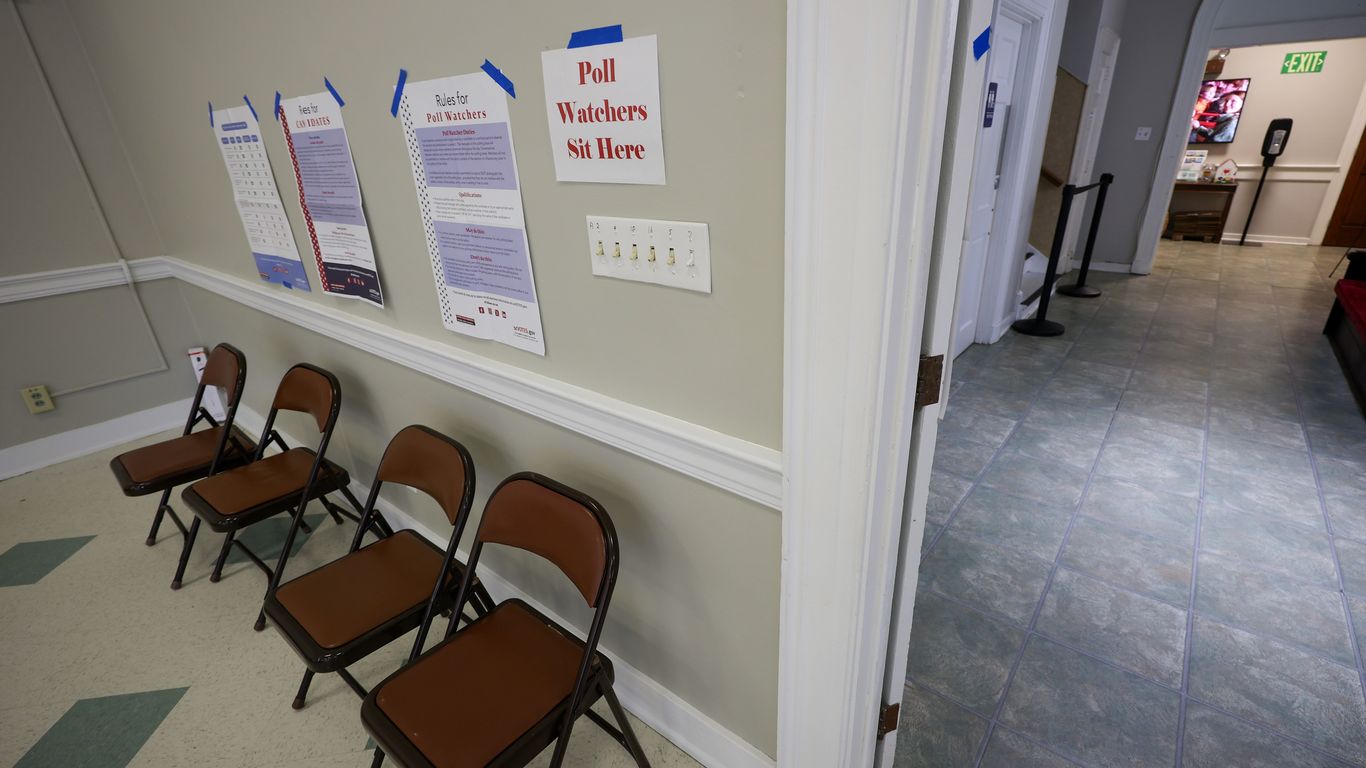 AxiosThis piece reads center-left
“courts repeatedly rejected the DOJ's efforts to force states to restrict voting”
What's left outThe snippet cuts off mid-sentence after noting studies show voter fraud is rare, leaving the claim incomplete and creating a visual suggestion that the statement may be contested or incomplete.
Read the original UPIThis piece reads center
“sending 1,000 election monitors throughout all 50 states”
Read the original ABC NewsThis piece reads center
“dispatch roughly 1,000 election monitors to all 50 states”
FramingPlaces the word 'largest' in quotation marks when it is the DOJ's own characterization, which could read to readers as doubt about whether this claim is accurate.
Read the original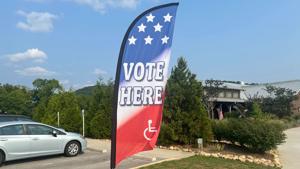 The Center SquareThis piece reads center
“U.S. Department of Justice is monitoring voting in all 50 states”
Read the original
Placements are generated by an AI model from each article’s own headline and summary, and every quotation above is checked to be a real substring of that article before it is published. How this is done
Prism is free and carries no advertising. Support it if it was useful.