US expands naval blockade to restrict Iranian commerce by land and sea
Reported by
A dot shows how that piece reads — Prism rates articles, not outlets, and shows the words behind each placement below. No dot means the piece isn’t rated. How the ratings work
What happened
The account the coverage agrees on, with contested figures attributed rather than asserted. This is not one of the five framings below — it is the ground they all stand on.
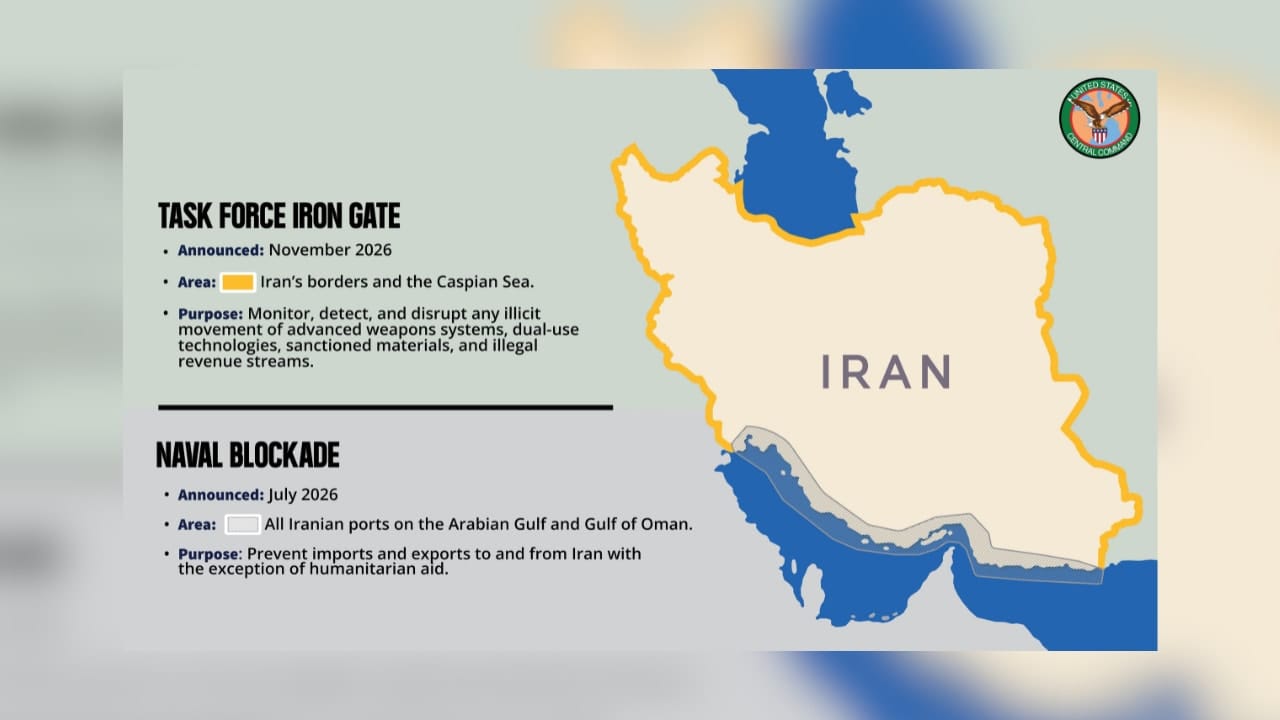
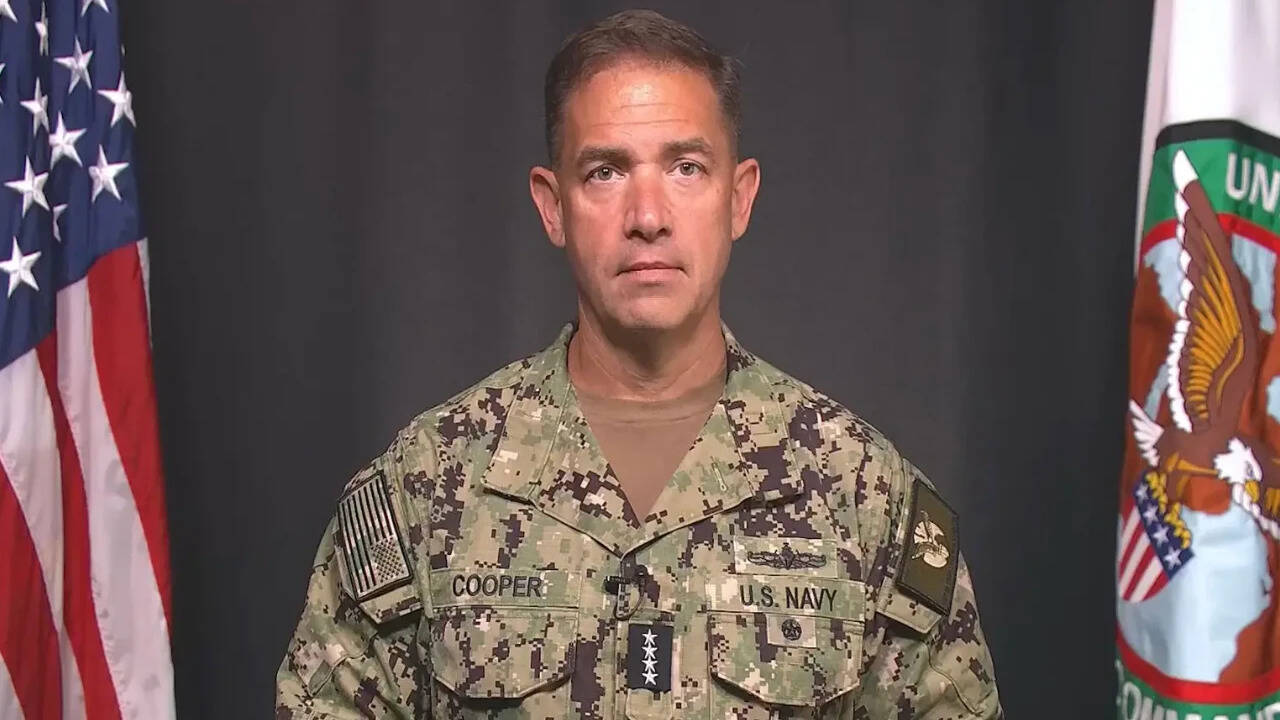
The U.S. military announced the creation of Task Force Iron Gate, based in Tampa, Florida, to disrupt Iran's land and maritime transport of advanced weapons systems and sanctioned materials across land borders and the Caspian Sea. The task force will coordinate with other U.S. government agencies and involves approximately 20 personnel. This expands an existing months-long naval blockade that the U.S. military says has stopped Tehran from exporting more than $25 billion in crude oil. The U.S. has not specified whether military action would be involved in enforcement.
How the spectrum reads this story
The same event, summarised as five points on the political spectrum would each tend to frame it. These are generated by an AI model and are a starting point, not the last word.
Left
The U.S. is escalating economic pressure on Iran through an expanded blockade targeting both sea and land routes, adding a specialized task force to restrict weapons shipments and commerce. This represents a significant intensification of unilateral sanctions and coercive measures that bypass multilateral institutions. While framed as preventing weapons proliferation, such comprehensive trade restrictions historically harm civilian populations and can destabilize entire regions without addressing underlying security concerns or pursuing diplomatic resolution.
No article in this story reads this way. This is how the position tends to frame events like it — written by a model, not quoted from anyone.
Center-left
The U.S. has announced Task Force Iron Gate to complement its existing naval blockade, aiming to disrupt Iran's weapons shipments and sanctioned exports through land routes and the Caspian Sea. This targeted enforcement effort seeks to limit Iran's ability to finance military and terrorist activities while maintaining diplomatic space. The approach uses specialized interdiction rather than broad military action, focusing on coordinated interagency work to tighten existing economic restrictions.
No article in this story reads this way. This is how the position tends to frame events like it — written by a model, not quoted from anyone.
Center
The U.S. military has established a new task force to supplement its naval blockade with land-based enforcement against Iranian weapons transport and sanctioned commerce. The initiative involves about 20 personnel coordinating across agencies from a Tampa base, representing a measured expansion of existing restrictions rather than a dramatic escalation. The blockade has reportedly prevented significant crude oil exports, though the practical effectiveness of adding a land component and whether military force will be used remain unclear.
Drawn from 5 articles placed here, below.
Center-right
The U.S. is taking necessary steps to enforce economic restrictions and prevent Iran from exporting advanced weapons and materials that fuel regional instability and terrorism. Task Force Iron Gate extends the successful naval blockade—which has already cost Iran $25 billion in lost oil sales—to land routes and the Caspian Sea. This coordinated enforcement across military and civilian agencies demonstrates a comprehensive strategy to constrain Iranian capabilities without full military engagement.
Drawn from 1 article placed here, below.
Right
The U.S. military has wisely expanded its containment strategy against Iran by creating Task Force Iron Gate to block weapons shipments across land borders and the Caspian Sea, complementing the existing naval blockade. This focused enforcement action protects American interests and regional allies while respecting sovereignty by avoiding broader military operations. The blockade's success in preventing $25 billion in oil exports shows that economic pressure can achieve strategic goals while maintaining operational control and limiting entanglement.
No article in this story reads this way. This is how the position tends to frame events like it — written by a model, not quoted from anyone.
Hear two viewpoints debate it
Pick two viewpoints and Prism writes a short, six-turn exchange about this story in each one’s own voice — steel-manned, no winner declared. Each pairing is written once and then saved for every reader. The voices are AI syntheses of a tradition, not real people.
New pairing — Prism will write it now.
How each outlet covered it
Where Prism places each piece — not the outlet in general — with the words from that piece that put it there, and the photograph the outlet chose. Picking a photo is a framing decision too.
- CBS NewsThis piece reads center
“did not say whether any military action would be involved”
Read the original - The Jerusalem PostThis piece reads center
“will coordinate with other US government agencies”
FramingIntroduces the task force name with "as it will be called," suggesting future announcement, while other outlets present it as already announced or established.
Read the original - Al-MonitorThis piece reads center
“bolster Washington's efforts to restrict Tehran's movement”
Read the original - The Straits TimesThis piece reads center
“naval blockade of Iran has stopped Tehran exporting”
What's left outLeads with a quantified achievement of the blockade ($25 billion in oil exports prevented), a detail other outlets mention but do not emphasize in their headline or opening.
Read the original - The Times of IndiaThis piece reads center-right
“restrict Iran's capabilities to finance terrorism”
Word choiceExplicitly names terrorism financing as a goal, while other outlets focus on weapons transport and sanctioned materials without this characterization.
Read the original
Placements are generated by an AI model from each article’s own headline and summary, and every quotation above is checked to be a real substring of that article before it is published. How this is done
Prism is free and carries no advertising. Support it if it was useful.