New Mexico jury orders Meta to pay $25 billion over Cambridge Analytica data privacy scandal
Reported by
A dot shows how that piece reads — Prism rates articles, not outlets, and shows the words behind each placement below. No dot means the piece isn’t rated. How the ratings work
What happened
The account the coverage agrees on, with contested figures attributed rather than asserted. This is not one of the five framings below — it is the ground they all stand on.
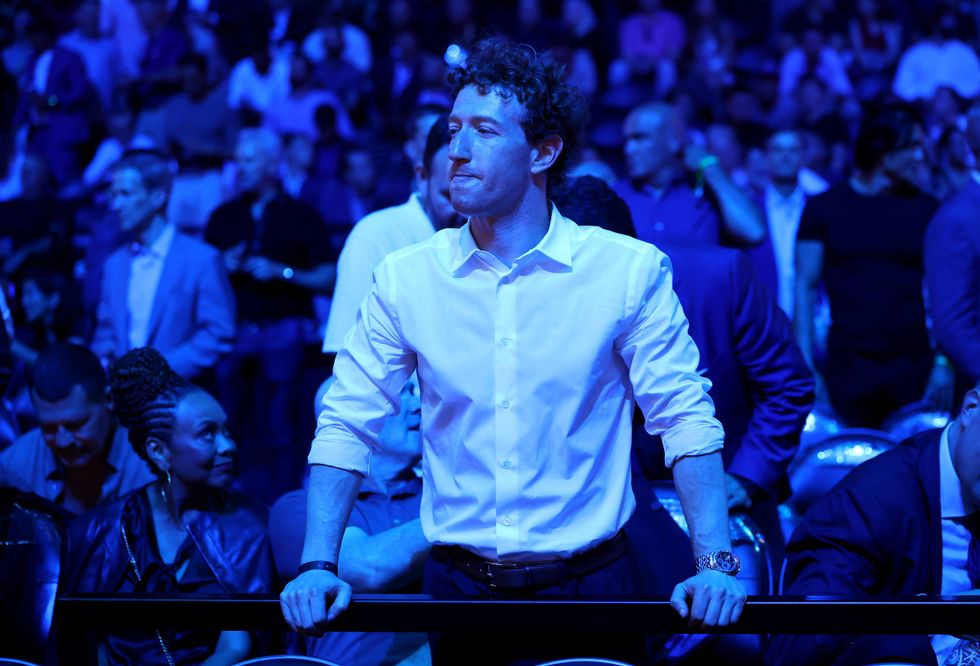
A New Mexico judge ordered Meta to pay $25 billion on Wednesday after a jury found the company misled consumers about data privacy in connection with the Cambridge Analytica scandal, when a political consulting firm obtained Facebook user data without consent during Donald Trump's 2016 presidential campaign. The jury found Meta committed over 43 million violations of New Mexico's consumer protection laws. New Mexico's Attorney General called it one of the largest financial penalties against a corporation in US history, though Common Dreams notes it represents a fraction of the $219.5 billion the law warranted.
How the spectrum reads this story
The same event, summarised as five points on the political spectrum would each tend to frame it. These are generated by an AI model and are a starting point, not the last word.
Left
This ruling exposes how Meta prioritized profit over user rights for years, harvesting personal data and deceiving millions while enabling political manipulation. The $25 billion penalty, though historic, falls short of what the law allows and what genuine accountability would demand—especially given Meta's continued market dominance and minimal changes to its business model. Real justice requires not just fines but structural reform of how tech companies treat user data.
Drawn from 1 article placed here, below.
Center-left
This verdict demonstrates that courts can hold major tech companies accountable when they violate consumer trust. Meta's deception about data privacy harmed millions and enabled foreign interference in democracy. The $25 billion fine is substantial and sends an important message, though questions remain about whether penalties alone are enough to change corporate behavior without additional regulation of data practices.
No article in this story reads this way. This is how the position tends to frame events like it — written by a model, not quoted from anyone.
Center
The ruling reflects appropriate judicial enforcement of consumer protection law against documented corporate wrongdoing. A jury found Meta misled users; a judge imposed a substantial penalty. The question of whether $25 billion is the right amount involves genuine trade-offs: enough to deter misconduct, but not so large it destabilizes the company or sets precedent that chills innovation. The case also raises the broader question of what mix of enforcement, regulation, and market pressure best protects consumers.
Drawn from 3 articles placed here, below.
Center-right
Meta violated consumer protection laws and deceived users about how their data would be handled, and the court was right to impose a significant penalty. This demonstrates that existing laws can work when enforced. However, the $25 billion fine is exceptionally large and may create unpredictable liability for companies. Going forward, clearer rules and regulatory certainty—rather than massive retroactive penalties—would better protect both consumers and business investment.
No article in this story reads this way. This is how the position tends to frame events like it — written by a model, not quoted from anyone.
Right
While Meta clearly violated state law and deserves consequences, this $25 billion penalty raises concerns about government overreach and unpredictable litigation. The company made mistakes, but massive retroactive fines for conduct that occurred years ago create legal uncertainty and could discourage investment in technology. Better solutions involve clearer privacy rules, consumer choice, and competition—not massive state-imposed penalties that concentrate power in government hands.
No article in this story reads this way. This is how the position tends to frame events like it — written by a model, not quoted from anyone.
Hear two viewpoints debate it
Pick two viewpoints and Prism writes a short, six-turn exchange about this story in each one’s own voice — steel-manned, no winner declared. Each pairing is written once and then saved for every reader. The voices are AI syntheses of a tradition, not real people.
New pairing — Prism will write it now.
How each outlet covered it
Where Prism places each piece — not the outlet in general — with the words from that piece that put it there, and the photograph the outlet chose. Picking a photo is a framing decision too.
- Common DreamsThis piece reads left
“just a fraction of the $219.5 billion warranted under the law”
FramingEmphasizes that the $25 billion penalty falls short of legal maximums, whereas other outlets report the award as historic or record-breaking without this comparison.
Read the original  The GuardianThis piece reads center
“A judge in New Mexico ordered Meta Platforms to pay $25bn”
Read the original BBCThis piece reads center
“The fine is the largest to date against Facebook's owner”
Word choicePuts 'lies' in quotation marks in the headline, a more pointed characterization than other outlets' use of 'misled' without punctuation.
Read the original Le MondeThis piece reads center
“judge's ruling follows a jury verdict that found the company deceived users”
Read the original- DWnot ratedRead the original
 Fox Businessnot ratedRead the original
Placements are generated by an AI model from each article’s own headline and summary, and every quotation above is checked to be a real substring of that article before it is published. How this is done
Prism is free and carries no advertising. Support it if it was useful.