Flávio Bolsonaro arrives in Miami after fleeing Brazil, claims himself as Brazil's true leader
Reported by
A dot shows how that piece reads — Prism rates articles, not outlets, and shows the words behind each placement below. No dot means the piece isn’t rated. How the ratings work

What happened
The account the coverage agrees on, with contested figures attributed rather than asserted. This is not one of the five framings below — it is the ground they all stand on.
Flávio Bolsonaro, who lost Brazil's presidential election to incumbent Luiz Inácio Lula da Silva on Sunday, fled to the United States and arrived in Miami on Wednesday. He passed through Argentina during his journey. Brazilian authorities had ordered him to surrender his passport and a Supreme Court order barred him from foreign travel. Upon arrival, Bolsonaro claimed he is Brazil's rightfully elected president, alleging electoral fraud and describing his situation as a coup d'état and political persecution. He faces multiple investigations in Brazil. The Trump administration granted him and his family visas to enter the US.
How the spectrum reads this story
The same event, summarised as five points on the political spectrum would each tend to frame it. These are generated by an AI model and are a starting point, not the last word.
Left
Bolsonaro's flight exposes the far right's contempt for democratic results when they lose. He lost a legitimate election to Lula, faced accountability for investigations into his conduct, and rather than accept defeat he fled to the US and fabricated claims of electoral fraud—the same false allegations that fueled his supporters' assault on Brazilian institutions. That he received a warm welcome from Trump reveals how autocratic movements protect each other across borders, and how the global far right weaponizes asylum and refugee systems to evade justice.
Drawn from 1 article placed here, below.
Center-left
Bolsonaro's departure removes a significant obstacle to Brazil's democratic stability, but it underscores how vulnerable democracies remain to destabilization. His baseless fraud claims and refusal to concede after losing fairly repeat the playbook that has destabilized democracies worldwide. The US granting him refuge is diplomatically problematic—it signals willingness to shelter those who reject election results and face legitimate investigations. Brazil's institutions held firm by enforcing travel bans and pursuing accountability, but the damage to regional relations and to the principle that losers must accept defeats is real.
Drawn from 3 articles placed here, below.
Center
Bolsonaro lost a competitive election and faces serious investigations at home. That he fled rather than face those processes, while also claiming the election was stolen despite no credible evidence, reflects a genuine political crisis in Brazil. The US decision to admit him creates friction with a major regional partner and sets an awkward precedent, but extradition is unlikely and the immediate risk of violence appears limited. Brazil's courts and institutions are functioning; Lula's government won through the ballot. The longer-term question is whether Bolsonaro's exile reduces or prolongs polarization.
Drawn from 8 articles placed here, below.
Center-right
Bolsonaro faced a coordinated campaign against him in Brazil's courts and media, and chose to leave rather than submit to proceedings he views as politically motivated. His concerns about the integrity of Brazil's election process deserve serious consideration, even if they remain disputed. That he fled suggests he feared the outcome of investigations he sees as persecution rather than justice. The US granting refuge to a political opponent of a left-wing government is consistent with American support for those fleeing authoritarianism. Brazil's leftist government now has even greater power to consolidate control without meaningful opposition.
No article in this story reads this way. This is how the position tends to frame events like it — written by a model, not quoted from anyone.
Right
Bolsonaro lost an election in a country where the judiciary and media have been weaponized against the right, and chose exile over politically motivated prosecution. His claims of electoral fraud reflect legitimate concerns about institutional capture by the left. The US correctly granted him asylum and refuge from persecution, honoring the principle that democracies should shelter those fleeing politicized justice systems. Trump's welcome of Bolsonaro is proper—it supports a fellow anti-establishment leader and sends the message that America will not abandon allies to the left's vengeance. Lula's regime now consolidates unchecked power.
Drawn from 2 articles placed here, below.
Hear two viewpoints debate it
Pick two viewpoints and Prism writes a short, six-turn exchange about this story in each one’s own voice — steel-manned, no winner declared. Each pairing is written once and then saved for every reader. The voices are AI syntheses of a tradition, not real people.
New pairing — Prism will write it now.
How each outlet covered it
Where Prism places each piece — not the outlet in general — with the words from that piece that put it there, and the photograph the outlet chose. Picking a photo is a framing decision too.
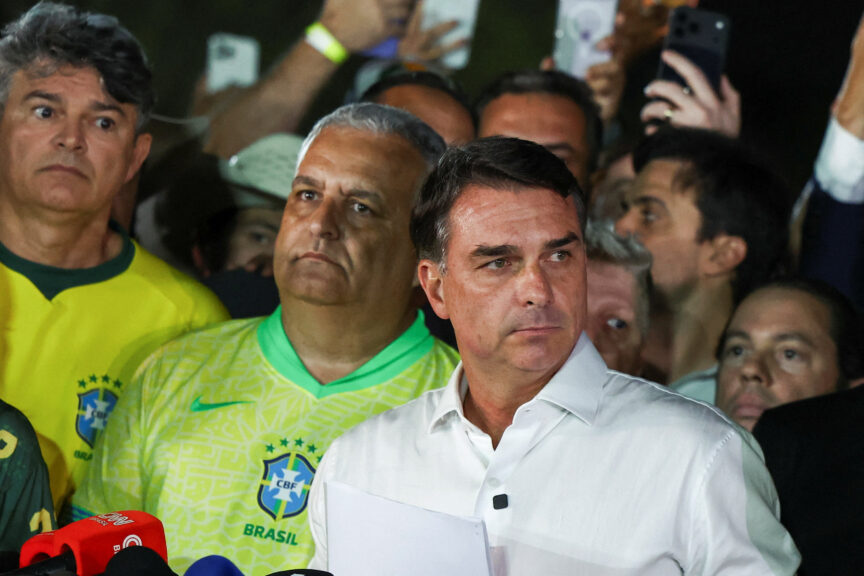 Novara MediaThis piece reads left
“Far-Right Loser Flávio Bolsonaro Flees Brazil”
Word choiceOpens with a loaded characterization ('loser') in the headline itself, where other outlets use neutral descriptors like 'defeated candidate.' The word choice frames the person before reporting the event.
Read the original- BBCThis piece reads center-left
“recycling unsubstantiated allegations of "electoral fraud”
FramingFlags Bolsonaro's fraud claims as unsubstantiated in its own voice within the snippet, whereas most outlets simply report what he claimed without editorializing on its credibility.
Read the original  Foreign PolicyThis piece reads center-left
“Just like his father, the far-right senator fled Brazil”
Read the original- BloombergThis piece reads center-left
“Trump Shelters Flavio Bolsonaro, Risking Tensions”
Read the original - The Straits TimesThis piece reads center
“frenzied 24-hours that left the world scratching its head”
Read the original - DWnot ratedRead the original
- The American ConservativeThis piece reads center
“The failed Brazilian presidential candidate arrived in Florida”
Read the original 
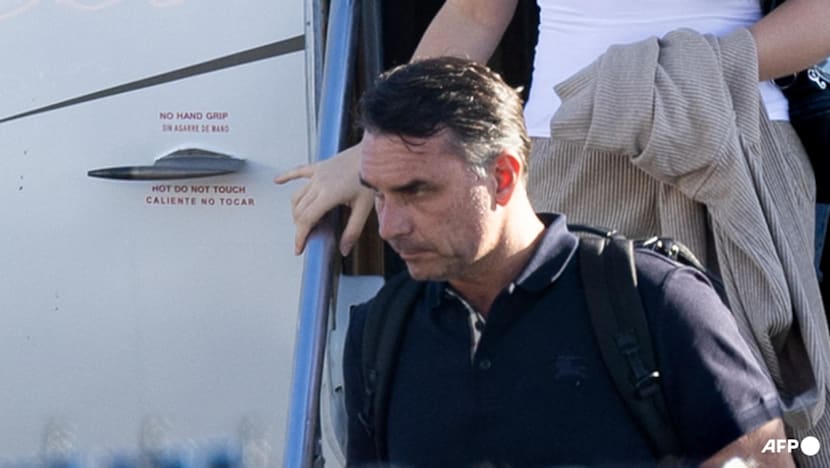
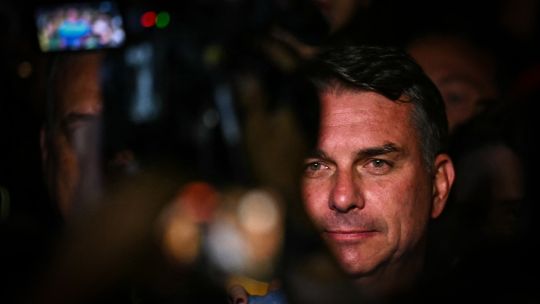 Buenos Aires TimesThis piece reads center
“Right-wing senator, now in self-imposed exile”
Read the original
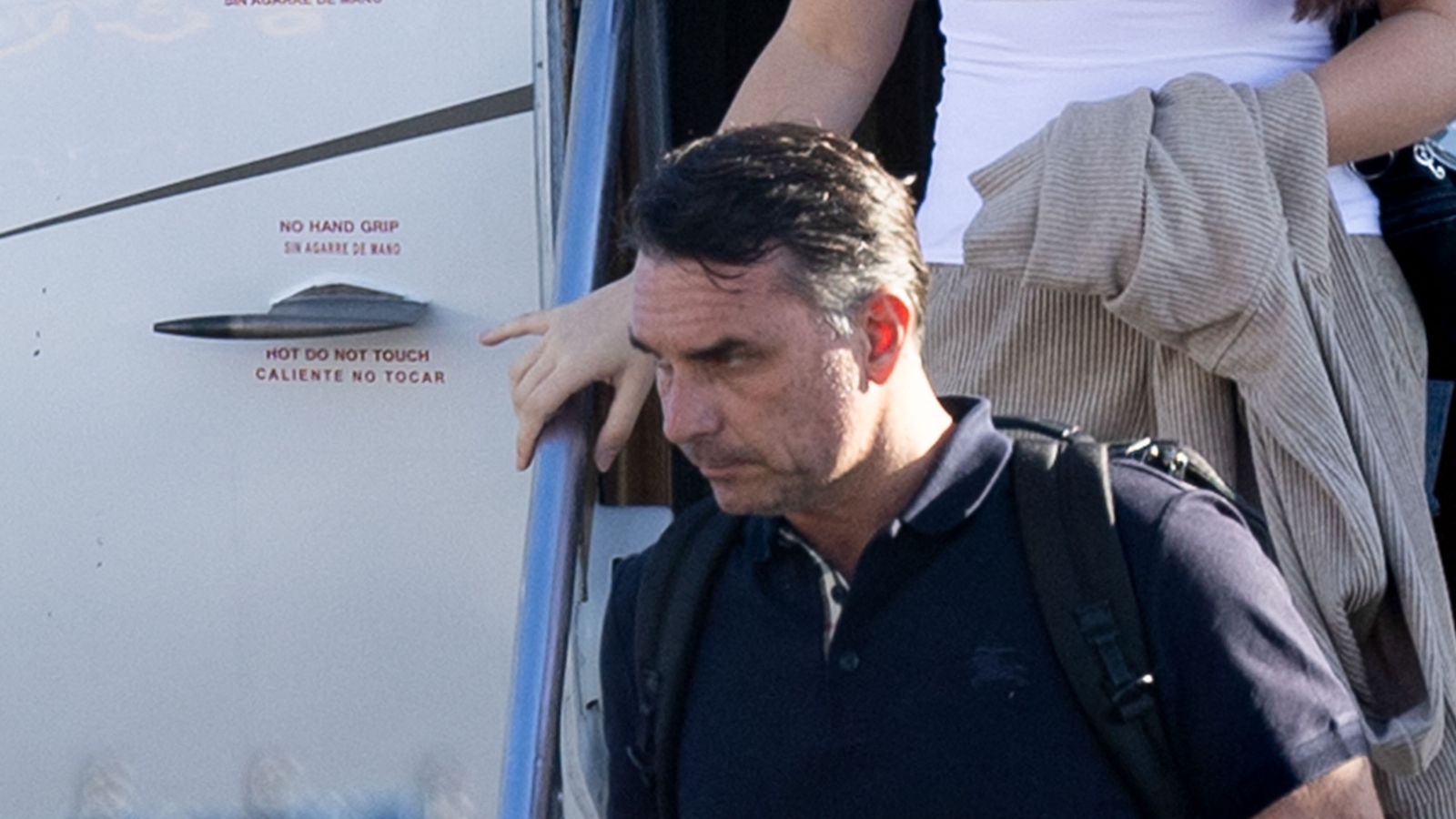 Hindustan TimesThis piece reads center
“fleeing to Florida, vowing to lead the opposition”
Read the original Hungarian ConservativeThis piece reads right
“Trump Welcomes Him”
FramingForegrounds Trump's active welcome and the detail that visas were granted by the Trump administration, emphasizing US political support where most outlets treat the arrival itself as the primary fact.
Read the original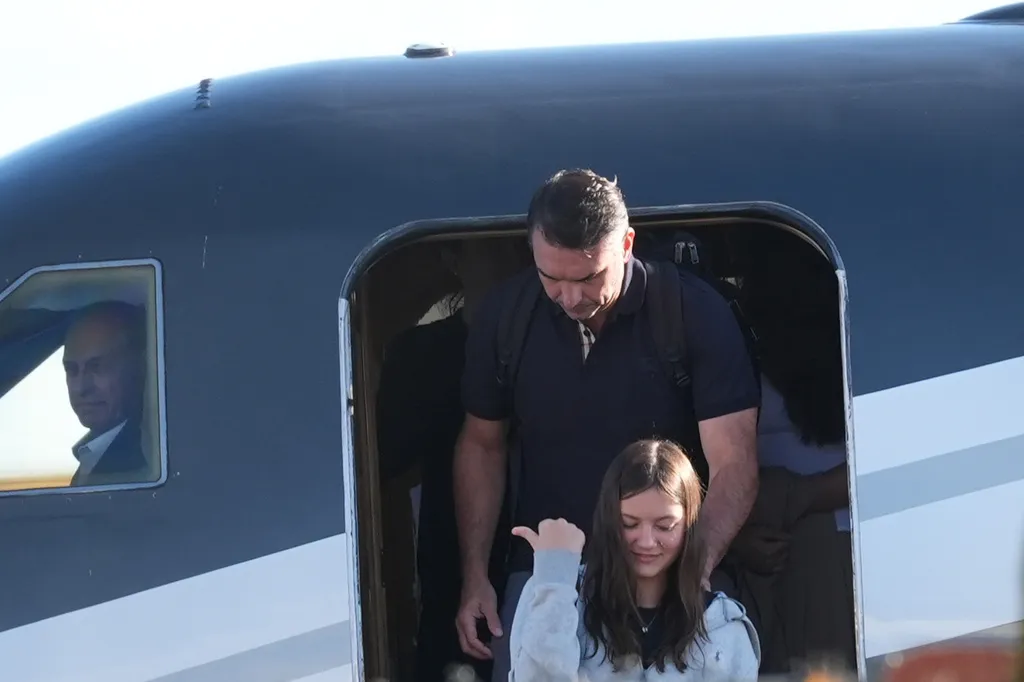 Washington ExaminerThis piece reads right
“with blessing of the White House”
FramingExplicitly characterizes his departure as occurring 'with blessing of the White House,' attributing motive to US action that other outlets report more neutrally as visa approval.
Read the original
Placements are generated by an AI model from each article’s own headline and summary, and every quotation above is checked to be a real substring of that article before it is published. How this is done
Prism is free and carries no advertising. Support it if it was useful.