Family of Tierra Walker, who died after being denied abortion, sues Texas AG Ken Paxton
Reported by
A dot shows how that piece reads — Prism rates articles, not outlets, and shows the words behind each placement below. No dot means the piece isn’t rated. How the ratings work

What happened
The account the coverage agrees on, with contested figures attributed rather than asserted. This is not one of the five framings below — it is the ground they all stand on.
The family of Tierra Walker, a 37-year-old San Antonio woman who died in December 2024, has filed a lawsuit in Bexar County, Texas against Attorney General Ken Paxton and doctors. Walker died after being unable to obtain an abortion while pregnant. The lawsuit argues that Texas's near-total abortion ban violates state and U.S. constitutions. This is described as the first lawsuit over a death linked to an abortion ban.
How the spectrum reads this story
The same event, summarised as five points on the political spectrum would each tend to frame it. These are generated by an AI model and are a starting point, not the last word.
Left
Texas's near-total abortion ban has directly caused a preventable death, demonstrating how restrictions rooted in ideological opposition to abortion rights endanger women's lives. The state's criminalizing approach forces doctors to prioritize fetal life over women's health, making pregnancy itself a life-threatening condition when complications arise. This lawsuit represents accountability for a policy that treats women as vessels rather than people with autonomy and medical needs. Paxton and state officials bear responsibility for deaths their laws enable.
Center-left
This tragedy reveals the real-world consequences of Texas's restrictive abortion law. While the state has the authority to regulate abortion, sweeping bans without exceptions for health emergencies create impossible situations where doctors cannot act to save lives. The family's lawsuit raises legitimate questions about whether such broad restrictions comply with constitutional protections. Texas needs clearer legal pathways allowing doctors to provide emergency care without fear of prosecution, balancing the state's interests with women's safety.
Center
This case highlights the tension between abortion restrictions and medical emergencies. The facts—a woman's death after being denied abortion care—are tragic and demand serious attention from both legal and medical perspectives. However, the full details matter: what exactly prevented treatment, what warnings existed, and whether clearer emergency protocols could have helped. Rather than viewing this as simply about the ban or the lawsuit, policymakers should examine whether existing exceptions for life-threatening conditions are clearly understood by doctors and hospitals, and whether communication between medical and legal authorities can improve without abandoning either health protections or abortion regulations.
Center-right
While Walker's death is deeply tragic and deserves full investigation, a single case does not prove that abortion restrictions are unconstitutional or necessarily prevented her care. Texas law includes exceptions for life-threatening pregnancies, and the lawsuit's claims about what occurred medically and legally need scrutiny. Rather than invalidating the law wholesale, courts should examine whether doctors understood their legal protections, whether communication failures occurred, and whether procedural improvements are needed. Jumping to blame Paxton or declare the ban unconstitutional before facts are established undermines both due process and the state's legitimate interest in protecting unborn life.
Right
This lawsuit is a political effort to use one tragedy to overturn Texas's democratically enacted abortion protections. Abortion is a serious moral matter where states have the right to set policy reflecting their citizens' values. Texas law already includes exceptions for genuine threats to the mother's life—the question is whether those protections were properly applied here, not whether the law itself is unjust. Using a lawsuit to pressure legislators through emotional appeals rather than addressing specific medical or procedural failures sets a dangerous precedent and distracts from rigorous examination of what actually happened in this case.
Hear two viewpoints debate it
Pick two viewpoints and Prism writes a short, six-turn exchange about this story in each one’s own voice — steel-manned, no winner declared. Each pairing is written once and then saved for every reader. The voices are AI syntheses of a tradition, not real people.
New pairing — Prism will write it now.
How each outlet covered it
Where Prism places each piece — not the outlet in general — with the words from that piece that put it there, and the photograph the outlet chose. Picking a photo is a framing decision too.
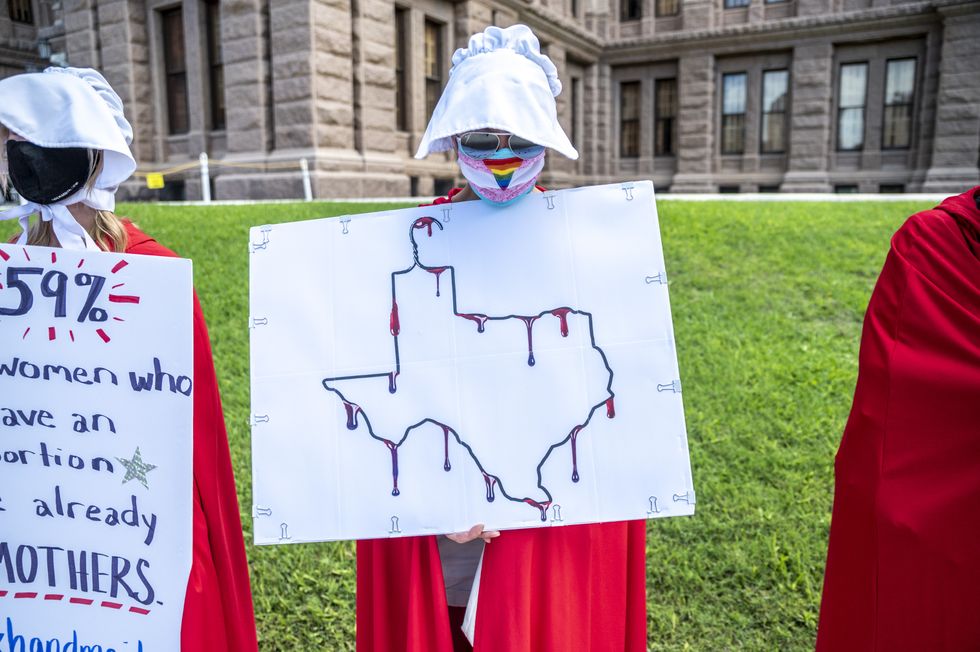 Common DreamsThis piece reads left
“Tierra Walker is dead, and those responsible must be held accountable”
FramingOpens with a direct quote asserting accountability and moral responsibility, positioning the lawsuit not primarily as a legal matter but as a demand for responsibility—a framing that reads as a call to action rather than neutral reporting.
Read the original- The 19thThis piece reads center-left
“first lawsuit over a death linked to an abortion ban”
Word choiceEmphasizes the lawsuit's unprecedented nature by framing it as 'the first' of its kind, which underscores the significance of the case and its potential precedent-setting status.
Read the original - SalonThis piece reads center-left
“Texas' near-total abortion ban violates the state and U.S. constitutions”
Read the original
Placements are generated by an AI model from each article’s own headline and summary, and every quotation above is checked to be a real substring of that article before it is published. How this is done
Prism is free and carries no advertising. Support it if it was useful.