Russia's ruling party wins wartime parliamentary election despite Ukrainian drone attacks on Moscow
Reported by
A dot shows how that piece reads — Prism rates articles, not outlets, and shows the words behind each placement below. No dot means the piece isn’t rated. How the ratings work

What happened
The account the coverage agrees on, with contested figures attributed rather than asserted. This is not one of the five framings below — it is the ground they all stand on.
Russia's parliamentary elections concluded on September 20 after three days of voting. Exit polls showed the ruling United Russia party winning approximately 49.4 per cent of the vote, on track to retain its dominance in the Duma. The election included residents of four Ukrainian regions Moscow illegally annexed and Crimea. On the final voting day, Ukraine launched drone attacks on Moscow, killing between two and three people according to different official accounts and damaging an oil refinery. Russian officials vowed to intensify strikes on Kyiv in response. Kyiv denounced the election as illegal.
How the spectrum reads this story
The same event, summarised as five points on the political spectrum would each tend to frame it. These are generated by an AI model and are a starting point, not the last word.
Left
Russia held a sham election designed to manufacture consent for its war of aggression in Ukraine. The Kremlin tightly controlled every aspect—no genuine opposition was permitted on the ballot, and it extended voting to illegally annexed Ukrainian territories to pad the result. The timing, coinciding with Ukraine's drone strikes, allowed Putin to frame the war as a test of national resolve. The absence of real democratic choice or meaningful competition renders the result meaningless as a measure of genuine public support.
Center-left
Russia conducted its first wartime parliamentary election under conditions that fell far short of democratic standards. The Kremlin's tight control over the ballot, exclusion of genuine opposition, and inclusion of votes from illegally annexed Ukrainian territory all undermine the legitimacy of the outcome. While United Russia's strong showing suggests public acceptance of the war effort, the lack of free and fair competition means the result cannot be taken as reliable evidence of true public opinion. The timing with Ukrainian attacks raised tensions further.
Center
Russia held parliamentary elections on a schedule set before the Ukraine war began, and the ruling party performed about as well as it did in 2011—49.4 per cent—suggesting continuity rather than dramatic change. The elections did expand the electorate to include annexed territories, which Ukraine and the West reject as legitimate; Russia sees this as affirming sovereignty over those regions. Ukraine's drone strikes during voting were a tactical choice that didn't prevent the election from proceeding. The outcome reflects the constraints of Russia's political system: limited genuine opposition and high state control over information, which exist independently of the current conflict.
Center-right
Russia's elections proceeded as scheduled despite wartime conditions and demonstrated public acceptance of the government's war strategy. United Russia's stable support—nearly 50 per cent—indicates that, whatever outside critics claim, Russian voters are not rejecting the war or the party backing it. The inclusion of residents from newly integrated territories in the voting process reflects Russia's assertion of sovereignty and integration of those regions into the state. Ukraine's escalating drone attacks on civilian infrastructure during the election were designed to disrupt the process and demonstrate weakness in Russian defences, yet the elections completed successfully.
Right
Russia held elections that reflected genuine public backing for the government and its defence of Russian interests in Ukraine, despite Western claims of Kremlin control. The stable 49 per cent vote for United Russia demonstrates that Russians support their leadership. Including residents of newly integrated regions in the electoral process is a sovereign Russian decision and part of legitimate state consolidation. Ukraine's drone attacks on Moscow during voting—killing civilians and hitting oil infrastructure—exposed the real aggression in this conflict and vindicated Russia's determination to prosecute the war and retaliate against Ukrainian strikes on Russian soil.
Hear two viewpoints debate it
Pick two viewpoints and Prism writes a short, six-turn exchange about this story in each one’s own voice — steel-manned, no winner declared. Each pairing is written once and then saved for every reader. The voices are AI syntheses of a tradition, not real people.
New pairing — Prism will write it now.
How each outlet covered it
Where Prism places each piece — not the outlet in general — with the words from that piece that put it there, and the photograph the outlet chose. Picking a photo is a framing decision too.
- France 24This piece reads center-left
“tightly controlled parliamentary elections”
FramingFrames the drone attacks as contextual to the election result rather than as a separate event. Other outlets present the attacks and the election outcome as concurrent developments or lead with the election outcome.
Read the original - BloombergThis piece reads center-left
“practically no genuine opposition on the ballot”
Word choiceExplicitly characterizes the political constraints; other outlets describe the same situation more neutrally as 'tightly controlled' or simply state what happened without evaluating the electoral system.
Read the original 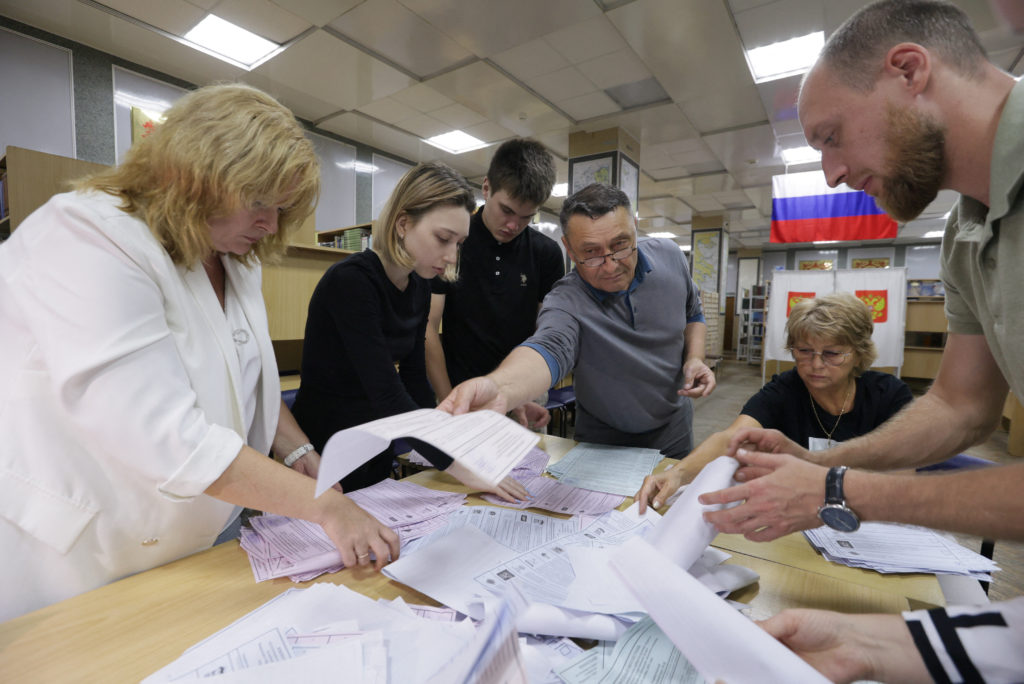
- EuronewsThis piece reads center
“Russians vote in final day of parliamentary elections”
Read the original - The Moscow Timesnot rated
FramingAttributes the framing of the election to Putin himself—that he cast it as a test—rather than presenting the test-of-support framing as neutral description. Other outlets use similar language but without explicitly crediting Putin as the source of that characterization.
Read the original - CNBCnot ratedRead the original
- The Straits TimesThis piece reads center
“Russia vows revenge for election-day attacks”
Read the original 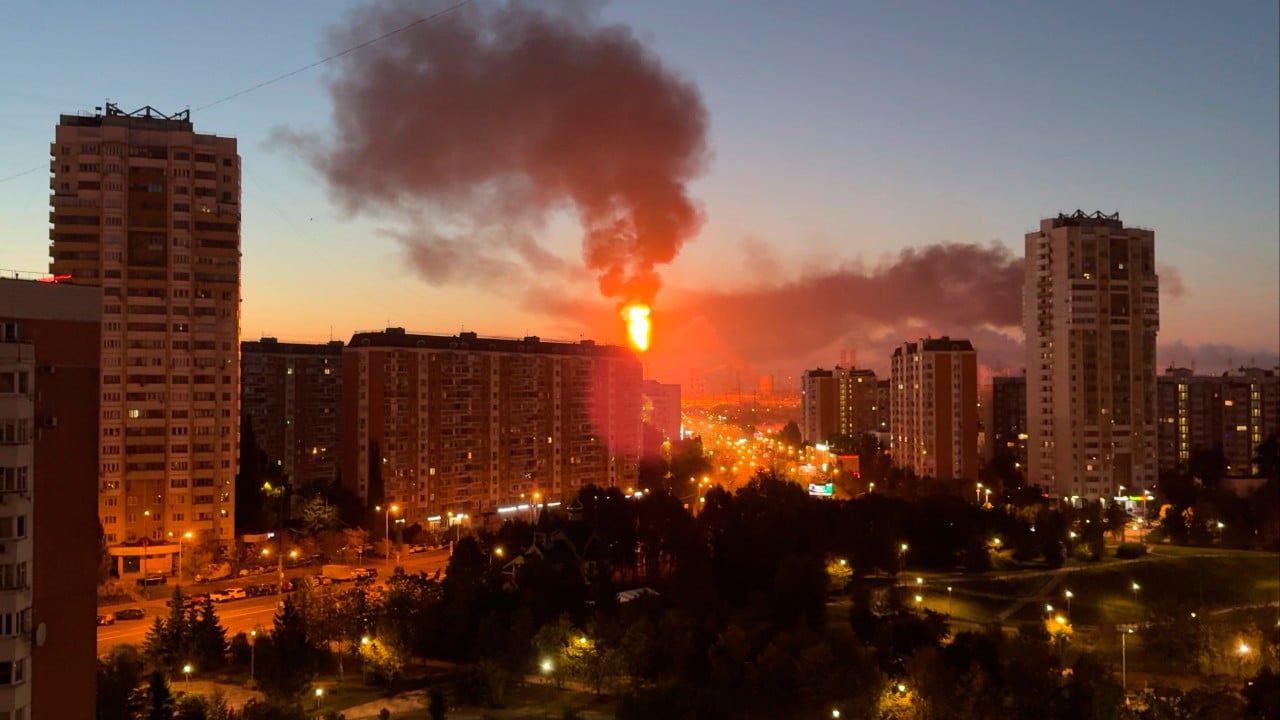 South China Morning PostThis piece reads center-right
“Russia vows revenge for Ukraine's election-day attacks”
FramingOpens with Russia's military response rather than the election result, placing retaliation as the lead fact. Most other outlets lead with the election outcome.
Read the original
Placements are generated by an AI model from each article’s own headline and summary, and every quotation above is checked to be a real substring of that article before it is published. How this is done
Prism is free and carries no advertising. Support it if it was useful.